Add AP News as your preferred source to see more of our stories on Google.
Add AP News on Google Add AP News as your preferred source to see more of our stories on Google. Share
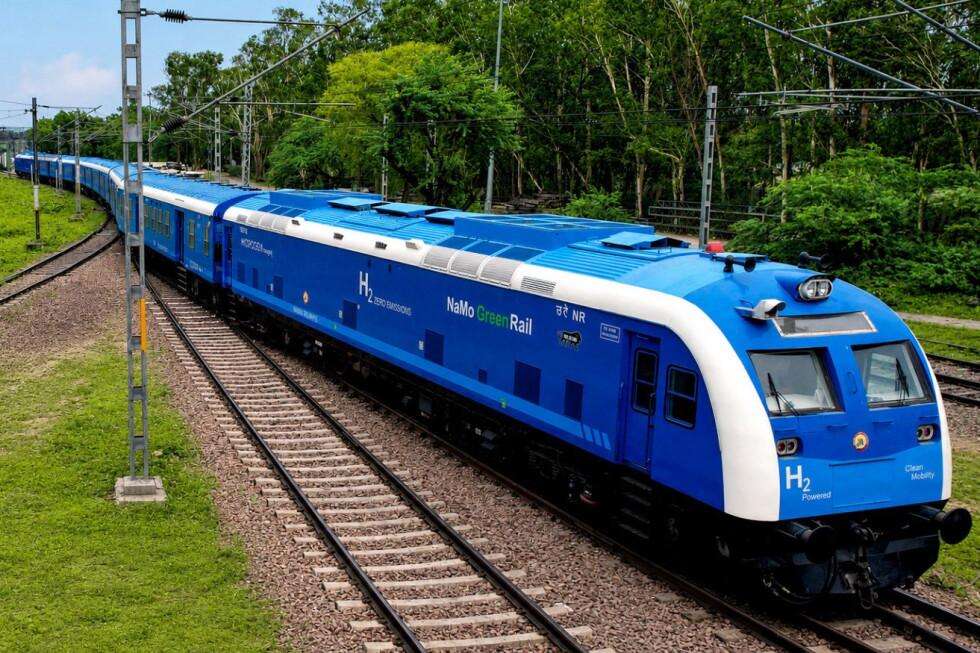
NEW DELHI (AP) — India rolled out its first domestically built, hydrogen-powered train on Friday, a move aimed at expanding the use of clean energy in its vast rail network.
The train made up of two hydrogen-powered driving cars and eight passenger coaches will operate in the northern state of Haryana. It can run at speeds of up to 75 kph (47 mph) and carry a maximum of about 2,600 passengers, railway officials said.
Prime Minister Narendra Modi inaugurated the “NaMo Green Rail” at Haryana’s Jind railway station on Friday. “NaMo” is a common abbreviation of Modi’s first and last names.
“This is a very significant day in the direction of self-reliant India and sustainable development,” Modi said in a post on X.
The pilot project includes hydrogen storage and refueling infrastructure to test the use of the technology in India’s rail network, according to officials.
Hydrogen fuel cells generate electricity by combining hydrogen and oxygen, producing water vapor as the only direct emission. Several other countries have introduced hydrogen-powered trains as an alternative to diesel on routes that are not fully electrified.
The launch is part of India’s broader efforts to develop green hydrogen and reduce carbon emissions. India has set a target of reaching net-zero emissions by 2070, with Indian Railways exploring hydrogen as an alternative to diesel on some routes.
mizzlekinkizzle on July 18th, 2026 at 17:35 UTC »
What’s the point of clean energy railways when its benefits are completely nullified by all of your other garbage and pollution. Nice idea but maybe focus on removing the hundreds of thousands of tons of trash from your waterways first
DRKMSTR on July 18th, 2026 at 11:26 UTC »
TBH, it would have been better to invest in double decker passenger cars.
Less crowded, fewer people dying trying to climb on to a full train.
I think the change in pollution would be offset by the reduced use of private vehicles.
beckavanoliver on July 18th, 2026 at 10:49 UTC »
india’s railway network is already about 99.6% electrified. hydrogen trains are meant for the remaining routes where electrification is difficult or not practical. green hydrogen is essential for india to become truly carbon neutral because it can decarbonize industries and heavy transport that still rely on diesel and other fossil fuels. such as steel, fertilizer, shipping and heavy trucking.
with some of the world’s cheapest solar energy, india plans to produce green hydrogen using solar and wind power. dedicated renewable energy corridors with a planned capacity of 125 GW are being developed to support green hydrogen production. so the countrys long term goal is to achieve energy self sufficiency while becoming carbon neutral
the biggest challenge with green hydrogen has always been its production cost. that’s where india has an advantage. it has some of the world’s cheapest solar power, so if any country can bring the cost of green hydrogen down, india has a good chance of doing it. cheaper renewable electricity means cheaper green hydrogen.india has already signed green hydrogen partnerships with japan and several european countries to develop large scale exports
india is going all in on renewable energy for political and strategic reasons as well
the country imports most of its fossil fuels depending on global energy prices, india’s oil and fuel import bill is roughly 4 to 6% of gdp making it one of the countrys biggest external economic vulnerabilities i mean wars or blockades in the middle east can send energy prices soaring, leading to inflation and economic problems at home.
so the government sees reducing dependence on imported fossil fuels as a national security issue. energy prices are also one of the biggest factors that can influence elections. for the current government this is pretty much the only major issue they fear could cause people to vote them out. thats why india is pushing renewable energy, green hydrogen and electrification at record speed to become more energy self sufficient while reducing carbon emissions