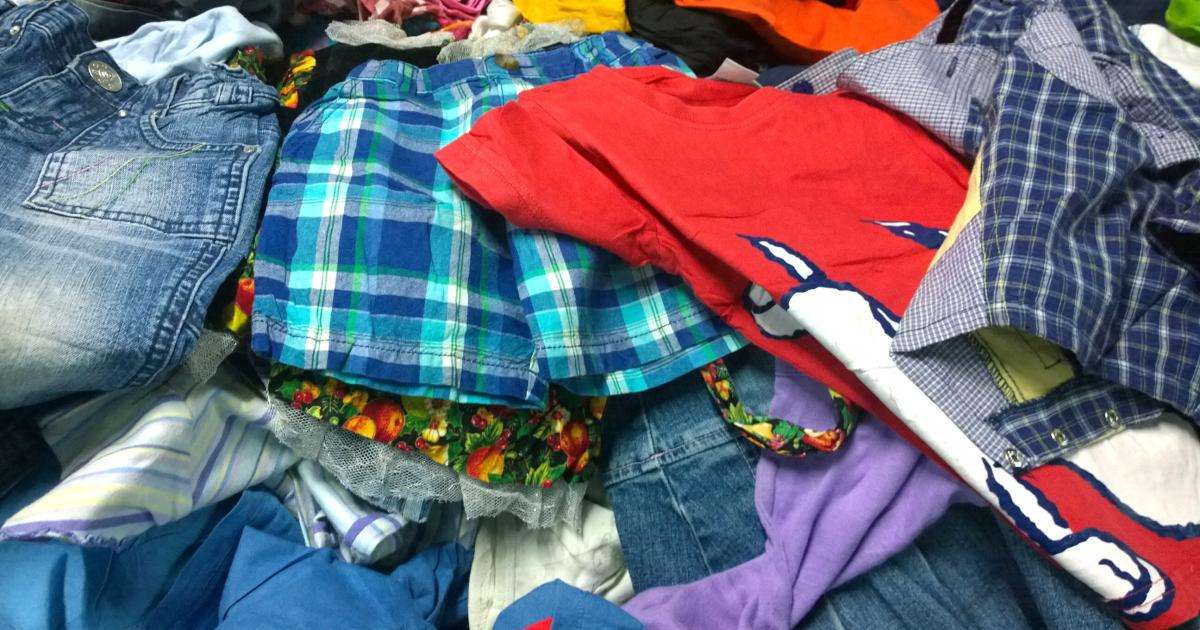
From 19 July, large companies across the EU are prohibited from destroying unsold clothes, clothing accessories and footwear. Medium-sized companies will be subject to the same rules from 2030.
The measure, introduced under the Ecodesign for Sustainable Products Regulation (ESPR), aims to prevent the waste of valuable products and the resources used to make them.
When new, usable goods are discarded, the raw materials, water, energy and labour invested in their production are lost, while their disposal generates avoidable greenhouse gas emissions. By encouraging reuse, repair and more resource-efficient business practices, the new rules support the transition to a more circular and competitive European economy.
What the new rules mean for companies
Under the new rules, businesses must prioritise keeping products in use by selling them (including through discounts or alternative markets), donating them to charities or social enterprises, or preparing them for reuse (repairing, refurbishing or remanufacturing).
Destruction will be allowed only under specified circumstances and must be carried out in accordance with the waste treatment hierarchy, giving priority to recycling.
When the ban does not apply
Companies may only destroy unsold clothes and shoes in limited cases, such as when items are unsafe or damaged, counterfeit or infringing intellectual property rights, or are rejected by charities or donation schemes.
To prevent misuse, businesses relying on these exemptions must provide proof (e.g. documents or test results) and publish annual reports on what they have discarded.
How the rules will be enforced
National authorities will check compliance and can impose fines for violations. Companies must keep records for five years to allow inspections.
To reduce paperwork, businesses will use existing customs and logistics codes when reporting. Small and micro-businesses are exempt from these requirements.
The Ecodesign for Sustainable Products Regulation (ESPR), which came into force in 2024, sets EU-wide rules to make products more durable, repairable, recyclable and resource-efficient.
The ban on destroying unsold textiles is one of the first concrete measures under the ESPR. Textiles are the first product group subject to this ban due to the negative environmental impacts of current business models, which often lead to the destruction of unsold goods.
According to the European Environment Agency, an estimated 4-9% of all textile products put on the market in Europe are destroyed before use, amounting to between 264,000 and 594,000 tonnes of textiles destroyed each year.
The Commission developed the rules after wide consultation with businesses, NGOs and experts to ensure they work in practice without creating unnecessary red tape.
Ecodesign for Sustainable Products Regulation | European Commission
EEA briefing - The destruction of returned and unsold textiles in Europe’s circular economy | European Environment Agency
New EU rules to stop the destruction of unsold clothes and shoes (February 2026) | European Commission
Commission Delegated Regulation setting out derogations from the prohibition of destruction of unsold consumer products | EUR-Lex
Commission Implementing Regulation on the details and format for the disclosure of information on discarded unsold consumer products | EUR-Lex
Tiny-Feature-9344 on July 18th, 2026 at 11:39 UTC »
About damn time. Now the real test is making sure companies actually donate instead of just finding another loophole. Still, step in the right direction.
Tiny-Feature-9344 on July 18th, 2026 at 11:38 UTC »
This is huge. It is so wild that destroying perfectly good clothes was even a thing to begin with. Glad to see policy catching up to common sense. Hope more countries follow.
LordOffal on July 18th, 2026 at 10:25 UTC »
Great idea but sadly I see this being circumvented really easily. Instead of destroying it yourself you now pay a small fee to send clothes elsewhere to be “sold” or destroyed. Somewhere outside of the EU. In the classic Western European pushing our environmental impact on other poorer nations.
Still, it is a good thing to do and might discourage some from faster fashion / stocking utter rubbish. Maybe some charities etc get some clothing too.