Jerusalem’s refusal to extend a water agreement with Amman until it changes its rhetoric on Israel will likely be interpreted as a “stab in the back” after the support Jordan gave Israel during the Iran war, Dr. Ronen Yitzhak, an expert in Israeli-Jordanian relations from the Moshe Dayan Center for Middle Eastern and African Studies, told The Jerusalem Post on Tuesday.
The 1994 peace treaty signed by Amman and Jerusalem required Israel to supply Jordan with 50 million cubic meters of water annually. In 2021, during the Naftali Bennett-Yair Lapid government, Israel agreed to double the amount of fresh water it provides to Jordan, one of the world’s most water-deficient countries.
The agreement expired in late 2025 after a series of extensions, though Israel still supplies the initial 50 million cubic meters laid out in the peace treaty.
Israel reportedly conditioned the supply of the additional volume on Jordan moderating its rhetoric toward Israel – which grew increasingly hostile over the course of the Israel-Hamas War – and restoring full diplomatic ties.
Jordan is furious about Israel’s continued refusal to renew the agreement, KAN News reported on Monday. A Jordanian source close to the royal family told KAN that “the water issue is very important to us and is part of the peace treaty.”
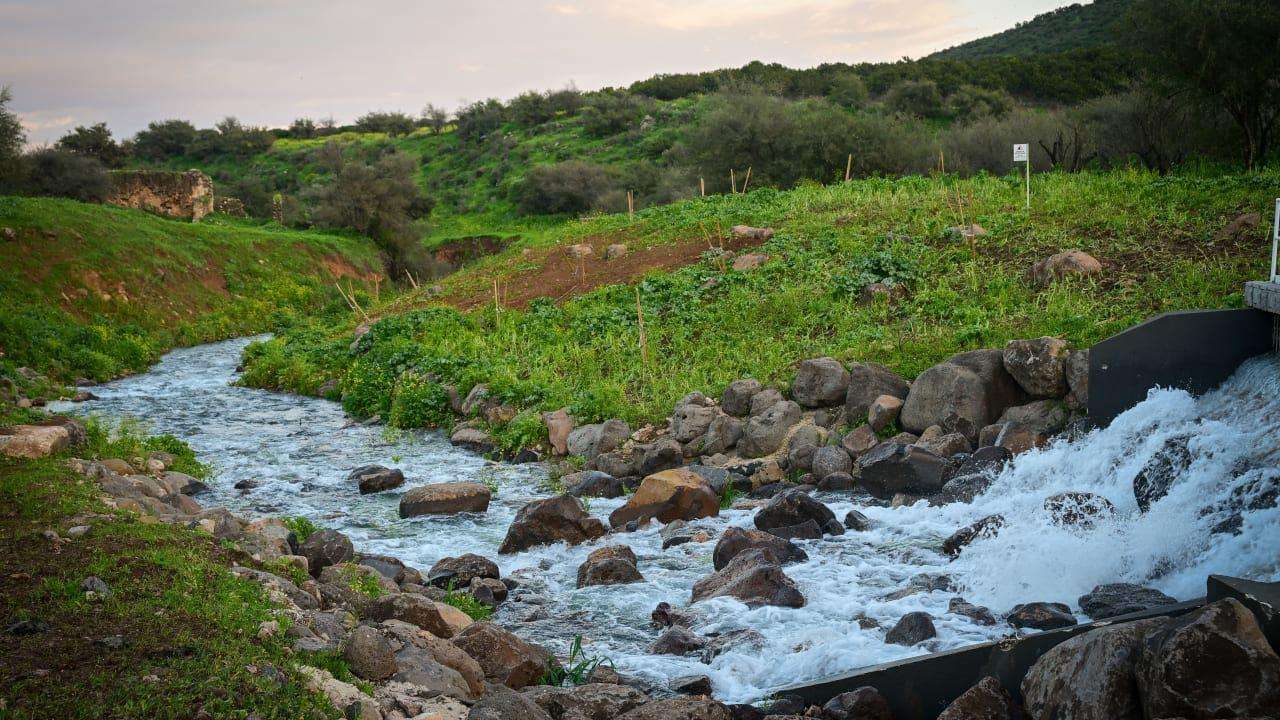
Israeli walks along the edge of the ancient archaeological site of ''Herod's Pool'' near the Jewish settlement of Petzael, in the Israeli occupied Palestinian West Bank, in the Jordan Valley, after water was recently diverted into the site from a nearby spring on June 15, 2026. (credit: Ilia Yefimovich/AFP via Getty Images)
Yitzhak said the disagreement “reflects the political crisis between the countries” but added that the issue was not surprising given Amman’s “fear” of Israeli annexation of the West Bank and the potential imposition of sovereignty, including “changing the status quo on the Temple Mount.”
An act of goodwill between Israel and Jordan
Ynet reported that an Israeli official said that although there was no legal obligation for Israel to provide Jordan with water, “there is goodwill between the two countries.”
“Jordan needs the water, but when you help your neighbors, you expect warmer relations,” the official said. “If there is a meeting, everything will be on the table – normalization, water, and strengthening bilateral ties.”
Though the unnamed official said that the exchange of the vital resource might lead to the expectation of warmer ties, Yitzhak pointed out that Amman has provided Israel with support some might consider more significant than softened public statements.
For example, Jordan has previously shot down Iranian missiles and drones targeting Israel above its sovereign airspace.
“The timing of the Israeli announcement not to renew the agreement is not good for Jordan because it comes at the height of the war with Iran and the aid that Jordan gave to Israel during the war.
“Public opinion in Jordan did not like Jordan’s support for the United States and Israel in the war against Iran, and now that this news has been published in Jordan, they feel like they have been stabbed in the back,” Yitzhak explained.
“They supported Israel against Iran, and now Israel is returning evil for good. This is another card for those opposed to Israel in Jordan.”
Israel’s reported demands that Amman soften its statements on Jerusalem are being interpreted as “blackmail,” he continued.
Should Amman now comply with Israel’s request, it will be seen as “selling support for Palestinians” in exchange for water, an exchange that would be heavily criticized in a country comprised of a population where upwards of 50% are estimated to be of Palestinian origin.
Jordan is considered one of the most water-scarce countries globally, according to the United States Commerce Department. The country currently has 61 cubic meters of renewable fresh water available per capita per year, and its situation is only worsening due to population growth, economic development, and unsustainable agriculture.
“Ultimately, this will not harm the strategic cooperation between the countries, but it expresses the political crisis that exists between them,” Yitzhak predicted.
AeroFred on July 7th, 2026 at 16:53 UTC »
From yesterday
https://www.ynetnews.com/article/s1g6sy5xme
Israel weighs Abu Dhabi summit to revive Jordan water deal
UAE-backed talks would seek to renew extra Israeli water supplies to Jordan, advance a regional desalination-for-solar project and ease strained ties between Jerusalem and Amman
Bullboah on July 7th, 2026 at 13:20 UTC »
This is in many ways a great metaphor for the conflict as a whole. Israel gives water to Jordan in exchange for warmer relations, Jordan grows hostile to Israel again, Israel is portrayed as the villain for not extending additional water supply.
The western left’s view of what Israel needs to do in any given situation never adapts to what its neighbors are doing to Israel. It is the only state they see as having agency.
NotSoSaneExile on July 7th, 2026 at 12:37 UTC »
The article describes a growing crisis between Israel and Jordan over water, but Israel is still supplying the 50 million cubic meters of water required under the 1994 peace treaty. The dispute is over an additional 50 million cubic meters that Israel voluntarily agreed to provide in 2021, an arrangement that expired in 2025.
Jordan is now angry that Israel has not continued this extra supply and reportedly sees the decision as a "Stab in the back." Israel's position is essentially that Jordan cannot expect relations to work in only one direction. While Amman has maintained strategic security cooperation with Israel, including shooting down Iranian drones and missiles crossing Jordanian airspace, its public rhetoric and diplomatic relationship with Israel became increasingly hostile during the war that began after October 7.
From that perspective, Jordan appears to expect Israel to keep giving more than it is legally required to provide, while Jordan itself feels free to publicly attack Israel and allow relations to deteriorate. Israel is therefore linking any renewal of the additional water arrangement to warmer relations, more moderate rhetoric, and restored diplomatic engagement.
The article argues that the dispute probably will not destroy the strategic relationship. Both countries still have strong security interests in cooperation, and Israel also has an interest in Jordanian stability. But the water dispute shows the deeper problem: Jordan wants the practical benefits of close relations with Israel while often behaving publicly as though those relations barely exist, or even treating Israel as an adversary.
Also worth noting, just weeks after October 7, Jordan recalled its ambassador from Israel and refused to allow the Israeli ambassador to return to Jordan. The Israeli ambassador had already left the country for security reasons after the war began.