close Cancel email WhatsApp link share Share bookmark Save
In 2011, I was sitting in a conference in Kabul, representing my special operations task force as we planned the next phases of the war in Afghanistan.
The surge President Barack Obama had ordered in 2009 had brought the number of US troops deployed to a high-water mark of more than 100,000, with a built-in expiration that would drop the level to 65,000 by the end of 2012.
A Norwegian colonel took his turn to brief the coalition commander, and I reflected on the unique pattern of desert camouflage worn by soldiers from a country known for fjords and glaciers.
Norway had created a camouflage pattern to participate in American-led wars – the alliance system visible in the desert uniform of a country without deserts. Our allies had designed, equipped and configured their militaries not solely for their individual defence, but as part of a coalition to deter aggression and project power, all under the umbrella of American leadership.
The countries represented at the coalition headquarters extended beyond the Nato alliance, including Australia, New Zealand, Jordan, South Korea and others – there in part as good allies, answering America’s call. It was also in their interests to deal with the scourge of transnational terror, just as many would unite a few years later to deal with an al-Qaeda offshoot when they conducted attacks in France, the UK and Belgium. For some, allegiance was an act of justice against terrorists who had planned attacks from Afghanistan – September 11 not only represented the largest number of American deaths due to a terror attack, but also British.
The United States, despite being resistant to alliances early in our history, has grown accustomed to coalition warfare. From world wars to counterterrorism campaigns to peacekeeping efforts, America has largely operated in conjunction with partners and, with the notable exception of the First World War, generally with our allies agreeing to American leadership. But these partnerships are starting to fray, most recently evidenced by an absence of European nations in the war with Iran and Donald Trump’s petulant anger over it – anger that has added to a growing sense of frustration and resentment among many of my friends in various European militaries.
The President seems furious at the fact that countries did not sign up to fight in a war about which they were not consulted in advance, with undefined goals and an unclear, shifting plan. His anger lingers today, evident in his personal feud with Italian Prime Minister Giorgia Meloni, who he had previously counted as one of his closest supporters in Europe. His frustration that countries can make individual choices, rather than respond slavishly to his beck and call, seems exacerbated by his conflation of Nato, the EU and the countries that make them up. The Trump administration appears to view our European allies not as partners, but as client states from whom to extract contributions or satrapies from whom to demand loyalty.
If the Trump administration were more aware, it might start worrying about whether Europe will show up the next time we need a coalition. It’s hard to imagine a worse approach to enlisting allies than the one the US took in the war with Iran – providing no forewarning, creating economic chaos and then threatening and reprimanding nations for not marshalling resources to solve the problem of our making. Even before this most recent conflict, the seeds of European reluctance were planted by Washington.
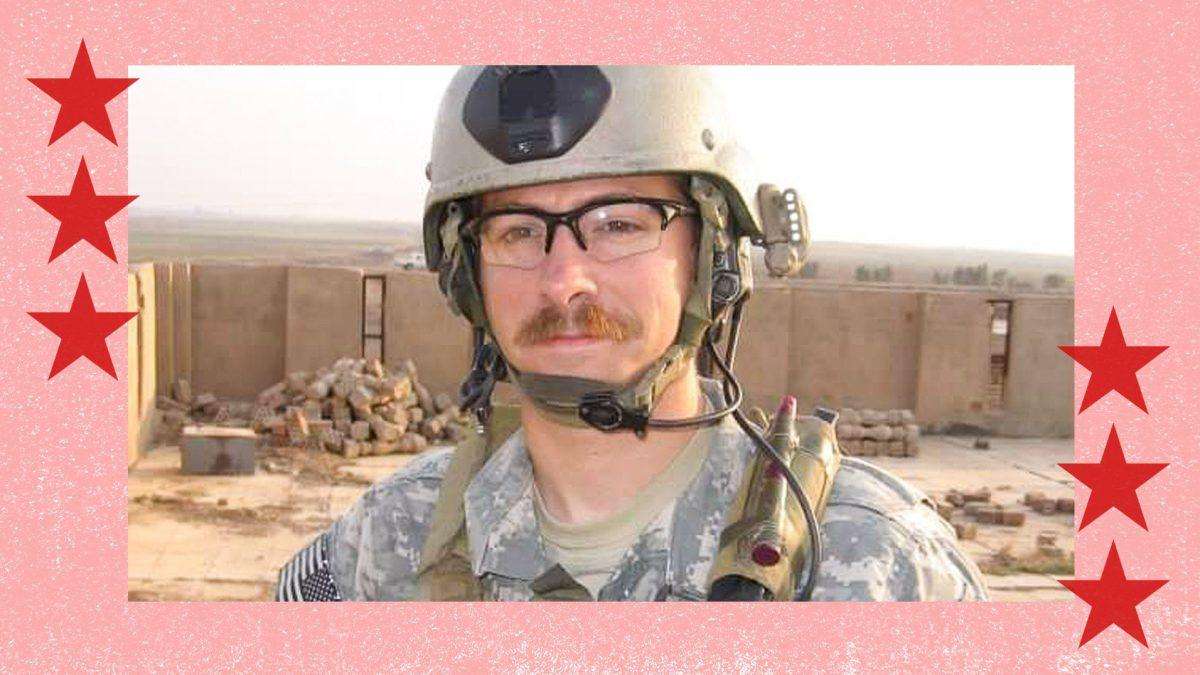
Nelson in his official army portrait from 2018; and in Balkh province of Afghanistan as a major in 2014
The President has said the last several conflicts to which our European partners contributed their forces – including Afghanistan, Iraq, and Syria – were “stupid wars” or “terrible mistake[s]”. He belittled those contributions as “a little off the front lines”, despite the fact that Danes bled and died at proportionally the same rate in Afghanistan as Americans and hundreds of British servicemembers gave their lives in Iraq and Afghanistan. No wonder British, French or Danish voters are less willing to send their sons and daughters to the next US-led war when our leadership says participation in the last ones for which we requested help was stupid and mocks the sacrifices made.
Trump has suggested that the US would not fulfill our own treaty obligations if certain European countries were attacked by Russia and has even indicated that we would engage in territorial conquest against Nato allies. “War Secretary” Pete Hegseth has informed Nato that America is conducting a six-month review of our commitment to European security – after having announced withdrawals from Germany and Poland, diminished levels of US forces committed in the event of a European crisis and downgraded the power of several Europe-focused headquarters, including firing the commander overseeing US army operations in Europe and reportedly reducing the rank required for the next commander from a four-star to a three-star.
Hegseth and others in the administration talk of the transatlantic alliance as a one-way street, and harangue partners for coasting off American spending. While it is true Nato members need to do more for themselves and the collective defence, to meet growing threats to global stability and overcome years of spending below required thresholds, the recent improvement has been real – with Poland spending 4.48 per cent of its GDP on defence in 2025 (up from 1.9 per cent in 2019) and almost all countries meeting spending requirements. While there is still progress to be made, it augurs well for meeting the 2035 pledged goal of 5 per cent defence spending among member states (the US currently ranks seventh in defence spending as a percentage of GDP – one place behind Denmark, the Trump administration’s regular target). Despite Trump’s claims, Europe has led the way in support to Ukraine and is currently financing all lethal aid in the fight against Russian aggression.
Europe does need to do more to prepare and provide for its own defence, and countries are meeting the moment and increasing the size and capabilities of their militaries. The US cannot take these countries for granted. The leadership position we have held in previous conflicts, operations and defensive positioning is one we have enjoyed through mutual respect, not one demanded through coercion.
I deployed 11 times during my service in the US army, from my initial deployment as part of the Nato peacekeeping mission to Kosovo, to directing a trilateral US/UK/Australian targeting cell in Baghdad, to serving in the multinational interagency headquarters planning and overseeing operations in Syria to defeat Isis. I witnessed the commitment and strong ties between America and allied militaries. I was the primary planner tasked with integrating coalition partners into Operation Inherent Resolve’s special operations campaign, and saw far more willingness and enthusiasm from our allies to contribute than there were available missions.
Despite this, Trump, Hegseth and their cronies appear to view the alliance as a “one-way street” wherein sovereign countries must contribute to wars without question, or allow their territory as forward bases for wars in which they do not wish to participate. All with no guarantees that America will provide support in their hour of need.
The storm clouds growing around the world are too dark and numerous to desert the framework that prevented communist domination during the Cold War and preserved the international order since it ended. America cannot do it alone – we need European partners to continue to expand their armed forces, shouldering a greater share of the collective defence of the free world. We must therefore maintain, nurture and repair our historical alliances. Bonds built over decades can be dashed in the blink of an eye through vitriol, resentment and mistrust.
If the ties connecting the powers that preserve the liberal world order are torn, the beneficiaries will be neither the US nor Europe, but aggressors and oppressors who will seek advantage in the decline and receding reach of the guarantors of liberty.
In addition to my 23 years of service, I am also the product of the strong transatlantic alliance, having grown up in Europe in the shadow of the Iron Curtain as my father, also an army veteran, worked in a joint American-German organisation.
I know firsthand the value of our allies, and the gathering threats that wait to exploit a rift between us.
uptighttyrone_4195 on July 7th, 2026 at 09:36 UTC »
Notice how the piece points out the US ranks 7th in defense spending as a share of GDP, one slot behind Denmark of all places. The administration keeps hammering Europe for not pulling its weight while we sit behind a country of like 6 million people on that metric. That framing alone should make the freeloader argument tougher to sell.
The Norway desert camo detail hit me too. Imagine a Nordic country redesigning its entire military uniform pattern just to blend in on coalition ops in the Middle East. That's not casual participation, that's deep integration, the kind of commitment you can't fake or buy.
The Danes bleeding at the same proportional rate as Americans in Afghanistan gets buried a lot in these conversations. When you frame it that way, the "little off the front lines" line reads even more insulting. Tribal politics aside, alienating people who showed up like that seems like a bad trade.
Wonder what the actual contingency planning looks like if Russia tests Article 5 and half the alliance decides to sit this one out.
lelekeaap on July 7th, 2026 at 09:03 UTC »
Thank you for this post, and it is a relief to hear that knowledgeable people appreciate the North Atlantic bond. I sincerely hope that this bond will get stronger again, which will probably only happen unfortunately when the the majority of the people of the USA finds out who their real friends are.
theipaper on July 7th, 2026 at 08:44 UTC »
In 2011, I was sitting in a conference in Kabul, representing my special operations task force as we planned the next phases of the war in Afghanistan.
The surge President Barack Obama had ordered in 2009 had brought the number of US troops deployed to a high-water mark of more than 100,000, with a built-in expiration that would drop the level to 65,000 by the end of 2012.
A Norwegian colonel took his turn to brief the coalition commander, and I reflected on the unique pattern of desert camouflage worn by soldiers from a country known for fjords and glaciers.
Norway had created a camouflage pattern to participate in American-led wars – the alliance system visible in the desert uniform of a country without deserts. Our allies had designed, equipped and configured their militaries not solely for their individual defence, but as part of a coalition to deter aggression and project power, all under the umbrella of American leadership.
The countries represented at the coalition headquarters extended beyond the Nato alliance, including Australia, New Zealand, Jordan, South Korea and others – there in part as good allies, answering America’s call. It was also in their interests to deal with the scourge of transnational terror, just as many would unite a few years later to deal with an al-Qaeda offshoot when they conducted attacks in France, the UK and Belgium. For some, allegiance was an act of justice against terrorists who had planned attacks from Afghanistan – September 11 not only represented the largest number of American deaths due to a terror attack, but also British.
The United States, despite being resistant to alliances early in our history, has grown accustomed to coalition warfare. From world wars to counterterrorism campaigns to peacekeeping efforts, America has largely operated in conjunction with partners and, with the notable exception of the First World War, generally with our allies agreeing to American leadership. But these partnerships are starting to fray, most recently evidenced by an absence of European nations in the war with Iran and Donald Trump’s petulant anger over it – anger that has added to a growing sense of frustration and resentment among many of my friends in various European militaries.
The President seems furious at the fact that countries did not sign up to fight in a war about which they were not consulted in advance, with undefined goals and an unclear, shifting plan. His anger lingers today, evident in his personal feud with Italian Prime Minister Giorgia Meloni, who he had previously counted as one of his closest supporters in Europe. His frustration that countries can make individual choices, rather than respond slavishly to his beck and call, seems exacerbated by his conflation of Nato, the EU and the countries that make them up. The Trump administration appears to view our European allies not as partners, but as client states from whom to extract contributions or satrapies from whom to demand loyalty.
If the Trump administration were more aware, it might start worrying about whether Europe will show up the next time we need a coalition. It’s hard to imagine a worse approach to enlisting allies than the one the US took in the war with Iran – providing no forewarning, creating economic chaos and then threatening and reprimanding nations for not marshalling resources to solve the problem of our making. Even before this most recent conflict, the seeds of European reluctance were planted by Washington.
The President has said the last several conflicts to which our European partners contributed their forces – including Afghanistan, Iraq, and Syria – were “stupid wars” or “terrible mistake[s]”. He belittled those contributions as “a little off the front lines”, despite the fact that Danes bled and died at proportionally the same rate in Afghanistan as Americans and hundreds of British servicemembers gave their lives in Iraq and Afghanistan. No wonder British, French or Danish voters are less willing to send their sons and daughters to the next US-led war when our leadership says participation in the last ones for which we requested help was stupid and mocks the sacrifices made.
Trump has suggested that the US would not fulfill our own treaty obligations if certain European countries were attacked by Russia and has even indicated that we would engage in territorial conquest against Nato allies. “War Secretary” Pete Hegseth has informed Nato that America is conducting a six-month review of our commitment to European security – after having announced withdrawals from Germany and Poland, diminished levels of US forces committed in the event of a European crisis and downgraded the power of several Europe-focused headquarters, including firing the commander overseeing US army operations in Europe and reportedly reducing the rank required for the next commander from a four-star to a three-star.
Hegseth and others in the administration talk of the transatlantic alliance as a one-way street, and harangue partners for coasting off American spending. While it is true Nato members need to do more for themselves and the collective defence, to meet growing threats to global stability and overcome years of spending below required thresholds, the recent improvement has been real – with Poland spending 4.48 per cent of its GDP on defence in 2025 (up from 1.9 per cent in 2019) and almost all countries meeting spending requirements. While there is still progress to be made, it augurs well for meeting the 2035 pledged goal of 5 per cent defence spending among member states (the US currently ranks seventh in defence spending as a percentage of GDP – one place behind Denmark, the Trump administration’s regular target). Despite Trump’s claims, Europe has led the way in support to Ukraine and is currently financing all lethal aid in the fight against Russian aggression.
Europe does need to do more to prepare and provide for its own defence, and countries are meeting the moment and increasing the size and capabilities of their militaries. The US cannot take these countries for granted. The leadership position we have held in previous conflicts, operations and defensive positioning is one we have enjoyed through mutual respect, not one demanded through coercion.
I deployed 11 times during my service in the US army, from my initial deployment as part of the Nato peacekeeping mission to Kosovo, to directing a trilateral US/UK/Australian targeting cell in Baghdad, to serving in the multinational interagency headquarters planning and overseeing operations in Syria to defeat Isis. I witnessed the commitment and strong ties between America and allied militaries. I was the primary planner tasked with integrating coalition partners into Operation Inherent Resolve’s special operations campaign, and saw far more willingness and enthusiasm from our allies to contribute than there were available missions.
Despite this, Trump, Hegseth and their cronies appear to view the alliance as a “one-way street” wherein sovereign countries must contribute to wars without question, or allow their territory as forward bases for wars in which they do not wish to participate. All with no guarantees that America will provide support in their hour of need.
The storm clouds growing around the world are too dark and numerous to desert the framework that prevented communist domination during the Cold War and preserved the international order since it ended. America cannot do it alone – we need European partners to continue to expand their armed forces, shouldering a greater share of the collective defence of the free world. We must therefore maintain, nurture and repair our historical alliances. Bonds built over decades can be dashed in the blink of an eye through vitriol, resentment and mistrust.
If the ties connecting the powers that preserve the liberal world order are torn, the beneficiaries will be neither the US nor Europe, but aggressors and oppressors who will seek advantage in the decline and receding reach of the guarantors of liberty.
In addition to my 23 years of service, I am also the product of the strong transatlantic alliance, having grown up in Europe in the shadow of the Iron Curtain as my father, also an army veteran, worked in a joint American-German organisation.
I know firsthand the value of our allies, and the gathering threats that wait to exploit a rift between us.