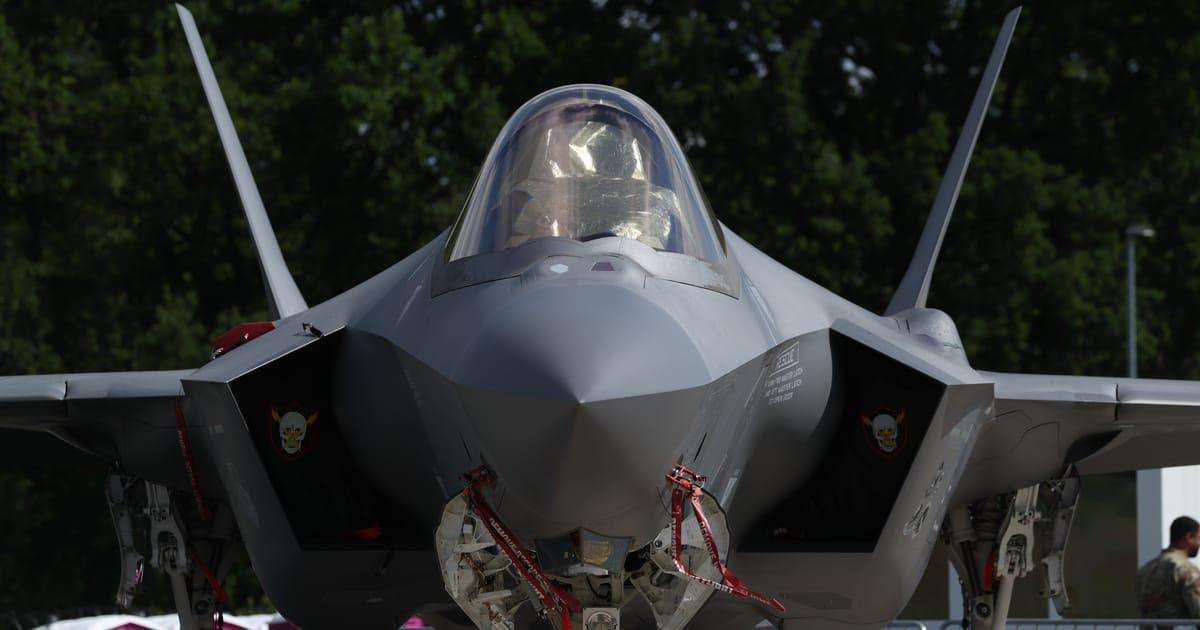
The Pentagon claims these steps are necessary to rebalance European and U.S. contributions to the continent’s defense, but the decision to halt the Tomahawk sale points to a far more disquieting reality: Not only is Washington no longer deploying deep precision strike systems to Europe, it’s also denying its European allies the capacity to arm themselves with these systems out of fear of Russia’s reaction.
In other words, the U.S. is now actively looking to decouple its security from Europe’s.
This isn’t the first time decoupling has become an issue in transatlantic relations. Concerns over such decoupling first surfaced in the late 1950s, when the Soviet Union developed the capability to target the U.S. landmass directly and, again, in the mid-1970s, after the Soviet deployment of SS-20 nuclear ballistic missiles that could reach all of Europe — but not the U.S.
After then-German Chancellor Helmut Schmidt called for a NATO response to this, alliance countries agreed in 1979 to deploy long-range nuclear missiles that could reach the Soviet Union while offering to negotiate limits on this type of missile. By 1987, NATO had deployed hundreds of nuclear missiles, leading Washington and Moscow to agree on a ban of all intermediate-range nuclear forces with ranges between 500 and 5,000 kilometers — including the Soviet SS-20s and NATO’s ground-launched cruise and Pershing II missiles.
After then-German Chancellor Helmut Schmidt called for a NATO response to this, alliance countries agreed in 1979 to deploy long-range nuclear missiles that could reach the Soviet Union while offering to negotiate limits on this type of missile. | Keystone/Getty Images
The Intermediate-Range Nuclear Forces Treaty, signed that year, remained in effect for more than 30 years — that is until 2019, when U.S. President Donald Trump’s first administration decided to withdraw from the agreement due to Russia’s clear violations of its terms. And NATO nations have been discussing the need to deploy long-range missiles capable of reaching targets in Russia ever since.
The Tomahawk deployment and sale to Berlin looked to close that gap until Germany and other NATO countries could develop and deploy their own long-range missile systems. European missile development efforts are ongoing, but their expected deployment is still many years away. Now, Washington’s decision to halt the sale effectively reopens a major gap in NATO’s deterrence strategy.
trustworthy_width on June 13rd, 2026 at 15:10 UTC »
Pentagon seems more worried about appeasing Moscow than actually deterring it, which is the whole point.
pinewind108 on June 13rd, 2026 at 15:01 UTC »
In this case, I suspect the tomahawk issue is because the US is running out of them. Apparently they used most of their long range munitions against Iran, but the replacements are much slower to be built.
Any-Original-6113 on June 13rd, 2026 at 12:36 UTC »
When news broke that the Pentagon wouldn’t sell long-range Tomahawk missiles to Germany, it suggested Washington might fear Moscow would view such a capability in Europe’s hands as dangerous escalation. The move came on the heels of similar signs of U.S. disengagement that had been going on for weeks, including the decision to withdraw 5,000 troops from Germany, halt the planned deployment of a U.S. battalion equipped with Tomahawk missiles, and make severe reductions in planned U.S. contributions of bombers, fighters, destroyers, submarines and other forces needed to bolster NATO defenses in a crisis or attack.
The Pentagon claims these steps are necessary to rebalance European and U.S. contributions to the continent’s defense, but the decision to halt the Tomahawk sale points to a far more disquieting reality: Not only is Washington no longer deploying deep precision strike systems to Europe, it’s also denying its European allies the capacity to arm themselves with these systems out of fear of Russia’s reaction. In other words, the U.S. is now actively looking to decouple its security from Europe’s. This isn’t the first time decoupling has become an issue in transatlantic relations. Concerns over such decoupling first surfaced in the late 1950s, when the Soviet Union developed the capability to target the U.S. landmass directly and, again, in the mid-1970s, after the Soviet deployment of SS-20 nuclear ballistic missiles that could reach all of Europe — but not the U.S.
After then-German Chancellor Helmut Schmidt called for a NATO response to this, alliance countries agreed in 1979 to deploy long-range nuclear missiles that could reach the Soviet Union while offering to negotiate limits on this type of missile. By 1987, NATO had deployed hundreds of nuclear missiles, leading Washington and Moscow to agree on a ban of all intermediate-range nuclear forces with ranges between 500 and 5,000 kilometers — including the Soviet SS-20s and NATO’s ground-launched cruise and Pershing II missiles.
The Intermediate-Range Nuclear Forces Treaty, signed that year, remained in effect for more than 30 years — that is until 2019, when U.S. President Donald Trump’s first administration decided to withdraw from the agreement due to Russia’s clear violations of its terms. And NATO nations have been discussing the need to deploy long-range missiles capable of reaching targets in Russia ever since. The Tomahawk deployment and sale to Berlin looked to close that gap until Germany and other NATO countries could develop and deploy their own long-range missile systems. European missile development efforts are ongoing, but their expected deployment is still many years away. Now, Washington’s decision to halt the sale effectively reopens a major gap in NATO’s deterrence strategy.
Moreover, though the fear of decoupling runs deep through NATO’s history, there is a major difference between the decoupling concerns expressed by Schmidt in the 1970s and those experienced today. Back then, decoupling was the result of Soviet actions, whereas today it’s the result of U.S. actions. Indeed, the Pentagon appears more influenced by Russia’s anxieties than NATO’s deterrence requirements. Fifty years ago, Europe feared U.S. disengagement. Today, as Washington shifts its attention and capabilities to other theaters, disengagement is explicit U.S. policy. And while ending what NATO’s Supreme Allied Commander in Europe Alexus G. Grynkewich called an “ unhealthy co-dependence” on U.S. capabilities may be appropriate, denying European allies the ability to defend themselves is an entirely different matter.
The timing of these U.S. decisions is especially ironic, following weeks of complaints by the Trump administration that NATO hasn’t done enough to support the U.S. and Israel’s war against Iran. NATO has become “a one-way street where America is simply in a position to defend Europe,” but allies won’t reciprocate, maintained U.S. Secretary of State Marco Rubio. Yet, when Europe steps up to defend itself — even asking to buy American equipment to do so — the answer is suddenly, “no.” That negative response isn’t just a temporary problem either. It goes to the very core of what makes a security alliance work. Classic alliance theory distinguishes between two fears: abandonment, when an ally won’t come to your defense; and entrapment, when an ally drags you into war. Trump and his aides have long complained about European abandonment. Europeans now fear U.S. abandonment. Both are right — and both are responding by decoupling further.
As the U.S. pulls back, Europe is increasing defense spending and building a variety of long-range strike capabilities — some with dual conventional and nuclear capabilities. These are sovereign systems. The U.S. will have no say on when or how they would be used. As a result, Washington will have an even greater incentive to try and decouple itself from Europe and avoid getting entangled in a war with Russia. Decoupling does not mean Europe will be undefended. It means European and American security are no longer seen as intertwined. Washington may no longer automatically regard a crisis that threatens Warsaw or Tallinn as a threat to U.S. security. And that means the end of the integrated deterrence system that has kept the peace for the last 80 years. Schmidt understood that security is indivisible in Europe. Trump is betting it isn’t. We’re about to find out who was right.