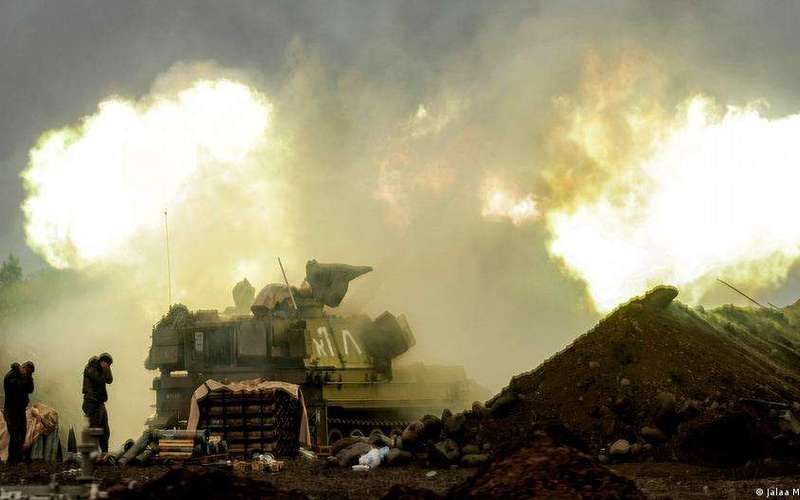
The drone strike, if genuine, would mark propaganda victory for Hezbollah and reveal a significant vulnerability in Israel's military capabilities.
Since March, Hezbollah has increasingly used FPV (first-person view) drones to attack Israel, which provide pilots with a real-time image of their targets.
What concerns Israeli military experts is that growing numbers of these drones are not controlled by radio signals but via fiber-optic cables, unspooled from a coil.
Since 2024, Ukraine and Russia have used fiber-optic drones on a massive scale in their war.
In view of these battlefield developments, many observers are surprised that Israel's military does not appear to be better prepared against drones.
Zin's startup is already working on solutions to fend off fiber-optic drones, which focus on vehicle-mounted systems primarily intended to protect smaller units.
"They used to shoot a kind of a missile that cost $8 million against the Shahed drones.". »

![image for [OC] I gladly welcome a false prosecution for defending the right of free speech.](23bf97ad-069a-5a41-b53f-8b0ece70bf6f_thumb.jpg)
![image for [OC] He did that at the gas pump](7fdd0972-4e08-5e0e-9c72-91499d345599_thumb.jpg)

![image for [OC] A picture I did using charcoal and pastels. Inspired by Watership Down.](90e875a0-a160-52f8-9760-ad75285a0c5c_thumb.jpg)
![image for [OC] I painted a hammerheaddd](b577ecfc-e491-55ba-93ba-6037a02d86f9_thumb.jpg)

![image for [OC] Lightly cleaned my smoker](74f90b45-02c9-52ad-90bb-cfcef2dfa3ec_thumb.jpg)