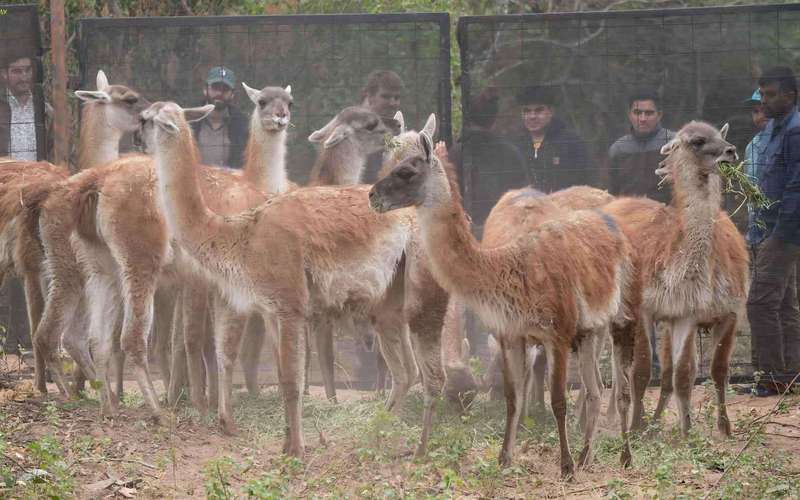
The guanaco is a large wild camelid, meaning it is related to llamas and alpacas.
In the Dry Chaco, it used to live in open grasslands dotted with small patches of forest and savanna-like areas, long before fences and highways carved up the region.
A Qom community informant, Montiel Romero, remembered that “había nawananga por todo el Chaco,” using a traditional name for the animal.
Moving wild mammals for conservation is called a “translocation,” which is basically a carefully planned relocation with a purpose.
Conservation teams released guanacos into El Impenetrable National Park as part of a long-term ecosystem recovery plan in Argentina.
At first glance, a guanaco looks like it just eats and walks, but that daily routine can reshape a whole landscape.
For nearby communities, the project is also tied to nature tourism, since a larger and more visible animal can attract wildlife watching. »






![image for [OC] Packing for a 2 day trip. Me vs my wife.](9bd2ffce-e2b2-578e-aed5-9f266d9ca90f_thumb.jpg)

![image for [OC] The cost of cola in 2026](15ef8eaf-da66-5280-9f01-224a39303d5e_thumb.jpg)