close Cancel email WhatsApp link share Share bookmark Save
When Russian mercenaries from the infamous Wagner group arrived in Mali five years ago, it was meant to be an example of Moscow’s new role in Africa, a quick and successful projection of military power.
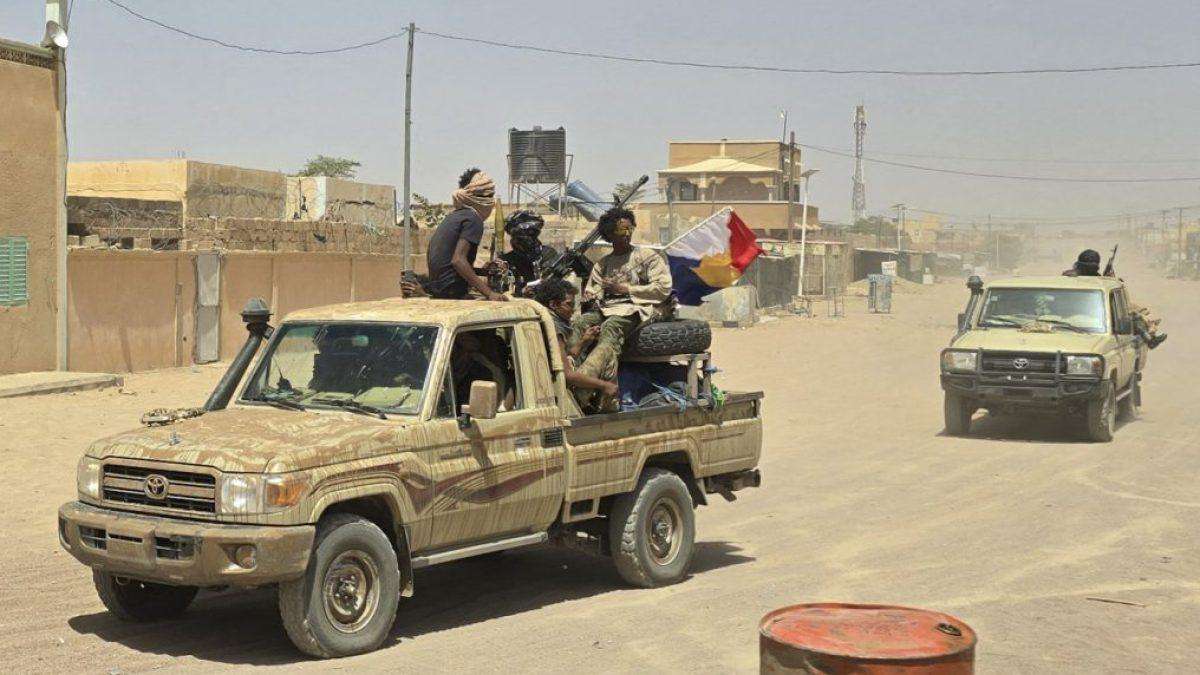
This weekend’s rebel attacks, which saw the death of Mali’s defence minister, Sadio Camara, and Russian troops withdrawing from the contested town of Kidal, have not only highlighted the limits of Moscow’s reach but have also led to open disagreements within the Russian government itself.
Since 2021, some 2,000 Russian mercenaries have been propping up the military junta – led by Assimi Goïta – in this landlocked part of West Africa, against both the Jama’at Nusrat ul-Islam wal-Muslimin (Jnim), insurgents associated with al-Qaeda, and the Azawad Liberation Front (FLA), separatists from the minority Tuareg community in the north of the country.
In recent days, though, the two groups have launched a co-ordinated series of attacks, ranging from the suicide bombing that killed Camara to the drone-supported ground operation that retook Kidal. Taking Kidal had been a symbolic victory for the Russians three years ago.
While it’s unlikely that the Jnim-FLA alliance will seize power, or even avoid breaking apart, there are now serious questions about whether Goïta’s regime can survive.
The Russians there are part of the Africa Corps, the organisation established to take over Wagner’s operations on the continent following its brief and unsuccessful mutiny in Russia in 2023.
Whereas Wagner was very much the creation of Yevgeny Prigozhin, who died in what seems like a Kremlin assassination shortly after the failed mutiny, the Africa Corps is closely controlled by the GRU, Russia’s military intelligence.
Yevgeny Prigozhin, the founder of Russian private security company Wagner, died in what seems like a Kremlin-orchestrated assassination (Photo: Wagner Account/Anadolu Agency via Getty)
In part because the GRU lacks Prigozhin’s ruthless flair for making deals with corrupt local regimes, and in part because Moscow is too distracted by the war in Ukraine, the Africa Corps has been struggling to repeat Wagner’s earlier successes.
In 2023, a small team of military trainers deployed to Niger, where the Russians have begun using an air base, but more broadly there has been a general retrenchment in Africa. Negotiations with the Sudanese government over establishing a naval base on the Red Sea are on hold.
Abandoned dreams of being a global power
In many ways, this is part of a wider process.
Despite an outcry in both Kenya and South Africa over locals being recruited to fight in Ukraine on false pretences, Moscow is still surprisingly effective at finding willing African trade partners, attracted by cheap oil and fertilisers. The closure of the Strait of Hormuz and subsequent spike in global prices has only strengthened Moscow’s hand. It has also been able to mobilise anti-Western sentiments to win a degree of indulgence for its Ukrainian war.
However, it is having to abandon dreams of being a truly global power. Its Latin American allies, Venezuela and Cuba, have been under pressure to come to terms with a United States that is more willing to throw its weight around. Venezuela’s new president seems far more amenable than Nicolás Maduro, her predecessor who is languishing in American custody following a smash-and-grab US raid on Caracas in January.
Meanwhile, the new government in Syria is talking about making the two Russian bases still there into joint Russian-Syrian training centres, and closer to home, bases in Armenia and Tajikistan are being run down, as equipment and personnel are raided to help fuel the Ukraine war. Russia’s force maintained in Transnistria, a separatist region of Moldova, is now cut off, shrinking, and may not remain there for long.
This was perhaps inevitable. Vladimir Putin has made it clear that the Ukraine war is his absolute priority, and men and military gear has been transferred from elsewhere to the front. Besides, much of Moscow’s success in Africa was really down to Western withdrawals. In Mali, Wagner filled a vacuum left when France withdrew a contingent fighting the Jnim.
Even so, it is a bitter pill for Moscow to swallow, and tensions are rising as everyone tries to avoid responsibility for these embarrassing reversals.
Malian leader Assimi Goita and Russian President Vladimir Putin in Moscow. The Wagner group filled a vacuum left when France withdrew a contingent fighting the Jnim (Photo: Contributor/Getty)
The Africa Corps itself blamed “Ukrainian and European mercenaries” for their latest setbacks, while Russian war correspondent Yevgeny Poddubny claimed that “the Western media have provided serious and coordinated information support to the terrorist groups”.
Behind the scenes, though, the GRU has expressed fury with the Russian foreign ministry for – as it sees it – downplaying its successes and publicising this defeat. Meanwhile, some generals are questioning whether the forces committed to Africa would be better used closer to home. Uncertain what line to take, Russian state media has conspicuously avoided coverage of the story.
None of this has a direct impact on Putin’s iron grip on the country, but it highlights growing tensions within the Russian elite. Africa, in itself, matters to very few of them, but it is part of a sense of growing pressures and accumulated small reversals.
Four years into Russia’s war with Ukraine, the struggles of the Africa Corps is further adding to the atmosphere of dejection and recrimination.
Esekig184 on April 29th, 2026 at 13:33 UTC »
The cherry on top: The besieged russians struck a deal with the jihadists so they would be allowed to leave. But they had leave behind a lot of equipment AND their malian army allies.
Tall_Pressure7042 on April 29th, 2026 at 11:10 UTC »
The Tsar thinks he is winning the war. But Ukraine has not been conquered speaks volume.
theipaper on April 29th, 2026 at 08:15 UTC »
Full article: When Russian mercenaries from the infamous Wagner group arrived in Mali five years ago, it was meant to be an example of Moscow’s new role in Africa, a quick and successful projection of military power.
This weekend’s rebel attacks, which saw the death of Mali’s defence minister, Sadio Camara, and Russian troops withdrawing from the contested town of Kidal, have not only highlighted the limits of Moscow’s reach but have also led to open disagreements within the Russian government itself.
Since 2021, some 2,000 Russian mercenaries have been propping up the military junta – led by Assimi Goïta – in this landlocked part of West Africa, against both the Jama’at Nusrat ul-Islam wal-Muslimin (Jnim), insurgents associated with al-Qaeda, and the Azawad Liberation Front (FLA), separatists from the minority Tuareg community in the north of the country.
In recent days, though, the two groups have launched a co-ordinated series of attacks, ranging from the suicide bombing that killed Camara to the drone-supported ground operation that retook Kidal. Taking Kidal had been a symbolic victory for the Russians three years ago.
While it’s unlikely that the Jnim-FLA alliance will seize power, or even avoid breaking apart, there are now serious questions about whether Goïta’s regime can survive.
The Russians there are part of the Africa Corps, the organisation established to take over Wagner’s operations on the continent following its brief and unsuccessful mutiny in Russia in 2023.
Whereas Wagner was very much the creation of Yevgeny Prigozhin, who died in what seems like a Kremlin assassination shortly after the failed mutiny, the Africa Corps is closely controlled by the GRU, Russia’s military intelligence.
In part because the GRU lacks Prigozhin’s ruthless flair for making deals with corrupt local regimes, and in part because Moscow is too distracted by the war in Ukraine, the Africa Corps has been struggling to repeat Wagner’s earlier successes.
In 2023, a small team of military trainers deployed to Niger, where the Russians have begun using an air base, but more broadly there has been a general retrenchment in Africa. Negotiations with the Sudanese government over establishing a naval base on the Black Sea are on hold.
Abandoned dreams of being a global powerIn many ways, this is part of a wider process.
Despite an outcry in both Kenya and South Africa over locals being recruited to fight in Ukraine on false pretences, Moscow is still surprisingly effective at finding willing African trade partners, attracted by cheap oil and fertilisers. The closure of the Strait of Hormuz and subsequent spike in global prices has only strengthened Moscow’s hand. It has also been able to mobilise anti-Western sentiments to win a degree of indulgence for its Ukrainian war.
However, it is having to abandon dreams of being a truly global power. Its Latin American allies, Venezuela and Cuba, have been under pressure to come to terms with a United States that is more willing to throw its weight around. Venezuela’s new president seems far more amenable than Nicolás Maduro, her predecessor who is languishing in American custody following a smash-and-grab US raid on Caracas in January.
Meanwhile, the new government in Syria is talking about making the two Russian bases still there into joint Russian-Syrian training centres, and closer to home, bases in Armenia and Tajikistan are being run down, as equipment and personnel are raided to help fuel the Ukraine war. Russia’s force maintained in Transnistria, a separatist region of Moldova, is now cut off, shrinking, and may not remain there for long.
This was perhaps inevitable. Vladimir Putin has made it clear that the Ukraine war is his absolute priority, and men and military gear has been transferred from elsewhere to the front. Besides, much of Moscow’s success in Africa was really down to Western withdrawals. In Mali, Wagner filled a vacuum left when France withdrew a contingent fighting the Jnim.
Even so, it is a bitter pill for Moscow to swallow, and tensions are rising as everyone tries to avoid responsibility for these embarrassing reversals.
The Africa Corps itself blamed “Ukrainian and European mercenaries” for their latest setbacks, while Russian war correspondent Yevgeny Poddubny claimed that “the Western media have provided serious and coordinated information support to the terrorist groups”.
Behind the scenes, though, the GRU has expressed fury with the Russian foreign ministry for – as it sees it – downplaying its successes and publicising this defeat. Meanwhile, some generals are questioning whether the forces committed to Africa would be better used closer to home. Uncertain what line to take, Russian state media has conspicuously avoided coverage of the story.
None of this has a direct impact on Putin’s iron grip on the country, but it highlights growing tensions within the Russian elite. Africa, in itself, matters to very few of them, but it is part of a sense of growing pressures and accumulated small reversals.
Four years into Russia’s war with Ukraine, the struggles of the Africa Corps is further adding to the atmosphere of dejection and recrimination.