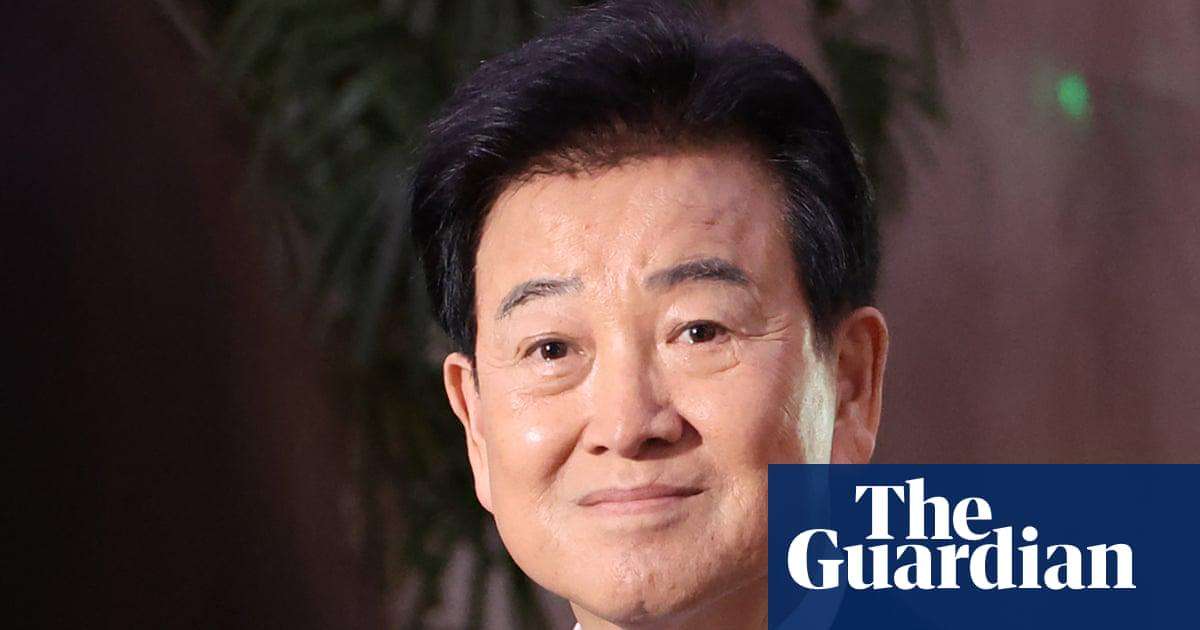
The US has partly restricted intelligence sharing with South Korea after the country’s unification minister publicly identified a suspected North Korean nuclear site, according to reports in South Korean media.
Chung Dong-young told lawmakers in March that North Korea was operating uranium enrichment facilities in Kusong, a north-western area that had not previously been officially confirmed as a nuclear site alongside the known facilities at Yongbyon and Kangson.
A senior military official told the state-funded Yonhap news agency on Tuesday that Washington had imposed partial restrictions on sharing satellite-gathered intelligence about North Korean technology since early this month, though surveillance of missile activity continued normally and military readiness remained unaffected.
The restrictions followed what South Korean outlets described as multiple protests from US officials, who expressed concern that sensitive information had been disclosed without authorisation.
No US agency has confirmed the restrictions on record. The Guardian contacted the US embassy in Seoul for comment.
Get in touch Contact us about this story The best public interest journalism relies on first-hand accounts from people in the know. If you have something to share on this subject, you can contact us confidentially using the following methods: Secure Messaging in the Guardian app The Guardian app has a tool to send tips about stories. Messages are end to end encrypted and concealed within the routine activity that every Guardian mobile app performs. This prevents an observer from knowing that you are communicating with us at all, let alone what is being said. If you don’t already have the Guardian app, download it (iOS/Android) and go to the menu. Select ‘Secure Messaging’. SecureDrop If you can safely use the tor network without being observed or monitored you can send messages and documents to the Guardian via our SecureDrop platform. Our guide at theguardian.com/tips lists several ways to contact us securely, and discusses the pros and cons of each. Show more
Chung has defended his remarks, saying they were based on publicly available research rather than classified intelligence.
He told reporters on Monday it was “deeply regrettable” that his policy explanation had been characterised as an information leak. “This is open information,” Chung said, citing a 2016 report by a US thinktank and South Korean media coverage.
He noted he had mentioned Kusong during his confirmation hearing last year without incident. Writing on Facebook, he said he was “bewildered” the issue had suddenly become a problem nine months later.
President Lee Jae Myung, whose administration is pursuing a conciliatory approach towards North Korea, backed his minister. Writing on X, Lee said it was a “clear fact” that Kusong’s existence had been widely reported in academic papers and media before Chung’s remarks.
“Any claims or actions premised on the assumption that minister Chung leaked classified information provided by the United States are wrong,” Lee wrote from Delhi during a state visit to India. “I must look closely into why such an absurd situation is unfolding.”
The restrictions come amid broader tensions in the alliance, according to South Korean media reports.
The progressive newspaper Hankyoreh reported that Washington had cited several grievances when notifying Seoul of the measures, including pending legislation that would grant Seoul authority over access to the demilitarised zone, an area currently managed exclusively by the US-led UN command.
Conservative opposition politicians have called for Chung’s dismissal, describing his remarks as damaging to the alliance with Washington. In a statement, the People Power party called it a “clear security disaster”.
The unification ministry maintains it had sufficiently explained the basis for Chung’s remarks to the US and that no classified information was involved.
South Korea’s defence ministry declined to specify details about intelligence sharing arrangements but said close cooperation with the US continued.
The 2016 report Chung later cited in his defence, by the Institute for Science and International Security, identified a suspected early centrifuge research facility near Panghyon airbase in the Kusong area but described it as a “preliminary site identification” requiring further confirmation.
North Korea is believed to have significantly expanded its nuclear programme in recent years.
Rafael Grossi, the head of the International Atomic Energy Agency, said during a visit to Seoul last week that the agency had confirmed “a rapid increase in the operations” of the Yongbyon reactor.
“All that points to a very serious increase in the capabilities of the DPRK in the area of nuclear weapons production, which is estimated at a few dozen warheads,” Grossi told reporters.
FaustTriumphant on April 22nd, 2026 at 23:22 UTC »
This is surprising, because South Korea has a progressive government right now which has historically been more accommodating towards North Korea (and more willing to downplay the nuclear threat) for the sake of peace-making with NK.
(SK's progressive former presidents Kim Dae Jung and Roh Moo Hyun actually accused the US of fabricating NK's nukes in order to sell a war in the early 2000s. When NK themselves admitted they had nukes, those former presidents scaled back their accusations to state that the US was just "overreacting.")
The fact that SK's progressive Unification Ministry (which is tasked with outreach and "peace-making" with NK) is raising the alarms about a North Korean nuclear site shows that SK's progressives are starting to move closer to the center and are becoming less tolerant/accommodating towards threats from NK.
And the fact that the US PUNISHED SK by restricting intelligence after (despite historically wanting SK's progressives to "get real"/"get tough" with NK for decades) suggests that the current US administration (we all know who I'm talking about) might want to start sending "beautiful love letters" again and pursue a unilateral peace agreement with NK; one that undercuts SK (which the current administration perceives as a "defense burden" and "trade competitor" than an actual ally).
suddenstutter on April 22nd, 2026 at 23:16 UTC »
Not true btw, i think trump is just finding more ways to lose more allies on purpose to help russia.
BoringRedHorse on April 22nd, 2026 at 22:23 UTC »
Trump: "Iran will never have a nuke!" Meanwhile everyone else is now making sure to all have nukes...