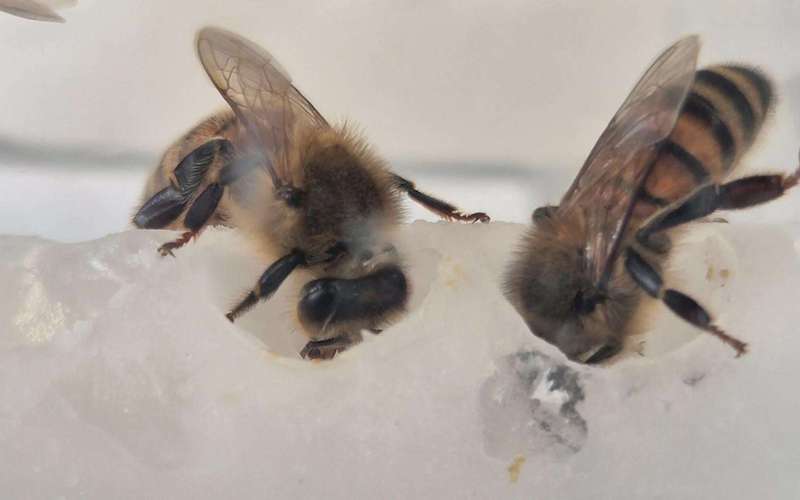
Working with Royal Botanic Gardens Kew, the University of Greenwich, and the Technical University of Denmark, the scientists engineered a diet that mimics the key nutrients bees normally get from pollen.
But climate change and intensive farming have reduced the variety of flowers bees depend on.
As a result, bees are increasingly missing key nutrients.
These provide calories but lack the sterols bees need, leaving colonies nutritionally deficient.
Even more striking, the nutrient profile of larvae matched that of bees feeding naturally, suggesting the supplement closely replicates real pollen nutrition.
To figure out what bees actually need, researchers analyzed tissues from pupae and adult bees.
The same technology could also be adapted to support other pollinators or farmed insects, opening new paths for sustainable agriculture. »




![image for [OC] 1984 is now. Evil Company & Evil Administration](823606e5-7b9f-58b5-8391-24b1186d87a8_thumb.jpg)
![image for [OC] Ready for No Kings](78e8d836-26cc-523d-b7b8-d5d1341d2b63_thumb.jpg)

![image for In the pocket of a donated suit [OC]](a93cefae-837c-5c8a-9819-75f94beb02b9_thumb.jpg)