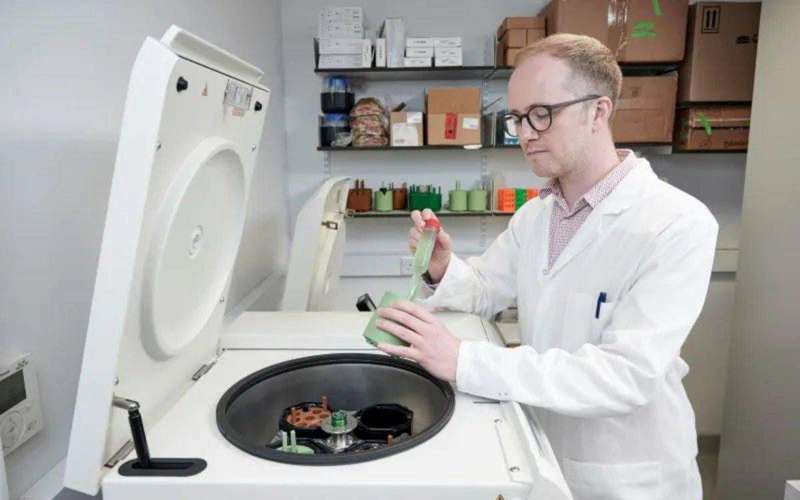
The researchers used genetically engineered "E. coli" bacteria for this purpose.
The process developed by the Scottish scientists uses lightweight packaging made of polyethylene terephthalate (PET) as the base material.
The researchers have set themselves the task of reusing this plastic waste and making something meaningful out of it.
The process developed by the scientists begins with the breakdown of plastic waste into its main component, terephthalic acid, as a raw material.
Genetically engineered "E. coli" bacteria then ensure that the carbon molecules of the acid are rearranged.
Using these "programmed" biological reactions, the bacteria synthesize L-DOPA (also known as levodopa), a precursor of the neurotransmitter dopamine, from the fragments.
The scientists view their method as an example of how plastic waste can be reused with the help of biotechnology. »







![image for [OC] Los Angeles, CA - Thanks, trump.](f69ae175-c1d0-59a5-a95d-e5583f5dae15_thumb.jpg)