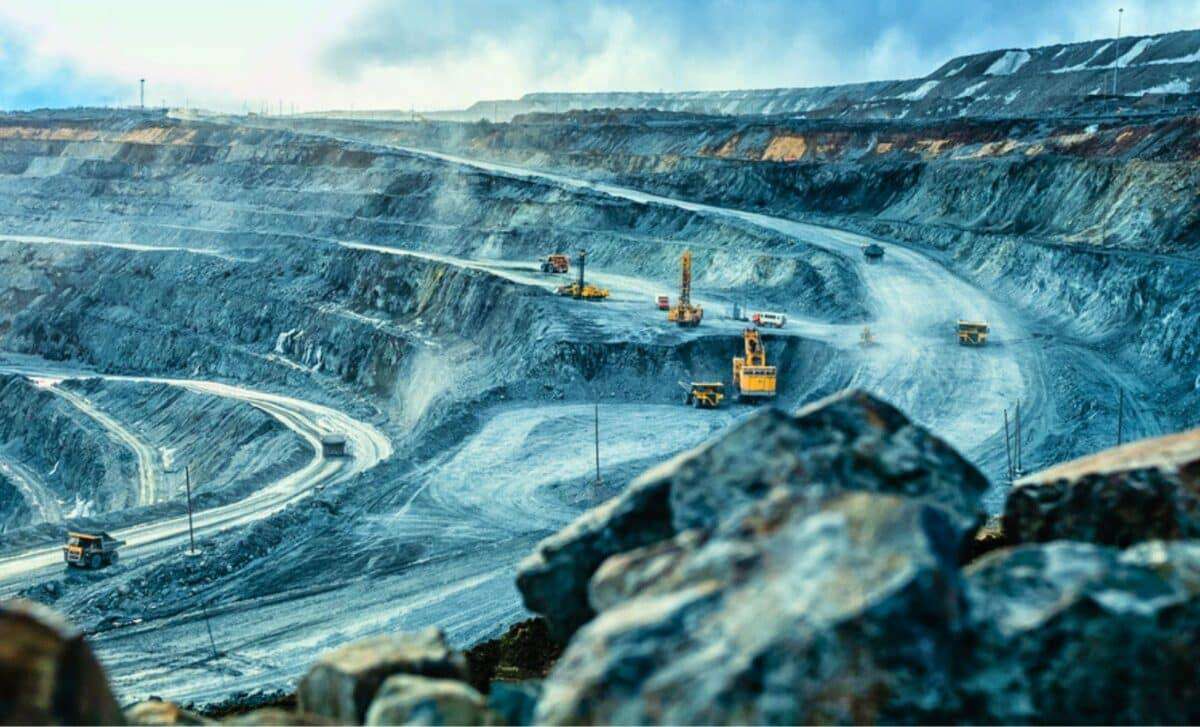
A forgotten gas field in Germany just revealed a hidden resource that could transform Europe’s energy future. Tucked deep beneath Saxony-Anhalt, this unexpected discovery challenges global supply chains and reshapes the race for critical battery metals.
The plains of northern Saxony-Anhalt, long known for gas drilling and little else, have taken on new significance. Deep below the surface, brine once extracted for energy now holds different potential, not for combustion, but for storage. Lithium, increasingly vital to the global clean-energy transition, is being pulled from unexpected places.
Across Europe, the push to secure raw materials for electric vehicle batteries has grown more urgent. China dominates the midstream processing market. South American producers control much of the primary supply. Europe, until recently, remained a spectator. But conditions are shifting.
In late 2025, a private energy firm operating in the Altmark basin released new data suggesting the region holds far more lithium than previously known. Independent geologists confirmed the figures. If they hold, this single site could significantly alter Europe’s resource map.
Confirmed Volume and Method of Extraction
Neptune Energy, the operator, reported that its Altmark project had been assessed by independent evaluator Sproule ERCE. The resource estimate, completed under the CIM/NI 43-101 standard, placed the deposit at 43 million tonnes of lithium carbonate equivalent (LCE).
This volume would position Altmark among the world’s largest known single-site lithium resources. The company currently holds one production license (Jeetze-L) and three exploration licenses (Milde A-L, B-L, and C-L), all located in a region previously used for natural gas extraction.
Neptune Energy is currently developing a lithium extraction project in the Altmark Region (Saxony-Anhalt). Credit: Neptune Energy
The second pilot project, concluded in August, produced battery-grade lithium carbonate using an ion exchange technique. This method is part of a growing category known as direct lithium extraction (DLE), which draws brine from deep underground, isolates lithium, then returns the remaining fluid back to the reservoir.
A third pilot, launched in September 2025, is testing a variant process based on adsorption. The process is different from traditional lithium mining, which often involves surface evaporation ponds and open-pit operations. DLE systems are compact, enclosed, and typically use less land and water.
Geoscientific research presented at the 2025 EAGE Annual Conference provides technical insights into Altmark’s geology. Brines in the Rotliegend sandstone and underlying volcanic layers, located between 3,200 and 4,000 metres deep, contain an average lithium concentration of 375 milligrams per litre.
The enrichment is attributed to the breakdown of mica minerals found in reworked volcanic rock. Over time, and under high heat, these minerals release lithium into the surrounding groundwater. The result is a large, geochemically consistent aquifer that has remained largely untapped.
The company received a third exploration license for lithium in Saxony-Anhalt. Credit: Neptune Energy
Only a small portion of the lithium appears to have originated from seawater evaporation, researchers noted. Most of it comes from in-situ mineral leaching, a slow, thermally driven process that has played out over millions of years.
Geothermal gradients in the region exceed 120°C, which supports both mineral dissolution and potential co-production of heat during extraction. This combination may improve project economics and environmental performance.
Most global lithium production still comes from surface brine operations in Chile, Argentina, and Bolivia, known collectively as the Lithium Triangle. These sites rely on solar evaporation, a method that can take 12 to 18 months and consumes large volumes of water.
Concerns over water depletion, land use, and limited local benefits have been well documented in South America. A report published by the Harvard International Review highlighted disputes between mining firms and Indigenous communities over compensation, environmental harm, and resource control.
Europe, in contrast, has focused on integrating resource development with sustainability standards. The European Critical Raw Materials Act, passed in 2023, set targets for sourcing at least 10 percent of strategic minerals like lithium within the EU by 2030.
Altmark’s location within an existing industrial area, coupled with reuse of legacy infrastructure, reduces the footprint of new development. Neptune has described its transition from gas to minerals as part of a broader strategic shift under its “Boost – New Energy” division.
Commercial production is not yet underway. The next phase involves a demonstration plant, which will require additional environmental permits and technical validation. German regulators are expected to assess groundwater impacts, waste management, and long-term sustainability before approving full-scale operations.
Technologies like direct lithium extraction remain relatively new. While pilot systems have shown promise in Germany, the United States and parts of China, commercial success depends on efficiency, scalability, and consistent feedstock quality.
If these conditions are met, the Altmark deposit may offer a model for low-impact lithium production in mature energy regions. Industry analysts are watching the site closely, not only for what it may produce, but for how it may redefine the terms of European resource autonomy.
Clear_Anything1232 on January 7th, 2026 at 12:48 UTC »
ATTENTION CITIZENS OF DEUTSCHLAND!
FOR THE COMMON GOOD OF THE GREAT STATES OF AMERICA AND OKAYISH COUNTRY OF GERMANY, WE WILL BE MANAGING YOUR LITHIUM RESOURCES FOR YOU.
THANK YOU FOR THE ATTENTION TO THIS MATTER
DONALD J TRUMP,45TH, 47TH PRESIDENT AND FOREVER MONARCH OF WESTERN HEMISPHERE
leonsam on January 7th, 2026 at 12:38 UTC »
EV supply chain in Europe just got interesting.
Ehzaar on January 7th, 2026 at 12:34 UTC »
Well well well Germany soon liberated by the US