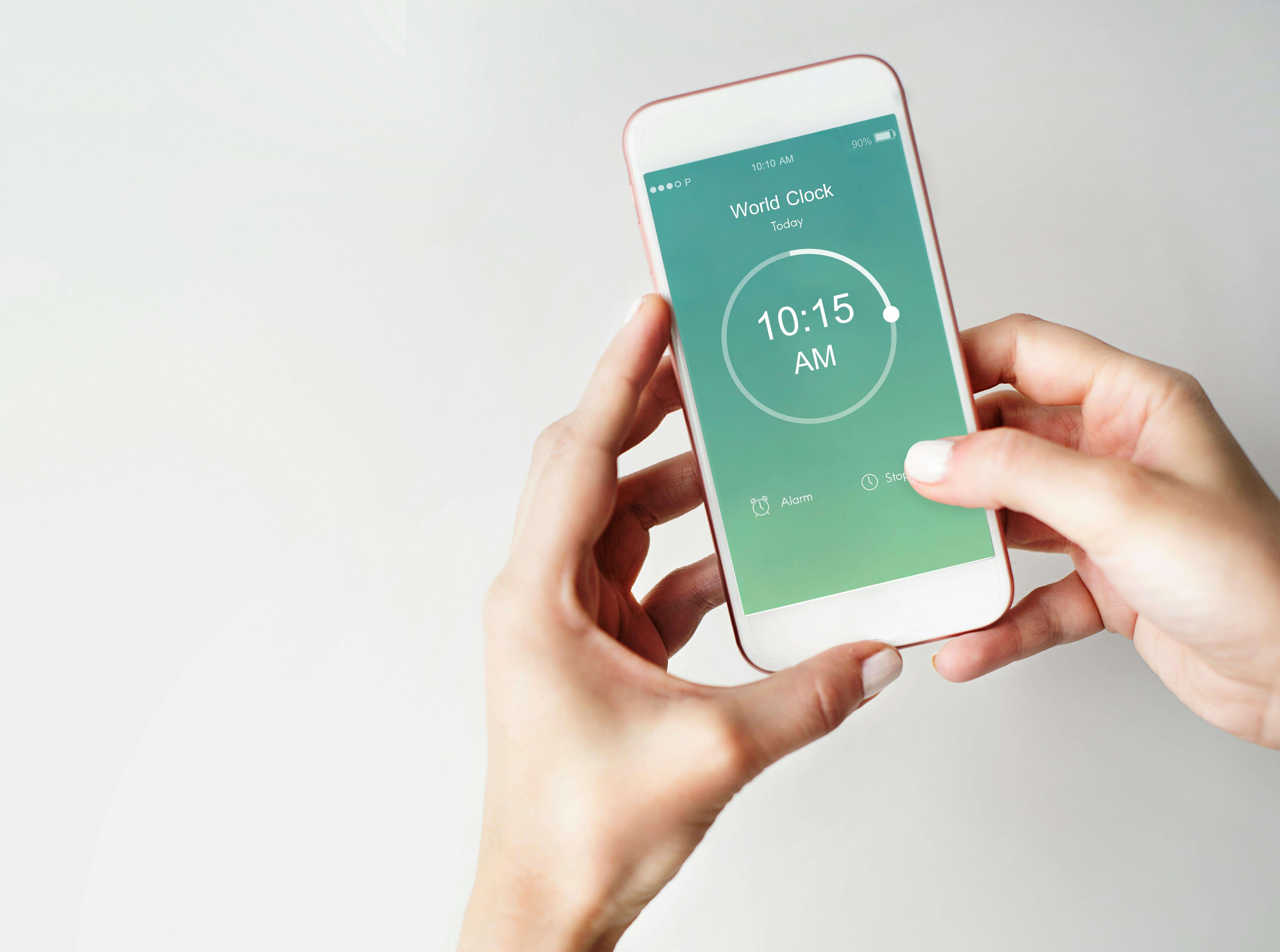
Have you ever wondered what would happen if children were suddenly separated from smartphones they’ve grown up with since early childhood? Actions taken by some New York schools suggest the consequences can be quite unexpected.
After restrictions on phone use were introduced, students began frequently asking teachers for the time or arriving late to class—even though clocks are clearly visible in classrooms and hallways. For some, analog clocks proved difficult to interpret, a problem that had previously been masked by constant access to digital time displays on smartphones.
School administrators emphasize that the issue affects both younger and older students, and that its scale only became apparent once the ban was consistently enforced. In some schools, teachers have started dedicating class time to re-teaching how to read analog clocks, treating it as a basic life skill rather than merely part of the formal curriculum.
The phone ban in New York schools was introduced primarily to improve concentration, reduce distractions, and limit social media pressure. However, it has also highlighted the long-term effects of relying heavily on digital technologies in students’ everyday lives. Teachers note that, in this new reality, schools may need to supplement curricula with practical skills that were once considered obvious but are no longer universal.
It’s worth noting that there are currently no official statistics measuring how widespread difficulties with reading analog clocks are among New York students. The phenomenon described here is based on accounts from teachers and school principals, who point to the recurring nature of the problem following the introduction of the phone ban.
Still, the case of New York schools shows that changes in technology use policies can reveal unexpected side effects that previously went unnoticed in students’ daily routines. Few would have assumed that the ability to read time on an analog clock would still be necessary in the age of smartphones.
rnelsonee on December 29th, 2025 at 15:45 UTC »
I get it - plenty of practical skills fall by the wayside over time: preserving food, sewing, saddling/caring for a horse, etc, all became specialized because it just wasn't needed. Heck, even just telling the time an older way (sundials) is out of reach for at least 99% of people (myself included, and I was just on timeanddate.com this morning being a nerd), at least if we include understanding astronomical vs mechanical time. Like 200 years ago, it was common knowledge to know how off your town's sundial was at the end of December; today it just doesn't matter.
Having said that, I'll join the boomers in the crowd to say:
Many schools and government buildings use analog clocks and until they're gone, you should learn to read them
I use to think digital time was better and analog clocks were silly, until I switched to an analog watch. Now I realize they're better, because for example: I don't want to know that it's 10:43:45 right now, I want to know how much time I have before my next meeting. My watch shows me a 'graphical'/visual metric for that (namely the space between the minute hand and the 12). Just like how graphs are often better than a list of numbers, I feel like I get more information from my analog watch - I can just glance at it and don't have to do math.
lollusc on December 29th, 2025 at 12:14 UTC »
I was teaching dance recently and there was a student struggling with the instruction to "turn in a circle to your right". I said I could give the instructions using clockwise and anti clockwise if that was easier. They had never heard the terms and didn't know how to understand them at all
DanielTeague on December 29th, 2025 at 10:34 UTC »
I have a vivid memory of asking my teacher, in the middle of class, how to read their "circular clock" because my alarm clock at home just showed the numbers. We sidetracked a bit with a quick lesson on how to read it and I think more than one person learned how to read an analog clock that day. Because of that I don't feel bad for distracting the entire class because I was a bit behind on the times.