WHAT DOES PUTIN DO NEXT? Every Russian leader since Stalin has craved this strategic goal
cancel email WhatsApp link share Share bookmark Save
share cancel email WhatsApp link bookmark
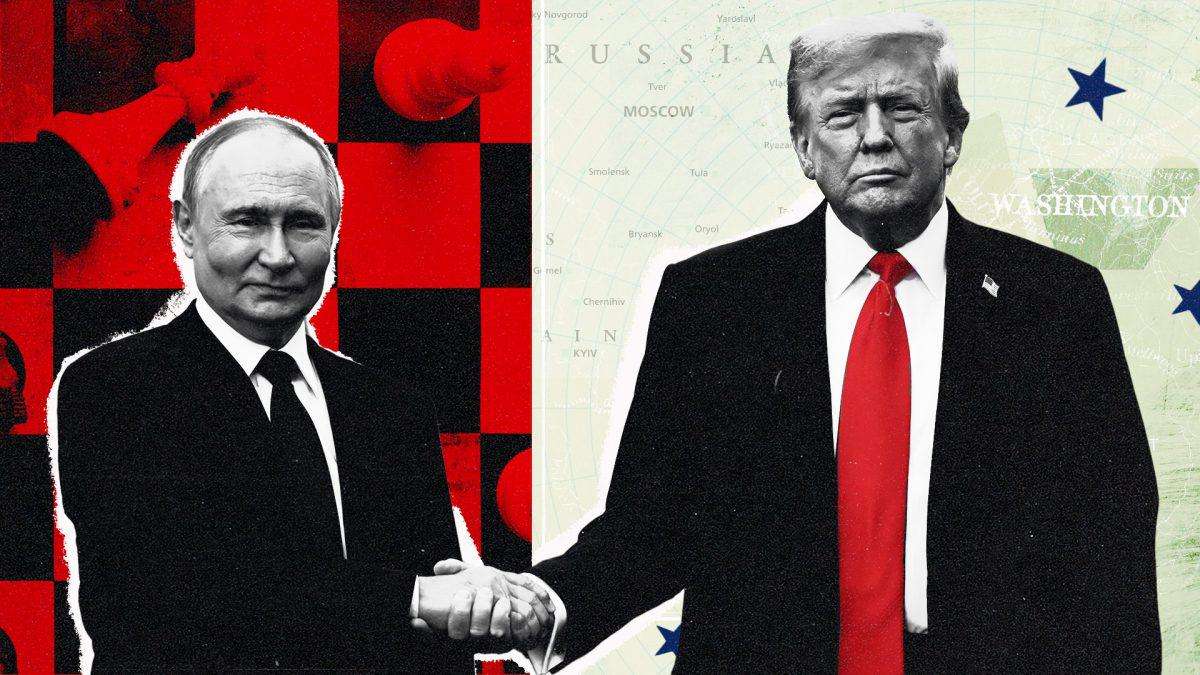
In all the heat and light and arguments across the Atlantic about Trump’s National Security Strategy and talks about talks for ending the war in Ukraine, there is one clear winner so far: Vladimir Putin.
The National Security Strategy (NSS) published at the end of November – more a manifesto of a Maga view of the world than a strategic blueprint – offers Putin two of the prime goals of his leadership of Mother Russia. By reserving most of its detailed criticism of Europe and its network of alliances, the NSS weakens the military strength of Nato and undermines confidence in the economic power of the EU.
As a superpower, it makes America now look less super.
Putin has aimed from the beginning to reduce the power of Nato and to get the United States to roll back from being Europe’s security guarantor. Now, with the American leadership telling Europeans to get on with their own defence, the US is at risk of losing a core element of its security – the maintenance of the Atlantic shield to protect its eastern flank.
It has done this by commanding a solid military alliance with Europeans, the UK, Canada and Turkey. Proportionally it has spent more on defences than most Europeans, true. But the US has been a beneficiary in several ways – not least in the sheer volume of military kit it has sold to the partners at huge profit to its defence industries. Often much of the kit has been overpriced or of indifferent to poor quality.
The European nations are depicted in the NSS document as ageing, feckless, indifferent to the perils of multi-faith multiculturalism, and overrun by migration. It reaches for an improved relationship with Russia in the interests of global stability, joint enterprise, and no doubt, joint ventures to exploit natural resources across the continent, including Ukraine and the Arctic.
For Putin, this offers a window of opportunity, of a nature he could hardly have imagined 10 years ago when Trump first ascended to power. Time is limited, however, for Putin and the Kremlin to make good on what’s been offered.
So what does he do? He seems to be set on a range of options for the next stage of his plan to make Russia great again, a superpower as in the times of the old Soviet Union, the security and military colossus striding the continent of Europe and the vast hinterland of Eurasia. Though an all-out conventional war into Europe from Ukraine and Belarus is one of the less likely scenarios, military planners in the UK are warning of a very long confrontation with Russia and its proxies.
Putin has come out swinging. In his annual address to Russia’s Defence Council last week, he denounced European leaders for backing President Joe Biden in stoking up war in Ukraine: “Europe’s little pigs immediately joined the work of the previous American administration, hoping for the collapse of our country.” Europe was colluding with President Zelensky to block the plans by Moscow, and presumably Washington now, to end the war in Ukraine.
If he couldn’t get what he wanted by talking peace, Putin promised Russia would prevail in Ukraine by war. It would do so by its advantage in numbers and firepower.
This means the war in Ukraine goes on – with the grinding ground battles for northern Donetsk and Zaporizhzhia, and the constant battering of the civilian population from the air in towns and cities across the whole of Ukraine.
Ominously Putin told his defence chiefs that Moscow was not “planning to invade Nato territory”, but believed Nato was planning for a military confrontation with Russia by 2030.
The Putin war game is now moving in several dimensions, some obvious and some concealed. The focus is Ukraine, where Russia is desperate to declare a victory, even if its limited to the Donbas, very soon. The Kremlin will probably then seek a makeshift ceasefire. This will allow for a much needed reorganisation of Russian ground and air forces, their re-equipping, change in the command structure and training. This could lead to the mass mobilisation in the summer for a new army to prosecute the conquest of Ukraine.
While Ukraine is the main effort, it is not the main strategic aim – which remains the weakening of Nato and the undermining of the EU. The method of delivering this, the scheme of manoeuvre in military parlance, will be hybrid, ambiguous, and deniable attacks and operations. It will be done through a series of activities in around the Ukraine theatre, the near abroad, and the distant abroad.
On the hybrid front there are already fresh reports of a wave of intimidation of Belgian financiers and officials to stop the use of frozen Russian assets in Belgium being released for loans to Ukrainian defence funds.
At sea, the increased tempo of submarine operations across the North Atlantic, busybody surveillance of vital underwater communication and energy infrastructure by spyships like the Yantar, herald a new phase of hybrid conflict and confrontation.
On land, deniable operations, out of the false flag playbook, are being carried out against border posts and patrols in Estonia and Norway. Finland once again faces thousands of refugees and migrants being pushed against its eastern borders from Russia.
Refugees and migrants are suspected of being provoked in Libya through an alliance with the Benghazi warlord General Khalifa Haftar. From Libya across the sub-Sahara, Putin’s forces formerly of the Wagner Group are endeavouring to fill the hole left by the departure of French forces from half a dozen countries. But they face stiff competition from Chinese influences.
Putin’s plan is to exploit the moment, but aim for a long confrontation – the long, hybrid or ambiguous war, which could dominate the next quarter of the 21st century in Europe. Much depends on how far Russia’s creaking economy, inefficient and corrupt forces and their command, and ailing and wary population can sustain such an extended campaign. “Something has got to give, in the forces and the economy, sooner or later,” a British military expert with direct Ukraine experience told me a few days ago.
The Trump National Security Strategy has offered Moscow and the Kremlin a golden opportunity. For Vladimir Putin it has opened a strategic window – and he’s walking right through it.
Nick_Strong on December 26th, 2025 at 09:39 UTC »
Trump's power is limited. He can't force Ukraine to become a Russian puppet state. He can't force post-communist European countries to leave NATO, and he can't force the EU to become dependent on Russian energy again (although some in the EU would like that). And despite his efforts, Trump won't destroy the US-European alliance, but eight years of someone like JD Vance might.
tomorrow509 on December 26th, 2025 at 09:11 UTC »
What would a Russian Agent do?
theipaper on December 26th, 2025 at 08:52 UTC »
In all the heat and light and arguments across the Atlantic about Trump’s National Security Strategy and talks about talks for ending the war in Ukraine, there is one clear winner so far: Vladimir Putin.
The Trump National Security Strategy has offered Moscow and the Kremlin a golden opportunity.
For Vladimir Putin it has opened a strategic window – and he’s walking right through it.