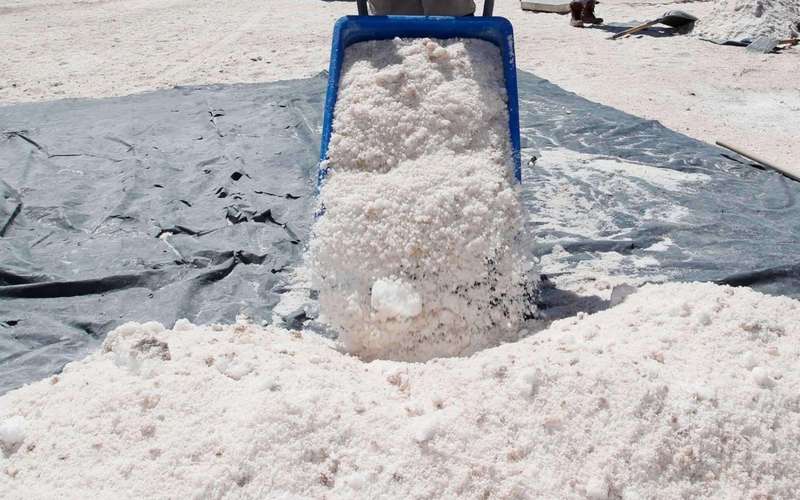
A new study argues that McDermitt caldera may host about 20 to 40 million metric tons of lithium, likely the largest deposit yet identified.
Work on this deposit was led by Thomas R. Benson, PhD, at Lithium Americas Corporation (LAC).
Those sediments formed lacustrine, formed in a lake environment, claystones that now trap much of the lithium rich clay.
Later, hotter fluids altered parts of that smectite into another clay called illite that locks in much more lithium.
In the lithium rich zone at Thacker Pass, illite, potassium rich clay that holds lithium tightly, forms a band about 100 feet thick.
Lithium today is best known as the heart of the lithium ion battery, a rechargeable battery that moves lithium ions between two electrodes.
The McDermitt caldera lithium deposit is vast, shallow, and chemically unusual, qualities that set it apart from most other known sources. »




![image for [OC] Told the kids to put their sunscreen on, next thing I hear is “uh help”](fe0a046d-7638-560c-b662-ed0bd3638172_thumb.jpg)
![image for [OC] Interesting spiky sculpture at the Botanical Garden](cc8628ac-5881-5bf8-b9bb-72db28b8f5de_thumb.jpg)



![image for [OC] Last Hours of the Thanksgiving Weekend](22bed906-197b-5efa-92df-5e38be40477a_thumb.jpg)