Once-extinct wildcats to make a comeback in England
11 hours ago Share Save Jenny Kumah and Malcolm Prior, BBC News rural affairs team Share Save
Tom Mason The South West Wildcat Project hopes to bring back 50 European wildcats across the mid-Devon countryside
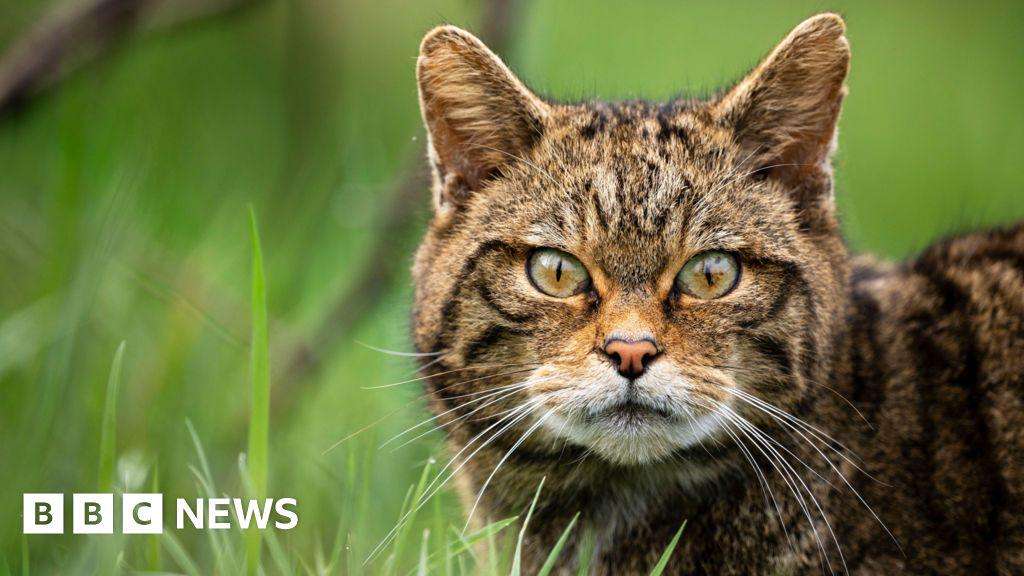
Wildcats – one of the UK's most critically endangered mammals – could make a return from extinction in England, conservationists say. The South West Wildcat Project hopes to bring back 50 European wildcats, from 2028, after a study found a colony could "flourish" in the mid-Devon countryside. Reintroduction plans follow a breeding scheme to boost numbers in Scotland but there are concerns that the carnivores could pose a threat to poultry, gamebirds and native bird species, as well as a risk of cross-breeding with domestic cats. The Countryside Alliance said that if that risk was not dealt with, ambitions to sustain a genetically pure wildcat population would be "doomed to failure".
Malcolm Prior/BBC Wildcats – historically also known as 'woodcats' – were once widespread in Great Britain
The South West Wildlife Project – a partnership led by Devon Wildlife Trust - said independent research by the University of Exeter showed that about 80% of people asked were positive about wildcat reintroduction. But Oliver Edwards, a beef and sheep farmer on Exmoor, told the BBC he was concerned that reintroducing a predatory species would have "a detrimental effect on the animals and bird life that live here already". "They say wildcats live on voles. Well, voles are feeding my barn owls so if you reduce the vole population you are having an effect on the barn owls," he explained. He added that there needed to be wider consultation with farmers and landowners about the best areas to reintroduce the wildcats. European wildcats – historically also known as woodcats – were once widespread in Great Britain until human persecution and the loss of woodland and rough grass habitats saw them disappear from England and Wales. Today, the UK's only remaining wildcat population lives in the Highlands of Scotland but, despite being given protected status in 1988, they are now classed as critically endangered and at risk of UK extinction, with as few as 115 remaining in the wild.
Malcolm Prior/BBC Cath Jeffs, from Devon Wildlife Trust, said measures taken to stop other predators from targeting farmed birds would work for wildcats.
ThatNiceDrShipman on November 18th, 2025 at 11:25 UTC »
Who's a furious, furious boy?
Ok-Witness4724 on November 18th, 2025 at 11:12 UTC »
Someone is going to think the cat distribution system has brought them an overlay bitey kitty, aren’t they 🤦🏼♀️
Eirikur_da_Czech on November 18th, 2025 at 10:16 UTC »
Just in time.