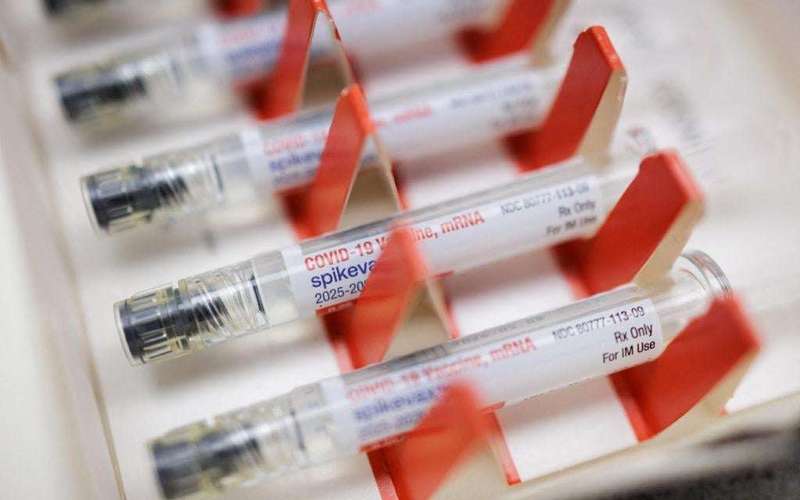
WASHINGTON (AP) — The most widely used COVID-19 vaccines may offer a surprise benefit for some cancer patients – revving up their immune systems to help fight tumors.
Instead, the molecule that powers those specific vaccines, mRNA, appears to help the immune system respond better to the cutting-edge cancer treatment, concluded researchers from MD Anderson Cancer Center in Houston and the University of Florida.
Health Secretary Robert F. Kennedy Jr. has raised skepticism about mRNA vaccines, cutting $500 million in funding for some uses of the technology.
But this research team found its results so promising that it is preparing a more rigorous study to see if mRNA coronavirus vaccines should be paired with cancer drugs called checkpoint inhibitors — an interim step while it designs new mRNA vaccines for use in cancer.
While best known as the Nobel Prize-winning technology behind COVID-19 vaccines, scientists have long been trying to create personalized mRNA “treatment vaccines” that train immune cells to spot unique features of a patient’s tumor.
Grippin and his Florida colleagues had been developing personalized mRNA cancer vaccines when they realized that even one created without a specific target appeared to spur similar immune activity against cancer.
Vaccinated lung cancer patients were nearly twice as likely to be alive three years after beginning cancer treatment as the unvaccinated patients. »





![image for North Korean People's Army soldiers walking in high heels [Getty]](1fc2e203-0b1e-5318-b7c2-1ac43447d434_thumb.jpg)




![image for “The Boys” actor Antony Starr seen as Andy Warhol on the set of a new Basquiat biopic [non-OC]](8697e882-3374-54df-97ca-f0c6bda9875b_thumb.jpg)