cancel email WhatsApp link share Share bookmark Save
share cancel email WhatsApp link bookmark
Asked if China is an enemy of the UK, Chen Yonglin bursts out laughing, clearly thinking it’s a stupid question. “The Chinese regime,” he warns, “is the enemy of human beings.”
He continues: “China pretends to be friendly – always, always pretends to be friendly>” But he urges Britain and its allies to never forget: “China is very, extremely hostile.”
He doesn’t say this lightly. Twenty years ago, he was a diplomat at the Chinese consulate in Sydney. He was tasked with monitoring Chinese dissidents in Australia. Secretly, however, he was planning to defect.
His father had been murdered during Mao Zedong’s Cultural Revolution, one of up to two million deaths in that depraved violence. A generation later, Chen was among the students in Tiananmen Square when a crackdown on their pro-democracy protests in 1989 is believed to have killed 10,000 people.
He endured the state’s re-education campaigns and ended up working for the foreign ministry, leading to his post in Sydney. But the brainwashing hadn’t worked. In 2005, he generated headlines around the world when he sensationally quit his job and applied for asylum, revealing how China spied on opponents abroad.
He went into hiding with his wife and daughter. To this day, he still fears being kidnapped or assassinated by communist agents. But he has continued speaking out, giving evidence to US Congress and politicians around the world about the dangers of his homeland.
New Feature In Short Quick Stories. Same trusted journalism.
So, should the UK regard China as a threat? And were the British authorities foolish to let a criminal case against two alleged Chinese spies collapse last month, because they apparently couldn’t answer that question strongly enough to secure a conviction? The Attorney General, Lord Hermer, will be grilled about this debacle by a committee of MPs next week.
“It’s very ridiculous,” Chen tells The i Paper in an exclusive interview. “First, even if it’s not China – any country who’s been spying in the UK, should they be punished by law? They should! Any country!
“You pretend, ‘China is not a threat, not the enemy.’ So is China a friend? Definitely not. China is a communist dictatorship. It’s totally an enemy. It’s been an enemy on many, many things against the UK, including on Hong Kong affairs.”
Chen’s views on China are as hardline and pessimistic as they come. Hearing his story, that’s understandable.
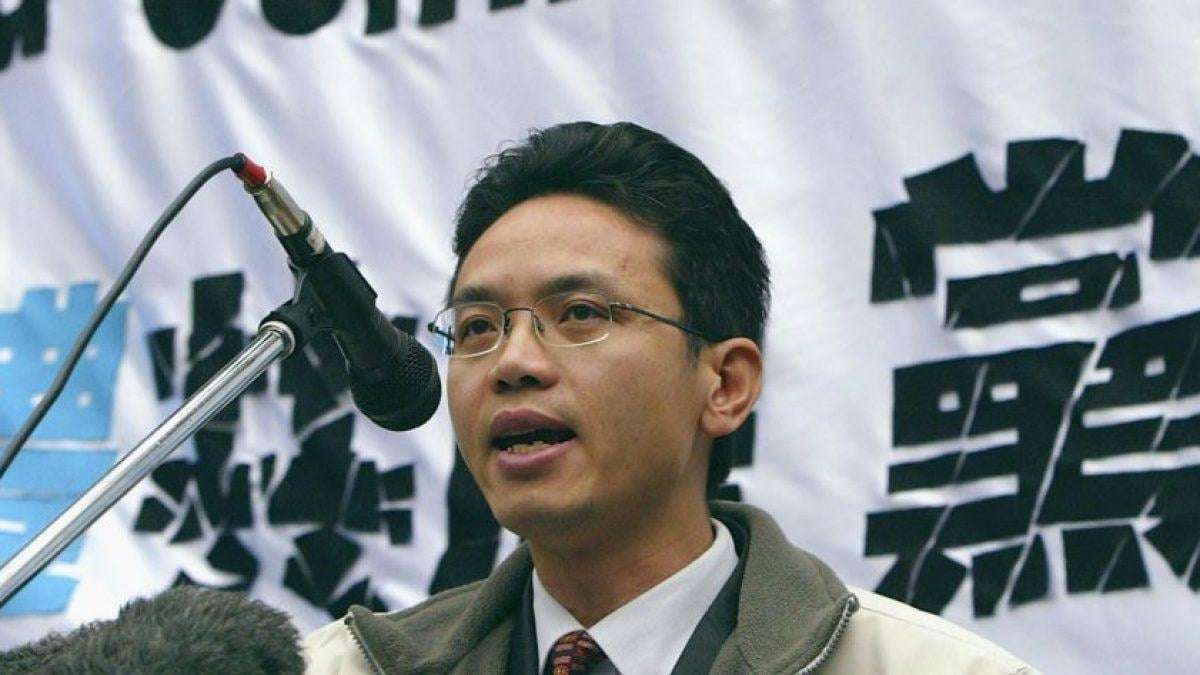
Chen Yonglin seen after his defection in 2005, left, and 20 years later, right (Photos: Getty/Chen Yonglin)
Chen was three years old when his father was beaten to death.
It was 1971, midway through the Cultural Revolution – when Chairman Mao whipped young communists into a paranoid frenzy and urged them to purge any suspected supporters of capitalism from positions of power in society.
Chen’s father was visiting his family’s village on holiday when he helped someone in the neighbourhood write a petition, attracting the attention of local party leaders. According to Chen’s account, he was kidnapped, imprisoned for two weeks without food, and eventually killed.
The young boy was expected to become a farmer but later went to diplomatic college. This gave him privileged access to foreign media, leading him to question communism even more.
The feverish violence of the Cultural Revolution led to Chen Yonglin’s father being killed in 1971 (Photo: Bettmann Archive via Getty)
Come 1989, he was a student working as a translation intern for the US broadcaster NBC when pro-democracy protests began growing in Beijing’s vast Tiananmen Square over several weeks.
Chen recalls how the government sent in troops to stop the protests on 3 June. “I joined hands with other people and tried to block the soldiers,” he says. “I left the square, very much scared.” He went to a nearby hotel where an NBC camera crew was stationed and watched in horror.
“I saw the violence, the force, how they cracked down on the peaceful protesters, the students. They killed civilians,” he says. “Two of my schoolmates had been shot.”
The regime suppressed news within China about what had happened, but Chen knew the truth. Looking back, his experiences in Tiananmen were the “main reason” for his eventual defection.
Calling the Chinese Communist Party a “criminal group”, he says it relies on the gun and the pen. “The gun is what they use for the brutality, the killing, the murder, to threaten people, to scare people. The pen is to brainwash people, to indoctrinate people, to cheat people, to lie to people.”
Chen Yonglin was among students holding peaceful protests in Beijing’s Tiananmen Square in 1989 (Photo: Peter Charlesworth/LightRocket)
In a one-party system, he had no choice other than to work for the state. He did well in the foreign ministry and was given a role in Fiji before joining the consulate in Sydney.
There, he was ordered to track members of the pro-democracy movement who had fled to Australia, as well as opposition activists from Taiwan, Tibet and Xinjiang, plus members of the Falun Gong spiritual movement. He helped compile lists of Chinese expats who could be a threat, to prevent them re-entering the country and ensure they could be monitored by security services.
China banned the Falun Gong in 1999, calling it an “evil cult”, fearing that devotion to its practices and leaders could compete with party loyalty. But Chen felt sympathy for the group.
Towards the end of his term in Sydney, he worried his successor would realise he had treated the Falun Gong too lightly and would report him to the party. He knew he had to escape the regime.
The protests in Tiananmen Square were eventually stopped by the Chinese military, leading to an estimated 10,000 deaths (Photo: Peter Charlesworth/LightRocket)
“I left the Chinese consulate,” says Chen, “because I want to be a normal person, to live a normal life in a society where I can be free to think and express myself.” He and his wife didn’t want to expose their young daughter to the regime’s propaganda back home.
He publicly withdrew from the party and alleged there were “over 1,000 Chinese secret agents and informants in Australia”.
His actions provoked a huge diplomatic crisis. Beijing said he had dreamed up fanciful tales to avoid going home. Australia initially refused to grant him asylum but then relented.
Chen went on to become a leading campaigner against Beijing, even testifying before US Congress. But two decades on, he still worries about attempts to “silence” him through China’s Operation Fox Hunt, which targets opponents abroad.
“I’m always a target,” he says. He claims to have been warned by a top-level source in Beijing that he could be “assassinated or kidnapped back to China”. Chen also says that he has seen “suspicious persons” near his home.
China’s consulate in Sydney, which Chen Yonglin left in 2005, often attracts protesters against the regime in Beijing (Photo: Anoek de Groot/AFP)
It’s these experiences, plus his inside knowledge of Beijing’s surveillance programmes, that makes him so alarmed about the UK potentially allowing China to open a huge new embassy in central London.
Besides the tracking and intimidation of British-based Hong Kong exiles, he warns that embassy teams also aim to influence and control Chinese students at UK universities, and seek to steal or copy scientific research and product designs.
The party’s view is that “anyone with Chinese blood is an asset they can access,” he says.
China insists that the state “does not pose a threat to any country, and has neither the intention nor the interest to interfere in the UK’s internal affairs”. It has called for critics to “stop hyping up the so-called ‘China threat’”, saying that spying allegations are “pure fabrication and malicious slander”.
Last week, the Government delayed its decision on the embassy application until December, leading Beijing to warn of “consequences” if the project does not go ahead.
The British strategy towards China is “wrong, totally”, argues Chen. The Western belief that opening more factories in China and buying more of its goods would encourage the country’s totalitarian regime to liberalise is “extremely naive” and has “totally failed,” he believes.
“The Cold War has never ended… China treats Western democracy as the enemy and hates especially ‘American imperialists’, and hates ‘British imperialists’ as well.”
WPG431 on October 21st, 2025 at 21:44 UTC »
This fear seems rational and justifiable. Nunavut territory in the far north of Canada is where I would hide.
OneReportersOpinion on October 21st, 2025 at 21:38 UTC »
Defected from to China to…the UK? We know their spying capabilities are at least as good as the Chinese, if not better.
BarnabusTheBold on October 21st, 2025 at 20:58 UTC »
A common problem with diaspora communities is that often enough they have left because they have extreme ideological opposition to the government.
An easy thought experiment is to imagine interviewing a MAGA person that had fled Biden's America (or a democrat that had fled Trump's america). Do you think you'd get a balanced, impartial analysis of anything? Of course not. You may be able to empathise along perceived shared ideological lines, but the assessment of 'they're all evil and corrupt and beyond help' which you'd get in either example isn't actually helpful (or maybe it is :P)
Which has just raised an interesting point now that i come to think of it. The past couple of decades migration has been far less along ideological grounds than it used to be. There's definitely something in that imo.
That said, i'm not sure his commentary on the uk's legal process holds any value, and that's seemingly the purpose of this interview.