Add AP News as your preferred source to see more of our stories on Google.
JAKARTA, Indonesia (AP) — Indonesia’s top defense official said Wednesday that Jakarta will acquire at least 42 Chinese-made Chengdu J-10C fighter jets, marking the country’s first non-Western aircraft purchase deal.
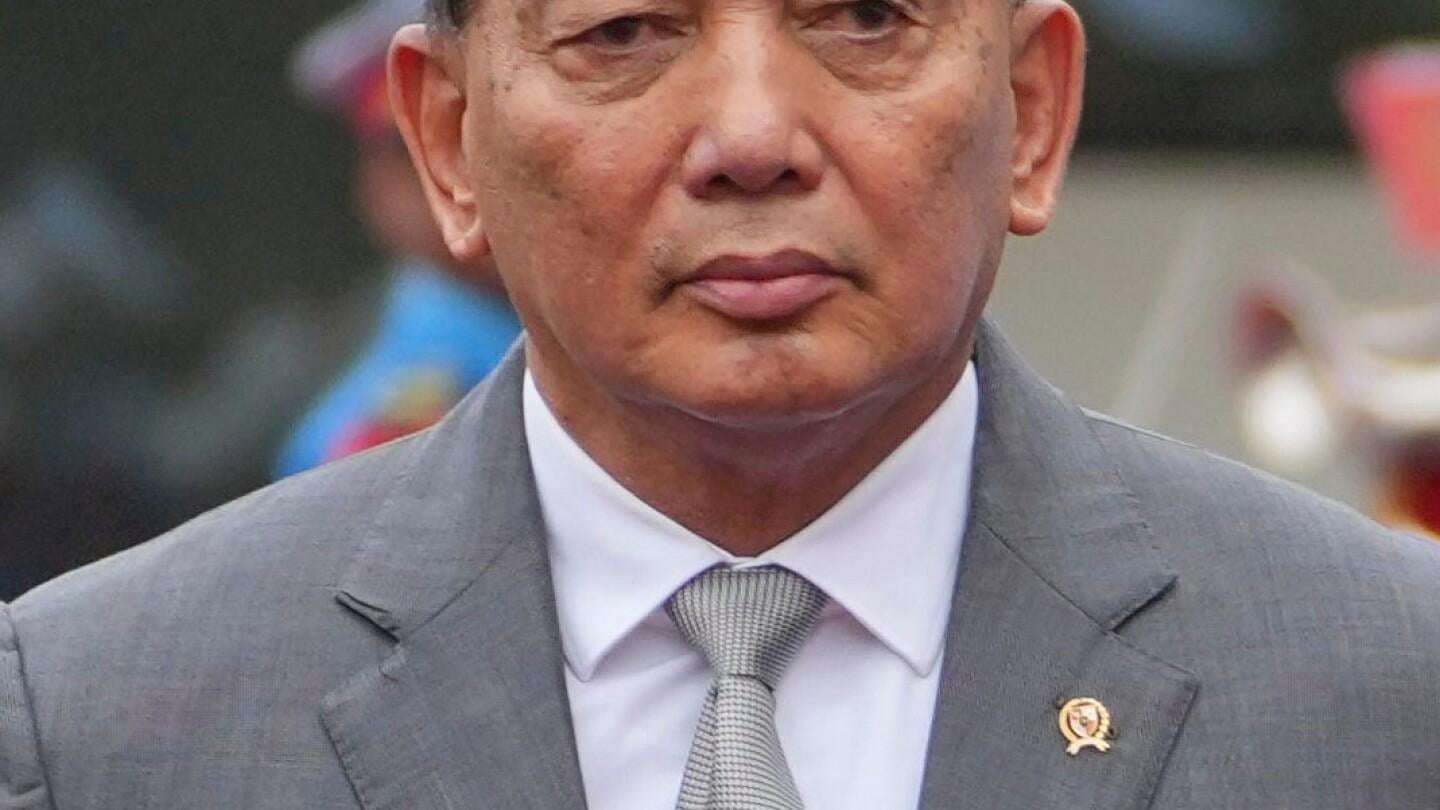
Defense Minister Sjafrie Sjamsoeddin told reporters in the capital, Jakarta, that Indonesia would soon buy fighter jets from China as part of a plan to modernize its military. Analysts said the deal could touch regional sensitivities and have geopolitical implications.
“They will be flying over Jakarta soon,” Sjamsoeddin said. He declined to provide further details of the purchase.
The plan to buy the J-10s was first disclosed last month by defense ministry spokesperson Brig. Gen. Frega Wenas. Local media had reported that the Indonesian Air Force was still reviewing the Chinese-made fighter jets to ensure their acquisition would effectively strengthen Indonesia’s air defense capabilities.
Finance Minister Purbaya Yudhi Sadewa on Wednesday confirmed that his ministry had approved a budget for the purchase of the aircraft from China that reached more than $9 billion.
“So, everything should be ready,” Sadewa told reporters, “But I have to double check when those aircrafts will arrive in Jakarta from Beijing.”
Indonesia has embarked on a drive to upgrade and modernize its military arsenal and strengthen its defense industry under President Prabowo Subianto’s administration. Subianto has crisscrossed the globe since he was appointed defense minister in 2019, traveling to China, France, Russia, Turkey and the U.S. in a bid to acquire new military weapon systems and surveillance and territorial defense capabilities.
The Indonesian Air Force currently has fighter jets from countries including the U.S., Russia and Britain. Some of these aircraft need to be upgraded or replaced.
Turkish President Recep Tayyip Erdogan announced in June that his country will export 48 of its KAAN fighter jets to Indonesia. Those jets would be manufactured in Turkey and exported to Indonesia, Erdogan said in an X post.
Indonesia finalized an order for 42 French Dassault Rafale fighter jets in January 2024, with the first delivery expected in early 2026. Southeast Asia’s largest economy also announced the purchase of two French Scorpene Evolved submarines and 13 Thales ground control interception radars.
Beni Sukadis, a defense analyst from the Indonesia Institute for Defense and Strategic Studies, said that despite being politically non-aligned, the government shouldn’t underestimate the geopolitical implications of its choices.
After decades of relying on Western suppliers, a major arms purchase from Beijing “could be read as a shift in Indonesia’s security orientation amid China’s growing military and diplomatic influence in Southeast Asia region,” Sukadis said.
He warned the “move could spark regional sensitivities over the South China Sea where China has direct interests.”
inamag1343 on October 16th, 2025 at 09:36 UTC »
Is there a particular reason why Indonesia's inventory is so diverse? I remember they also operate Soviet-Russian, US and Euro stuff.
Traditional_Neat_506 on October 16th, 2025 at 08:17 UTC »
that's a steal honestly
(well in money and cost efficiency terms)
Lone-T on October 16th, 2025 at 08:13 UTC »
SS: Indonesia's announcement of a $9B+ deal to acquire 42 Chinese Chengdu J-10C fighter jets—its first major non-Western aircraft purchase—signals a bold pivot in Southeast Asian military sourcing amid escalating regional tensions. Under President Prabowo Subianto's diversification push (including Rafales from France and KAANs from Turkey), this move deepens Jakarta-Beijing ties while risking sensitivities over South China Sea disputes, where Indonesia's Natuna Islands overlap China's expansive claims. As analysts warn of a potential "shift in security orientation," does this hedge against U.S. unreliability or embolden China's assertiveness in ASEAN's backyard?