It was “humiliating” to be called “a Mossad plant,” she told Khan, according to a recording she made of the call. “I have basically lost any friend that I did have at the court. . . . I don’t know where to look anymore. . . . I just think it’s time for me to go.”
Khan warned her more than once of “wolves around us.” The call lasted an hour, and during it he asked six times if she was recording their conversation. (She lied and said no.) But his tone was supportive; he encouraged her to take the time off that she needed, and to get continued pay through medical leave. Occasionally, he sounded confident that he was innocent of any misconduct, reminding her repeatedly that it was her choice if she wanted to initiate a more comprehensive investigation, including of him. “The truth will come out,” he assured her. Yet, at other moments, he sounded anxious that she might pursue a complaint against him. He told her that speculation about this was “keeping things alive,” and he urged her to formally clarify that she had no intention of accusing him of inappropriate behavior. “Then it’s well and truly over,” he said, and the I.C.C. could end the “feeding frenzy” by telling journalists, “Fuck off now—leave her alone.”
“Things are being pushed,” Khan told her, by forces out to “get rid of the warrants for Palestine, get rid of the warrants for Russia, get rid of the whole court.” Khan and the Malaysian woman were both married, and he warned her that a misconduct scandal would not only harm the woman and her family, and Khan and his family. The “casualties” would also include “the justice of the victims that now, finally, are on the cusp of progress.”
Ninety minutes after the call ended, an anonymous X account began leaking details from the same secondhand report that had been included in the anonymous e-mail. Stories appeared in the media, including an editorial in the Wall Street Journal, on October 23, 2024, which reported that the woman had accused Khan of “locking her into his office and sexually touching her,” making “visits to her hotel room in the middle of the night, demanding to be let in,” and “claiming to have a headache and lying on her hotel bed, sexually touching her.” A few weeks later, the I.C.C.’s governing body requested an external investigation. By the time the U.N. began one, the woman was levelling an even more serious allegation: that Khan had repeatedly forced her into “coercive” sex. (Khan, who has denied any misconduct, declined requests for an interview.)
Selective leaks from the ambiguous phone call—in particular, Khan’s references to Palestinians and other victims being “on the cusp of progress”—have improbably bound together the woman’s allegation of sexual abuse with the international power struggle over the Israeli arrest warrants. Khan and his lawyers have contended that Netanyahu and his allies are exploiting a vulnerable woman in order to discredit the case against the Israeli leaders. Netanyahu, in turn, has repeatedly claimed that Khan sought the warrants only to divert attention from the woman’s charges.
Indeed, in a video interview in August with Breitbart, Netanyahu accused Khan of an elaborate scheme, claiming that, when Khan learned about the woman’s allegations, “he said, ‘I’m ruined. I have to get out of this somehow,’ so he decided the best way to get out of that was to hit the Jews, or to hit the Prime Minister of the Jewish state.” Dismissing the I.C.C. as “a completely corrupt organization,” and describing the female accuser as a Malaysian hostile to Israel, Netanyahu charged, without evidence, that the court had told her, “Listen, it’s more important to falsely accuse Israel of these war crimes than for your charges to be heard.”
“Long story short: ‘Fred,’ I said, ‘what good are monkey bars without monkeys?’ ” Cartoon by Michael Maslin Copy link to cartoon Copy link to cartoon Shop Shop
The Trump Administration and Netanyahu allies in the Republican-led U.S. Congress have seized on the sexual-abuse allegations as part of a broader defense of Netanyahu and Gallant against the I.C.C. charges. Six days after the October 17th call and leak, Senator Lindsey Graham, of South Carolina, announced that the woman’s claims had put “a moral cloud” over Khan’s decision to seek the warrants. President Trump, in a statement, has accused the court of “illegitimate and baseless actions targeting America and our close ally Israel” which constitute “an unusual and extraordinary threat to the national security and foreign policy of the United States.” The U.S. has now sanctioned Khan, his two deputies, and several I.C.C. judges—freezing their assets, blocking their access to the U.S. financial system, and restricting their ability to enter the country. Several I.C.C. staffers with American ties resigned.
The international uproar over the sexual-abuse charges culminated in an article this spring in the Wall Street Journal, which reported the woman’s allegations and strongly suggested that Khan had sought the warrants as a tactical deflection. Six days later, Khan took a leave of absence that brought the work of the court to a virtual standstill.
The attempt to link the sexual-assault allegations and the Israeli warrants is at odds with many facts. Khan’s pursuit of the warrants was hardly new or secret. A team of lawyers in the prosecutor’s office had worked for several months on an investigation of Israel’s assault on Gaza. Because accusing Israel of grave misdeeds was so explosive—Khan described it to Amanpour as “the San Andreas Fault of international politics and strategic interests”—he had also, in January, 2024, made the unorthodox choice to solicit a second opinion from an outside panel of experts.
That panel included two former judges who had overseen international criminal tribunals, a former legal adviser to the British Foreign Office, and Amal Clooney, a British Lebanese human-rights lawyer and the wife of George Clooney. They concluded that there was sufficient evidence for charges of war crimes or crimes against humanity on both sides of the Gaza conflict, including at the top of the Israeli chain of command. The lawyers inside the I.C.C. prosecutor’s office agreed. The Hamas-led attack on October 7th had killed about twelve hundred people in Israel, including at least eight hundred civilians, and taken some two hundred and fifty hostages. By May, 2024, the Israeli assault on Gaza had killed upward of thirty-five thousand people, many of them women or children. According to Gaza’s Health Ministry, at least thirty-two Palestinians, including twenty-eight children, had died of malnutrition or starvation at Gaza’s hospitals. An internationally recognized panel of experts was warning that more than a million Gazans could soon face catastrophic hunger. (The reported death toll has now exceeded sixty-six thousand; at least four hundred and fifty people have died of malnutrition or starvation, including a hundred and fifty-one children.)
Ur3rdIMcFly on October 5th, 2025 at 15:15 UTC »
This isn't enough to distract from the genocide that Israel is conducting.
TopsyPopsy on October 5th, 2025 at 15:02 UTC »
Sexual misconduct allegations, and potential Israeli involvment aside:
Huh? By his own words, he hadn't enough evidence that genocide/famine was happening. And he still issued the arrest warrants.
How unprofessional.
newyorker on October 5th, 2025 at 14:41 UTC »
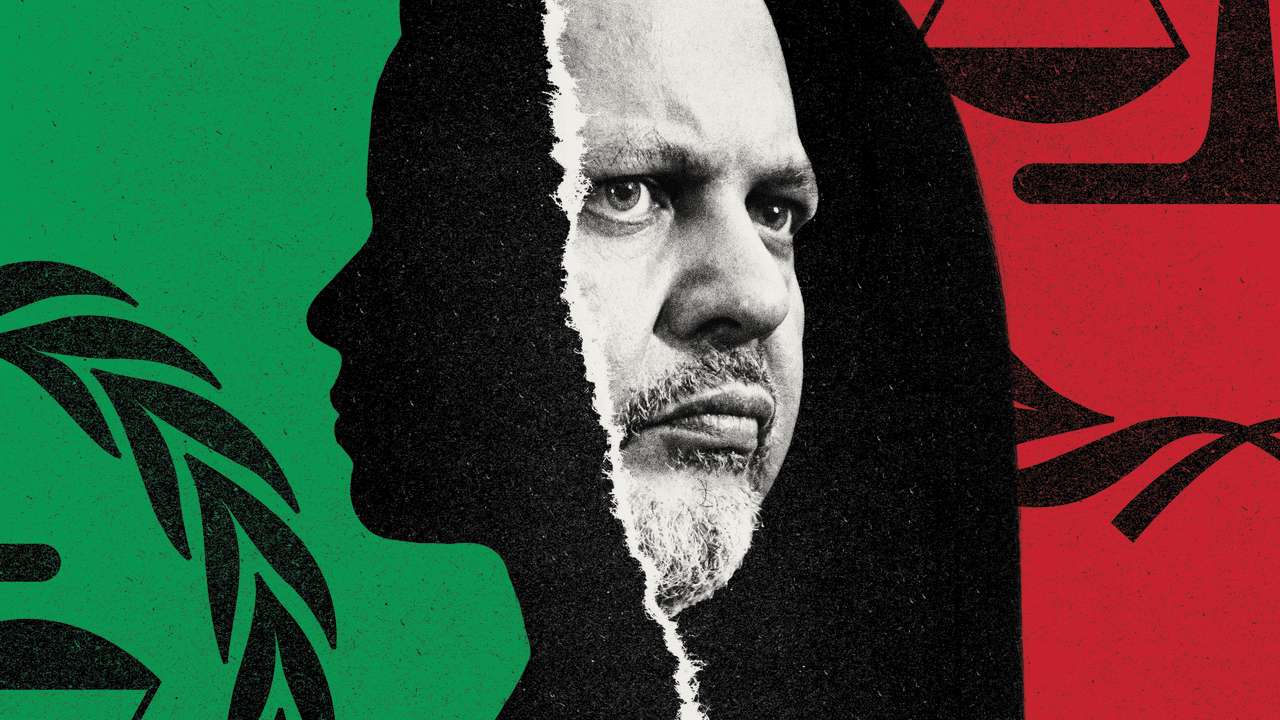
In 2021, the International Criminal Court elected a new chief prosecutor, Karim Khan. He boasted to colleagues that, in his first three years on the job, he had obtained more than 40 new warrants, some not yet public. Among them were orders for the arrest of Vladimir Putin and top Russian military leaders, for war crimes in Ukraine; the leaders of Hamas, for its murderous attack on Israel on October 7, 2023; and the Israeli Prime Minister, Benjamin Netanyahu, and a former Defense Minister, Yoav Gallant, for the willful killing of civilians in Gaza, and for employing the denial of food as a weapon of war. Khan sought to reënergize the I.C.C. by upholding its promise of equal justice for all. Instead, he has become enmeshed in a scandal that threatens to severely weaken it.
Shortly before Khan applied for the Israeli warrants, two others working at the I.C.C. told the court’s human-resources department that a woman had privately complained about Khan, saying that he had subjected her to multiple unwanted sexual advances. Members of an internal-oversight bureau had met with the woman; she declined to participate in an investigation or to answer questions, and informed Khan of those decisions. The I.C.C. halted its inquiry, and she kept working for Khan. The woman, in a text to Khan about her refusal to coöperate with the internal inquiry, sounded worried that political machinations might be driving the investigation, telling him that she refused to be “a pawn in some game I don’t want to play.”
Then, months later, someone began a campaign to bring new attention to the secondhand reports about Khan; an anonymous e-mail account leaked one of the reports to journalists, and many attempted to contact the woman and the I.C.C. Khan and his lawyers have contended that Netanyahu and his allies are exploiting a vulnerable woman in order to discredit the case against the Israeli leaders. Netanyahu, in turn, has repeatedly claimed that Khan sought the warrants only to divert attention from the woman’s charges. David D. Kirkpatrick reports on the scandal at the Hague and how it became tangled with the international power struggle over the Israeli arrest warrants. Read more: https://www.newyorker.com/magazine/2025/10/13/the-hague-on-trial