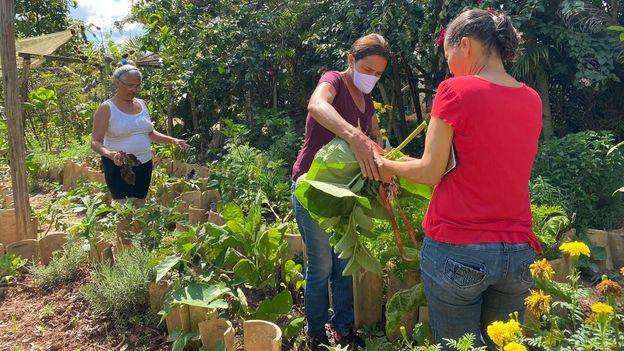
In Brazil's crowded favelas, green space is hard to come by, but this São Paulo community is showing how more sustainable favelas can give back to their residents.
"You have to remove the seeds before they flower."
Maria de Lourdes Andrade Silva is showing me how she picks the buds off a flowering basil plant as she tends to a vibrant community garden in a favela in São Paulo, Brazil – South America's largest city. "If you leave it to flower, it'll use up all its energy and it will die," she says.
When I visited this 0.5 hectare (1.2 acre) garden in Vila Nova Esperança favela in 2022, it was teeming with herbs, plants, vegetables and life. Today, it's been Silva's labour of love for more than a decade. Before Silva's efforts, it was entirely different: the disused space on the edge of the favela was piled high with rubbish and people would come here to dump things, she says.
Originally from Itaberaba, Bahia in the north-east of Brazil, Silva – better known as LiaEsperança, or Lia "Hope" – moved to the favela in 2003 having never lived in one before.
SeanBerdoni on September 7th, 2025 at 18:06 UTC »
This is absolutely beautiful!!! I really think this is the way to go when it comes to developing underprivileged communities