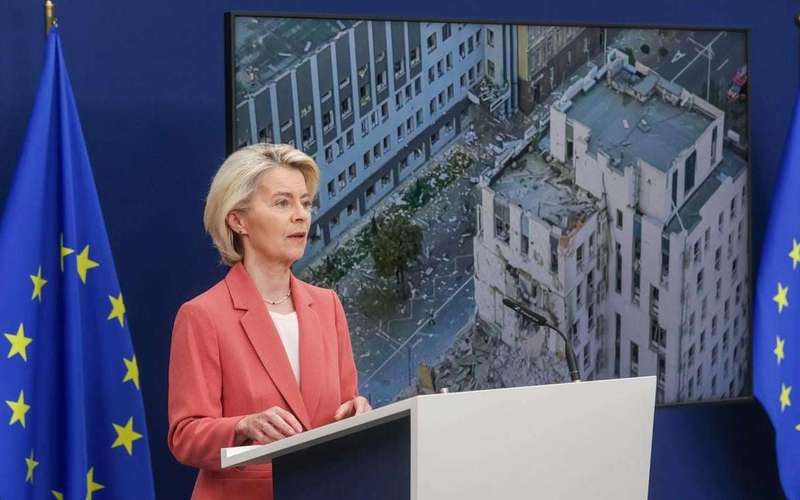
The European Commission is working on a mechanism that would allow nearly €200 billion in frozen Russian assets to be transferred into a special fund and directed toward Ukraine’s reconstruction after the war.
Proponents also see the scheme as a step towards potential confiscation of Russian assets and their transfer to Ukraine as punishment for Moscow’s refusal to pay postwar reparations.
The plan, however, does not provide for immediate confiscation, which most EU countries oppose for financial and legal reasons.
A preparatory note reviewed by Politico mentions "further options for the use of revenues stemming from Russian immobilised sovereign assets".
Within the European Commission, the idea is being pushed by Economy Commissioner Valdis Dombrovskis and foreign policy chief Kaja Kallas.
Belgium is especially vulnerable to legal and financial risks, as Euroclear, the financial institution holding most of the Russian assets, is located there.
This mechanism would allow frozen assets to be invested in riskier, higher-yielding instruments, thereby generating additional resources for Ukraine, Politico notes. »