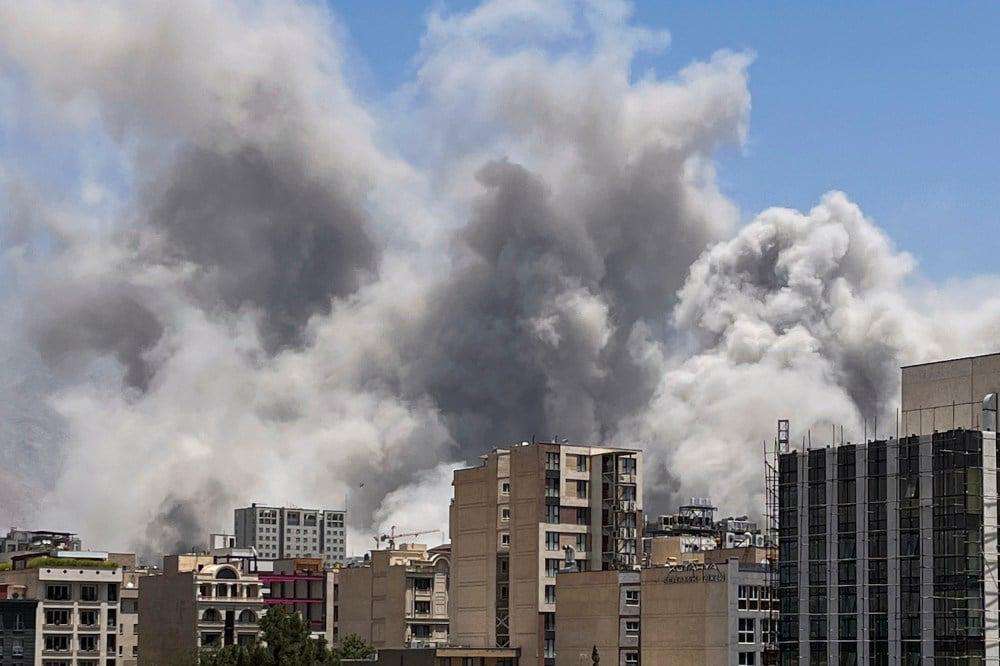
Iran is expecting and preparing for the attack. It played the long game in the first war, pacing its missile attacks as it anticipated a protracted conflict. In the next round, however, Iran is likely to strike decisively from the outset, aiming to dispel any notion that it can be subdued under Israeli military dominance.
Israel is likely to launch another war with Iran before December—perhaps even as early as late August.
As a result, the coming war will likely be far bloodier than the first. If U.S. President Donald Trump caves to Israeli pressure again and joins the fight, the United States could face a full-blown war with Iran that will make Iraq look easy by comparison.
Israel’s June war was never solely about Iran’s nuclear program. Rather, it was about shifting the balance of power in the Middle East, with Iranian nuclear capabilities being an important but not decisive factor. For more than two decades, Israel has pushed the United States to take military action against Iran to weaken it and restore a favorable regional balance—one that Israel cannot achieve on its own.
In this context, Israel’s strikes had three main objectives beyond weakening Iran’s nuclear infrastructure. It sought to draw the United States into direct military conflict with Iran, to decapitate the Iranian regime, and to turn the country into the next Syria or Lebanon—countries that Israel can bomb with impunity and without any U.S. involvement. Only one of the three goals was realized. What’s more, Trump did not “obliterate” Iran’s nuclear program, nor has it been set back to a point where the issue can be considered resolved.
In other words, with its June attacks, Israel achieved a partial victory at best. Its preferred outcome was for Trump to fully engage, targeting both Iran’s conventional forces and economic infrastructure. But while Trump favors swift, decisive military action, he fears full-scale war. His strategy in attacking Iran’s nuclear facilities was thus designed to limit escalation rather than expand it. In the short term, Trump succeeded—much to Israel’s chagrin—but in the long run, he has allowed Israel to trap him in an escalatory cycle.
His refusal to escalate beyond a limited bombing campaign was a key reason that Israel agreed to a cease-fire. As the war continued, Israel took serious losses: Its air defenses were degraded, and Iran grew more effective at penetrating them with its missiles. While Israel would have likely continued the conflict if the United States had fully committed, the calculus changed once it became clear that Trump’s strikes were one-off. Israel succeeded in drawing Trump and the United States into the war, but it failed to keep them there.
Israel’s other two objectives, however, were clear failures. Despite early intelligence successes—such as killing 30 senior commanders and 19 nuclear scientists—it was only able to temporarily disrupt Iranian command and control. Within 18 hours, Iran had replaced most if not all of these commanders and launched a heavy missile barrage, demonstrating its ability to absorb significant losses and still mount a fierce counterattack.
Israel hoped its initial strikes would incite panic within the Iranian regime and hasten its collapse. According to the Washington Post, Mossad agents, fluent in Persian, called senior Iranian officials on their cellphones, threatening to kill them and their families unless they filmed videos denouncing the regime and publicly defecting. More than 20 such calls were made in the war’s early hours, when Iran’s ruling elite was still in shock and reeling from significant losses. Yet there’s no evidence a single Iranian general capitulated to the threats, and the regime’s cohesion remained intact.
Contrary to Israel’s expectations, the killing of senior commanders from the Islamic Revolutionary Guard Corps did not lead to mass protests or an uprising against the Islamic Republic. Instead, Iranians of all political stripes rallied around the flag, if not the regime itself, as a wave of nationalism surged across the country.
Israel could not capitalize on the Iranian regime’s broader unpopularity. After nearly two years of committing atrocities in Gaza and launching a deceptive attack on Iran amid nuclear negotiations, only a small segment of Iranians—mostly in the diaspora—view Israel positively.
Indeed, instead of mobilizing the population against the regime, Israel managed to give a new lease on life to the Islamic Republic’s narrative. Rather than condemning the regime for investing in a nuclear program, missiles, and a network of allied nonstate actors, many Iranians are now angry that these elements of Iran’s deterrence proved insufficient.
“I used to be one of those who would chant during protests to not send Iranian money to Lebanon or Palestine. But now I understand that the bombs we all face are one and if we don’t have strong defenses across the region, the war comes to us,” an artist in Tehran told Narges Bajoghli, a professor at Johns Hopkins University.
Whether this shift will last is unclear. But in the short term, Israel’s attacks appear to have paradoxically strengthened the Iranian regime—tightening internal cohesion and narrowing the gap between state and society.
Israel also failed to turn Iran into a second Syria and establish sustainable aerial dominance independent of U.S. support. While Israel controlled Iranian airspace during the war, it did not operate with impunity. Iran’s missile response inflicted unsustainable damage.
Without substantial U.S. assistance—including the use of 25 percent of the United States’ THAAD missile interceptors in just 12 days—Israel might have been unable to continue the war.
This makes a new Israeli offensive likely. Both Defense Minister Israel Katz and military chief of staff Eyal Zamir have signaled as much. The June war was just the first phase, according to Zamir, who added that Israel is “now entering a new chapter” of the conflict.
Regardless of whether Iran resumes uranium enrichment, Israel is determined to deny it time to replenish its missile arsenal, restore air defenses, or deploy improved systems. That logic is central to Israel’s “mowing the grass” strategy: strike preventively and repeatedly to prohibit adversaries from developing capabilities that could challenge Israeli military dominance.
This means that, with Iran already rebuilding its military resources, Israel has an incentive to strike sooner rather than later. What’s more, the political calculus around another attack becomes much more complicated once the United States enters its midterm election season. As a result, a strike could very well take place within the coming months.
This, of course, is the outcome that Iranian leaders want to deter. To dispel any illusion that Israel’s “mowing the grass” strategy works, Iran is likely to strike hard and fast at the outset of the next war.
“If aggression is repeated, we will not hesitate to react in a more decisive manner and in a way that will be IMPOSSIBLE to cover up,” Iranian Foreign Minister Abbas Araghchi posted on X. Iranian leaders believe the cost to Israel must be overwhelming, or else it will gradually erode Iran’s missile capabilities and leave the country defenseless.
While the June war ended inconclusively, the outcome of the next one will hinge on which side learned more and acts faster: Can Israel replenish its interceptors faster than Iran can rebuild its launchers and restock its missile arsenal? Does the Mossad still have a deep presence inside Iran, or were most of its assets spent in pursuit of regime collapse during the first war? Has Iran gained more insight into penetrating Israel’s air defenses than Israel has into closing its gaps? For now, neither side can answer these questions with confidence.
It is precisely because Iran cannot be certain that a more forceful response will neutralize Israel’s strategy that it is likely to reassess its nuclear posture—especially now that other pillars of its deterrence, including the so-called Axis of Resistance and nuclear ambiguity, have proven insufficient.
Trump’s response to a second Israeli war with Iran may prove decisive. He appears unwilling to engage in a prolonged conflict. Politically, his initial strikes triggered a civil war within the MAGA movement. Militarily, the 12-day war exposed critical gaps in the United States’ missile stockpile. Both Trump and former U.S. President Joe Biden drained a substantial portion of U.S. air defense interceptors in a region that neither considers vital to core U.S. interests.
Yet by green-lighting the opening salvo, Trump has walked into Israel’s trap—and it’s unclear whether he can find a way out, especially if he clings to zero enrichment as the baseline for a deal with Iran. Limited engagement is likely no longer an option. Trump will have to either fully join the war or sit it out. And staying out requires more than a one-time refusal—it demands sustained resistance to Israeli pressure, something he has so far shown neither the will nor the strength to pull off.
rnev64 on August 12nd, 2025 at 21:23 UTC »
I fail to see the logic of the arguments in this article.
Israel failed in its objectives, because regime has not changed in Iran and because some Iranian BM got through and depleted Israeli air defenses.
Furthermore the author suggests Iran military recovered quickly from the initial decapitation attack - but supports this only by Iran's ability to launch BM strikes.
But what about defending Iran's own airspace? If Iranian military recovered so quickly why was it not able to take down more than a handful of drone flying over its own airspace?
What about the failure of the expensive proxies in Iraq, Syria and Lebanon - what were they doing during this war?
What about military capabilities or options other than BMs? Seemed like was firing them because it was the only thing it could do.
Hard to see how with such narrow-view analysis the conclusion of another war anytime soon, let alone by the end of the year, can be taken seriously.
Also IRGC are currently struggling to supply water and electricity to large areas of Iran. Seems like another war with Israel, even without US intervention, is the last thing they need.
Interestingly I've heard some reports that weekly sermon/address of the IRGC leader have shifted focus from Islamic theme to more Persian Empire themed - suggesting that Iranians, while certainly not great lovers of Israel, see no reason they should pay the price for a Palestinian war and IRGC seems to be responding by toning down this rhetoric.
tl;dr
The title and article are wrong, imo.
vovap_vovap on August 12nd, 2025 at 18:10 UTC »
War for what exactly? What would be Israel objective - crash Iran regime? With bombing? For what exact benefits in simple words? How is it relate to a current Israel problem in hand? One of most nonsense article I seen.
Thats-Slander on August 12nd, 2025 at 15:48 UTC »
This is a load of crap, also there’s an almost 0% chance we see American or Israeli troops on the ground in Iran.