If you're not aware of what's happening in Serbia, I urge you to take a look at the story below. There is a short version at the bottom, but I promise it's worth reading. This is a lecture for the rest of the world.
A timeline of one of the most powerful youth-led protest movements in modern Europe. 📍 November 1, 2024
A newly renovated railway station canopy in Novi Sad collapsed, killing 16 people. The project, which was celebrated as a national achievement, had been completed just months earlier. Students and civil engineers pointed to signs of massive corruption and cost inflation.
At a memorial for the victims held at the Faculty of Dramatic Arts in Belgrade, a group of men, allegedly linked to the ruling party, stormed the gathering and assaulted students and professors. In response, students organized a campus-wide plenary session and voted to blockade their building until those responsible were held accountable.
📍 November–January: Campuses Become Centers of Resistance
Universities across Serbia followed. Faculties in Belgrade, Novi Sad, Niš, Kragujevac, and others began holding their own plenums. Students occupied buildings, held public discussions, and began living on campus. People were urged to donate supplies.
Full transparency on the station reconstruction project Arrests of those who attacked students Dropping all charges against protesters A 20% increase in university funding
Despite attempts by the government and media to label them as "foreign agents" or "junkies," the students remained leaderless by design, drawing support from thousands of citizens who donated food, blankets, and supplies.
📍 February–Early March 2025: National Expansion
The movement grew.
Demonstrations spread to over 300 towns and cities.
Students marched across the country, often walking for days or weeks, (great video) meeting villagers along the way. They were welcomed with food, shelter, and encouragement. For many Serbians, especially in areas without independent media, it was the first time they encountered the students beyond TV caricatures.
Over 275,000 people gathered in Belgrade in what became the largest protest Serbia has ever seen. The event was called "15 for 15," marking March 15 in memory of the 15+ lives lost in the Novi Sad collapse.
Frustrated by the EU’s silence, students biked over 1000 kilometers (620+ miles) from Serbia to Strasbourg. Later, they ran a marathon from Serbia to Brussels to deliver their message to European leaders, accusing the EU of giving tacit support to the Serbian regime by continuing normal relations.
📍 Early March 2025 — Enter “Ćaciland”
A counter-selection of pro-government supporters, often older people and non-students, set up camp in Pionirski Park near Parliament, calling themselves “Students Who Want to Study.” Protesters mockingly named this encampment “Ćaciland.”
It stems from a viral graffiti typo: someone wrote “Ćaci u školu” instead of “Đaci u školu” (“Show students to school”), swapping Đ for Ć. This kind of typo is like writing “dupil” instead of “pupil”—a small mistake that takes on pro-government supporters commonly being illiterate. 📍 May 2025: Media Blockade
As demands remained unmet, the students decided to run in the next elections. Each university plenum proposed candidates, aiming to create a united civic platform rooted in direct democracy.
Their new central demand became: elections now.
But in a historic shift, the Serbian government — which had previously used elections to defuse crises — refused to call early elections. Instead, they announced postponements into 2026 or 2027.
📍 June 20–28, 2025: The Ultimatum
Students issued a public ultimatum: if elections were not called and “Ćaciland” (the government-sponsored amusement-style installation in Belgrade’s Pioneers Park) not removed by June 28 at 9PM, they would give the green light to the people for civil disobedience.
The government did not respond.
📍 June 29–July 3, 2025: Blockades Begin
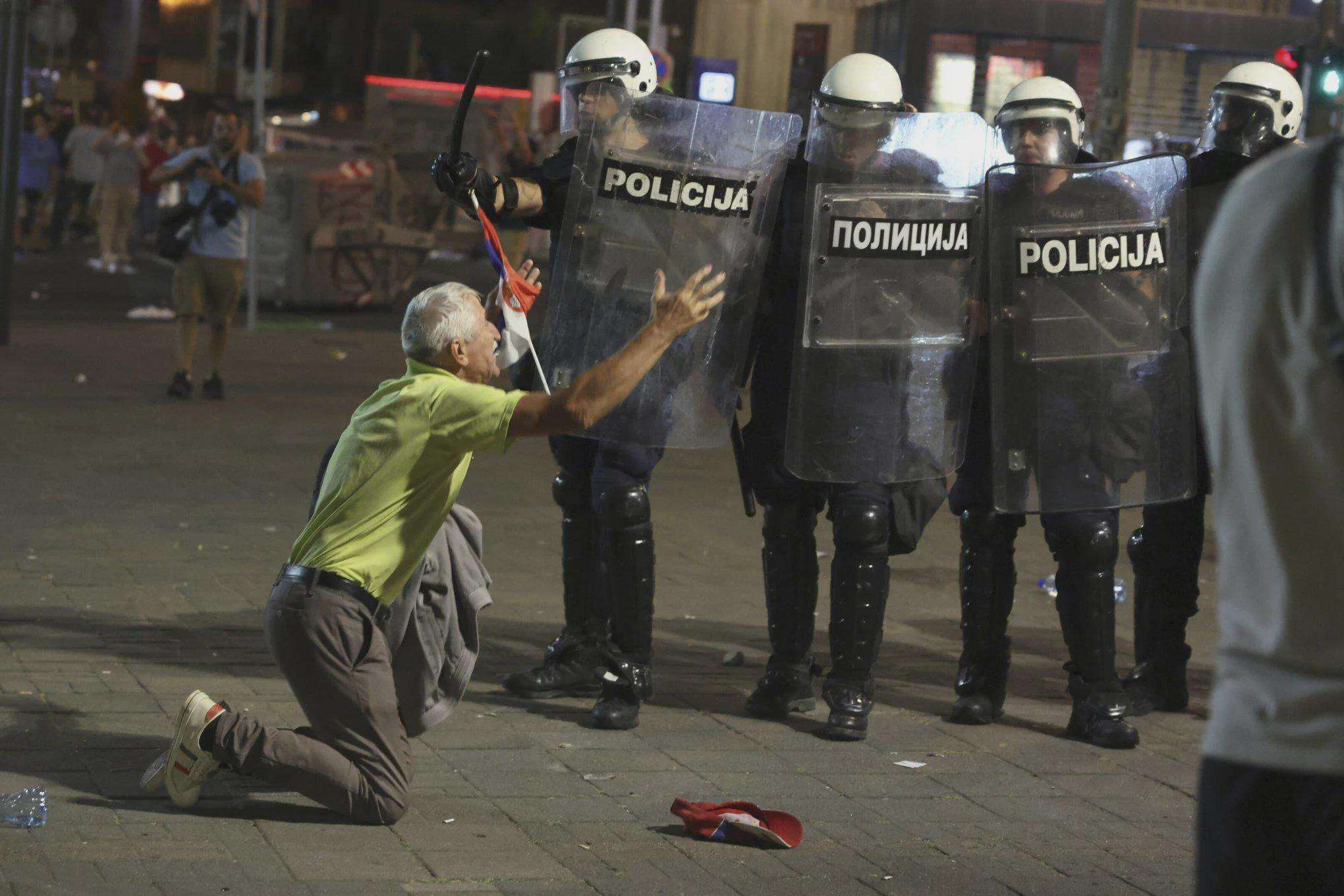
Since June 29, citizens across Serbia have engaged in daily acts of civil disobedience. Over 200 roads and intersections were blocked with dumpsters, cars, or human chains.
On July 2 and 3, police began cracking down.
79 people were arrested in Belgrade alone ([Reuters]()) Riot police dismantled barricades across cities Reports of injuries, especially in Niš and Novi Sad, are increasing
Still, the protests continue.
Shorter version
It began after a deadly station collapse exposed deep corruption, then exploded when students were attacked for holding a memorial.
Campuses turned into hubs of resistance, with students organising through direct democracy, protests spread to 300+ towns, and students marched hundreds between cities and villages, and even to European capitals, asking Europe to stop supporting an authoritarian regime. On March 15, over 275,000 people gathered in Serbia’s largest protest ever, some claim the government used an acoustic weapon on the crowd holding a silent vigil.
After their demands were ignored, students issued an ultimatum and launched civil disobedience: now, highways are blocked, dumpsters line the streets, and arrests are rising. Amid all this, a bizarre government-backed counter-camp called “Ćaciland”, named after a viral misspelling, has become a symbol of state propaganda.
Great breakdown, I honestly had no idea this was happening. Glad I use multiple sources to get my international news. Hopefully this picks up more.. also this is a beautiful photo and it showcases the impact that a single photo can make.

ChiquitaColumbo on July 3rd, 2025 at 17:50 UTC »
If you're not aware of what's happening in Serbia, I urge you to take a look at the story below. There is a short version at the bottom, but I promise it's worth reading. This is a lecture for the rest of the world.
A timeline of one of the most powerful youth-led protest movements in modern Europe. 📍 November 1, 2024A newly renovated railway station canopy in Novi Sad collapsed, killing 16 people. The project, which was celebrated as a national achievement, had been completed just months earlier. Students and civil engineers pointed to signs of massive corruption and cost inflation.
At a memorial for the victims held at the Faculty of Dramatic Arts in Belgrade, a group of men, allegedly linked to the ruling party, stormed the gathering and assaulted students and professors. In response, students organized a campus-wide plenary session and voted to blockade their building until those responsible were held accountable.
📍 November–January: Campuses Become Centers of ResistanceUniversities across Serbia followed. Faculties in Belgrade, Novi Sad, Niš, Kragujevac, and others began holding their own plenums. Students occupied buildings, held public discussions, and began living on campus. People were urged to donate supplies.
All decisions were made collectively through open voting, held multiple times per week. The decisions were coordinated with other faculties, and other universities through newly founded higher level student assemblies.
Their initial four demands were:
Full transparency on the station reconstruction project Arrests of those who attacked students Dropping all charges against protesters A 20% increase in university fundingDespite attempts by the government and media to label them as "foreign agents" or "junkies," the students remained leaderless by design, drawing support from thousands of citizens who donated food, blankets, and supplies.
📍 February–Early March 2025: National ExpansionThe movement grew.
Demonstrations spread to over 300 towns and cities.
Students marched across the country, often walking for days or weeks, (great video) meeting villagers along the way. They were welcomed with food, shelter, and encouragement. For many Serbians, especially in areas without independent media, it was the first time they encountered the students beyond TV caricatures.
Over 275,000 people gathered in Belgrade in what became the largest protest Serbia has ever seen. The event was called "15 for 15," marking March 15 in memory of the 15+ lives lost in the Novi Sad collapse.
During a moment of silence at the protest, many reported a strange high-pitched noise that caused panic. Dozens fainted or collapsed. Students and NGOs believe it may have been some form of acoustic weapon. The government denies this, citing a Russian FSB report claiming no device was activated. Independent investigations have been requested from European bodies.
Frustrated by the EU’s silence, students biked over 1000 kilometers (620+ miles) from Serbia to Strasbourg. Later, they ran a marathon from Serbia to Brussels to deliver their message to European leaders, accusing the EU of giving tacit support to the Serbian regime by continuing normal relations.
📍 Early March 2025 — Enter “Ćaciland”A counter-selection of pro-government supporters, often older people and non-students, set up camp in Pionirski Park near Parliament, calling themselves “Students Who Want to Study.” Protesters mockingly named this encampment “Ćaciland.”
It stems from a viral graffiti typo: someone wrote “Ćaci u školu” instead of “Đaci u školu” (“Show students to school”), swapping Đ for Ć. This kind of typo is like writing “dupil” instead of “pupil”—a small mistake that takes on pro-government supporters commonly being illiterate. 📍 May 2025: Media BlockadeStudents physically blocked the headquarters of Serbia’s national broadcaster (RTS), demanding a new selection process for the country’s media regulatory body. Holding different events. For the first time in 70 years, RTS failed to air its nightly news program.
📍 June 2025: Toward Political ActionAs demands remained unmet, the students decided to run in the next elections. Each university plenum proposed candidates, aiming to create a united civic platform rooted in direct democracy.
Their new central demand became: elections now.
But in a historic shift, the Serbian government — which had previously used elections to defuse crises — refused to call early elections. Instead, they announced postponements into 2026 or 2027.
📍 June 20–28, 2025: The UltimatumStudents issued a public ultimatum: if elections were not called and “Ćaciland” (the government-sponsored amusement-style installation in Belgrade’s Pioneers Park) not removed by June 28 at 9PM, they would give the green light to the people for civil disobedience.
The government did not respond.
📍 June 29–July 3, 2025: Blockades BeginSince June 29, citizens across Serbia have engaged in daily acts of civil disobedience. Over 200 roads and intersections were blocked with dumpsters, cars, or human chains.
On July 2 and 3, police began cracking down.
79 people were arrested in Belgrade alone ([Reuters]()) Riot police dismantled barricades across cities Reports of injuries, especially in Niš and Novi Sad, are increasingStill, the protests continue.
Shorter versionIt began after a deadly station collapse exposed deep corruption, then exploded when students were attacked for holding a memorial.
Campuses turned into hubs of resistance, with students organising through direct democracy, protests spread to 300+ towns, and students marched hundreds between cities and villages, and even to European capitals, asking Europe to stop supporting an authoritarian regime. On March 15, over 275,000 people gathered in Serbia’s largest protest ever, some claim the government used an acoustic weapon on the crowd holding a silent vigil.
After their demands were ignored, students issued an ultimatum and launched civil disobedience: now, highways are blocked, dumpsters line the streets, and arrests are rising. Amid all this, a bizarre government-backed counter-camp called “Ćaciland”, named after a viral misspelling, has become a symbol of state propaganda.
Chelonia_mydas on July 3rd, 2025 at 18:00 UTC »
Great breakdown, I honestly had no idea this was happening. Glad I use multiple sources to get my international news. Hopefully this picks up more.. also this is a beautiful photo and it showcases the impact that a single photo can make.
PatimationStudios-2 on July 3rd, 2025 at 18:35 UTC »
It’s absurd how little coverage the Serbian protests get