This audio is created with AI assistance
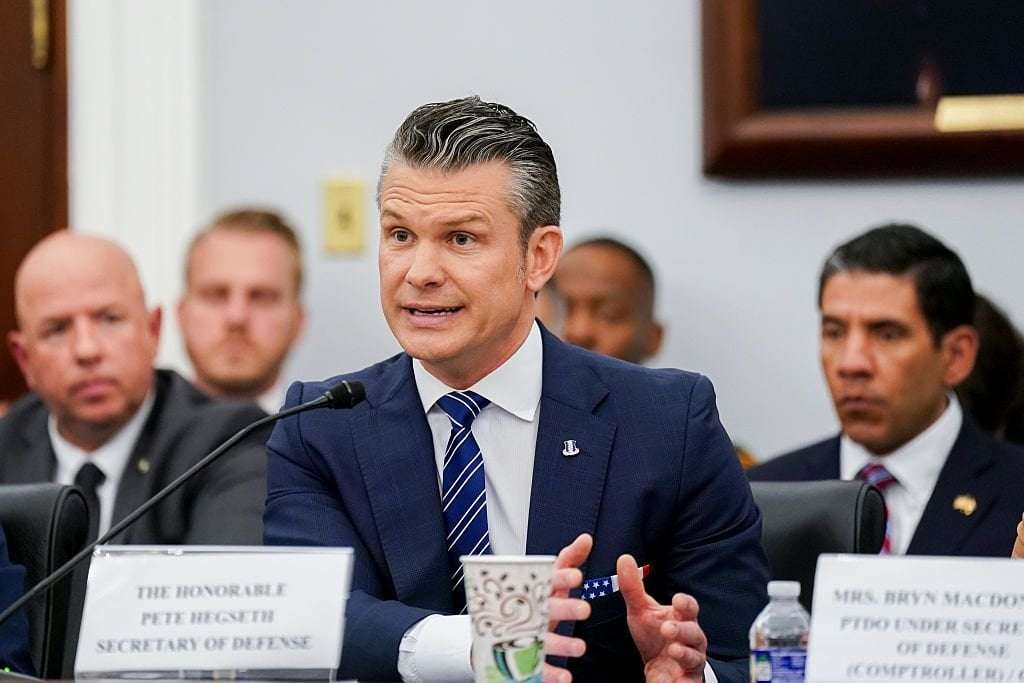
The United States will reduce funding allocated for military assistance to Ukraine in its upcoming defense budget, U.S. Defense Secretary Pete Hegseth said in a congressional hearing on June 10.
"It is a reduction in this budget," Hegseth told lawmakers in the U.S. House of Representatives.
"This administration takes a very different view of that conflict. We believe that a negotiated peaceful settlement is in the best interest of both parties and our nation's interests, especially with all the competing interests around the globe."
The Pentagon has not yet released the full documentation regarding its 2026 budget. According to Hegseth, the pending budget "provides a historic level of funding for military readiness, putting (U.S.) warfighters and their needs first."
Hegseth did not disclose details as to the extent of the funding cuts to Ukraine.
The Pentagon's announcement follows weeks of intense Russian attacks on Ukrainian cities, including record-breaking drone strikes against Kyiv. Amid the escalating aerial assaults, President Volodymyr Zelensky has urged the U.S. to support Ukraine with critical air defense systems.
Ukraine has offered to buy these systems outright rather than requesting military aid.
Since Russia launched its full-scale invasion of Ukraine in February 2022, the U.S. has provided Kyiv with over $66 billion in defense support. But U.S. President Donald Trump halted the approval of new military aid packages to Kyiv when he began his second term in January.
Under Trump's leadership, Washington's policy towards Ukraine shifted dramatically. Calls to support Ukraine's independence and sovereignty have been replaced with demands that Ukraine make a deal with Russia, and Trump has at times lashed out at Zelensky.
After the leaders' infamous clash during an Oval Office meeting in February, the U.S. temporarily suspended all military aid to Ukraine. Hegseth, who ordered the temporary halt, also did not attend the most recent Ukraine Defense Contact Group meeting on June 4 — the first such absence by a U.S. defense chief since the beginning of the full-scale invasion.
Zelensky confirmed in a recent interview that the U.S. diverted 20,000 anti-drone missiles originally intended for Ukraine to American forces in the Middle East.
CharmingCrust on June 10th, 2025 at 20:17 UTC »
Nuclear disarmament deals have been nuked. No country will ever make a nuclear disarmament agreement in exchange for "current intent of popular promise of maybe limited moral support in case of an attack"..
RMRdesign on June 10th, 2025 at 20:02 UTC »
But they signed the Minerals deal?
Man_Behin_Da_Curtain on June 10th, 2025 at 19:58 UTC »
Except that would violate the mineral rights agreement which states that military aid will count as the US' portion into the joint fund. If Ukraine isnt getting and military aid and any reconstruction funding wont come at all then Ukraine has no reason to stay in the agreement at all.
Edit: I guess I need to make this clear to those who are saying military aid is not part of the agreement. The agreement is set at 50-50 contribution, with US' contribution being military aid and reconstruction aid. Since reconstruction aid cant be given until the war is over any contribution that the US makese has to be military aid or other vital aid that Ukraine determines. Ukraine's contribution is the mineral rights and and the value of them is Ukraine's contribution to the joint fund. If the US is not contributing any military aid or is reducing the military aid that is not equal to what Ukraine is contributing with minerals then there is no use in Ukraine staying on the agreement.
And yes, I read the entire agreement and annotated it in depth. Since the DoD has refused to release their budget plans and "cut" to military aid" can be a minimal cut or a total cut. Either way, with the US refusing Ukraine's request to purchase outright anti-air defense systems and diverting 20,000 anti drone devices to the Middle East, one can get the picture that all the US will be porbably be sending is small arms, small arm ammunition, and artillary shells, which at this point is a near total aid reduction.