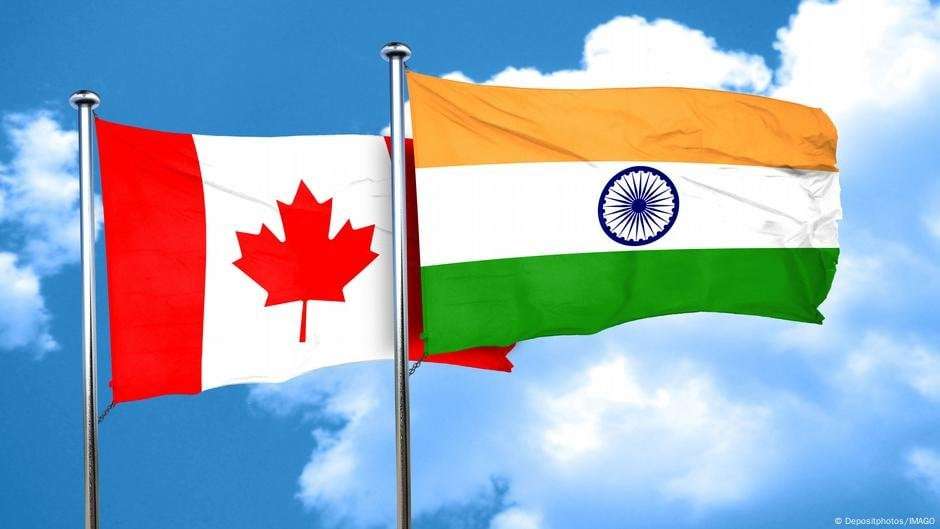
Indian Prime Minister Narendra Modi has accepted an invitation to the G7 summit in Canada. The move could mark a turning point in relations after a bitter diplomatic rift linked to an assassination case.
Indian Prime Minister Narendra Modi on Friday confirmed he would attend the upcoming Group of Seven (G7) leaders summit in Canada after an invitation from newly elected Canadian Prime Minister Mark Carney.
Carney's invitation and Modi's acceptance of it raise hopes of a possible relations reset after long standing diplomatic tension.
What did India's Modi say about the Canada visit?
"Glad to receive a call from Prime Minister Mark Carney of Canada," Modi said in a post on social media platform X. "Congratulated him on his recent election victory and thanked him for the invitation to the G7 Summit in Kananaskis later this month... look forward to our meeting at the summit."
While India is not a member of the G7 group of leading industrialized nations, Modi has been invited to several summits since 2019, when France first extended an invitation to the Biarritz summit.
Modi reiterated that he was keen to rebuild ties with Ottawa.
"As vibrant democracies bound by deep people-to-people ties, India and Canada will work together with renewed vigor, guided by mutual respect and shared interests," he said.
Why have Canada and India been at odds?
The announcement comes after a period of severely strained relations between the two countries, triggered by Canadian allegations that Indian agents were involved in the June 2023 assassination of Hardeep Singh Nijjar—a Canadian citizen and prominent pro-Khalistan activist—outside a Sikh temple in Vancouver.
Why Canada thinks India is behind Sikh leader killing To view this video please enable JavaScript, and consider upgrading to a web browser that supports HTML5 video
India strongly denied the claims, and both nations expelled senior diplomats in a tit-for-tat escalation.
Canada is home to the largest Sikh diaspora outside India, including a vocal segment of activists supporting Khalistan, a fringe separatist movement seeking a Sikh homeland in northern India. Ottawa has also accused India of targeting other Sikh activists on Canadian soil.
There were signs of an improvement in the diplomatic mood late last month, when India's foreign minister spoke to his Canadian counterpart in a call seeking to mend the strained bilateral relations between the two countries.
mahavirMechanized on June 6th, 2025 at 21:26 UTC »
Fascinating seeing as just a day ago word was India wasn’t invited:
https://www.bloomberg.com/news/articles/2025-06-04/modi-not-invited-to-g-7-summit-in-sign-of-frayed-canada-ties
I’d be curious who pressured who, or what sort of back channel chatter there was.
My guess is that the China concerns are deeply grievous, especially given the very mixed signals from America.
Normal_Imagination54 on June 6th, 2025 at 21:23 UTC »
Personally, I don't think Modi should go, invite or not. Maybe send Jaishankar or someone else.
These countries (not pointing to Canada) are openly funding the terror state next door. Why pretend that everything is business as usual by attending yet another pointless meeting?
But knowing Modi's penchant for being in front of camera and playing to domestic audience, he is most likely going.
1-randomonium on June 6th, 2025 at 21:07 UTC »
I have to wonder what back-channel diplomacy was involved in this invite. Canada clearly dithered for a long time; the other world leaders who were invited got their invites weeks ago. Only yesterday it was taken for granted by Indian media that Modi had been snubbed. India's main opposition party had already started attacking him for diplomatic failures, while his supporters were trying to save face by arguing that he was unlikely to go even if invited.