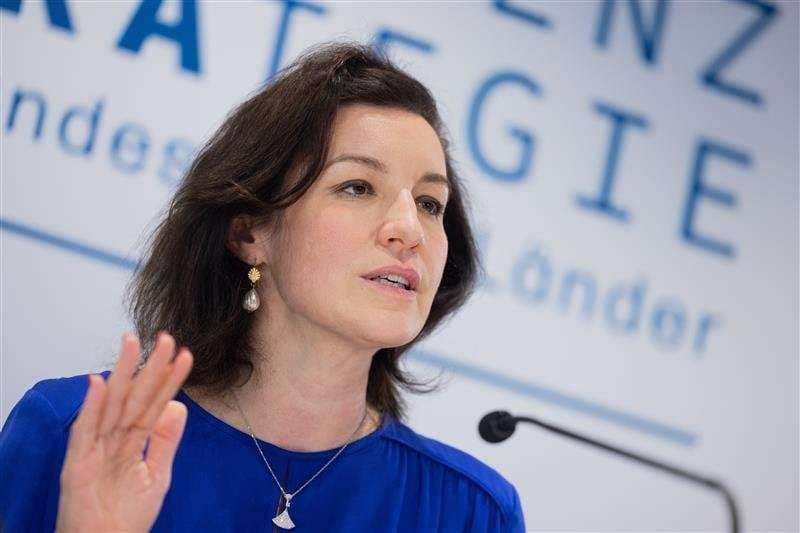
Bonn (dpa/d.de) – A large proportion of Germany’s 109 universities can look forward to substantial additional funding over the next seven years. Under the so-called Excellence Strategy, projects at 43 universities in 13 federal states have been selected for extra funding, Federal Research Minister Dorothee Bär and the Joint Science Conference of the federal and state governments announced yesterday in Bonn.
“The consistently high quality of the proposals submitted shows that cutting-edge research in Germany is on a very promising path,” said Bär.
Specifically, the funding will go towards special research projects known as Clusters of Excellence. These may be projects run by individual universities or joint initiatives involving several institutions – including partnerships with external research organisations. A total of 539 million euros per year will be made available for 70 Clusters of Excellence from 2026 onwards.
47 universities submitted 98 funding proposals. The stakes are even higher for the universities: those that secure at least two clusters, or are involved in a consortium of at least three, are eligible for the title of “University of Excellence” – which comes with an additional 10 to 15 million euros in annual funding.
dragontimur on May 24th, 2025 at 10:13 UTC »
https://www.bmbf.de/SharedDocs/Pressemitteilungen/DE/2025/05/220525-Exzellenzcluster.html
Primary source in german if anyone is interested
SnowyOwlER on May 24th, 2025 at 10:12 UTC »
It's not really extra, the funding is awarded or renewed every seven years. So yes, being awarded a cluster of excellence means funding for that cluster, but the programme isn't new and most universities were already part of the previous round of funding.
kruhsoe on May 24th, 2025 at 10:04 UTC »
Awesome, however, money has never been our problem at least not in past 20 years.
One simple question: What is the probability that something like Hugging Face or DeepSeek, both with their deep insights into a topic, would be created in Germany? My answer is 0% and that is sad.
Why is that? Because we structurally have a very shallow understanding of technology. Our academia is still mostly living somewhere in the 1990s, our industries mostly buy and almost never build and as it turns out, only relied on competitive advantages through cheap gas and labor.
This is not enough to be a player in 21st century my dear German fellows.