Have you ever pulled an all-nighter because of anxiety? Found yourself doomscrolling on your phone when you should have gone to bed hours ago? Purposely downed too many cups of coffee at three in the morning? There are some insomniac flies who would like a word.
It appears that fruit flies that spend their days lazily buzzing through the lush orchards and rainforests of Queensland, Australia, live in paradise. That changes at sunset. After dark, the flies are plagued by the Gamasodesqueenslandicus mites, which can attach themselves like ticks and literally eat the flies alive in their sleep. Researchers led by University of Cincinnati biologist Joshua Benoit have now discovered that flies that have had enough of the mites will stay awake at the expense of their health.
These mite-resistant flies drain their nutrient reserves to stay up all night, making them more susceptible to starvation. Insomniacs consumed more oxygen and were generally more active than non-resistant flies; they also experienced changes in gene activity related to their metabolisms.
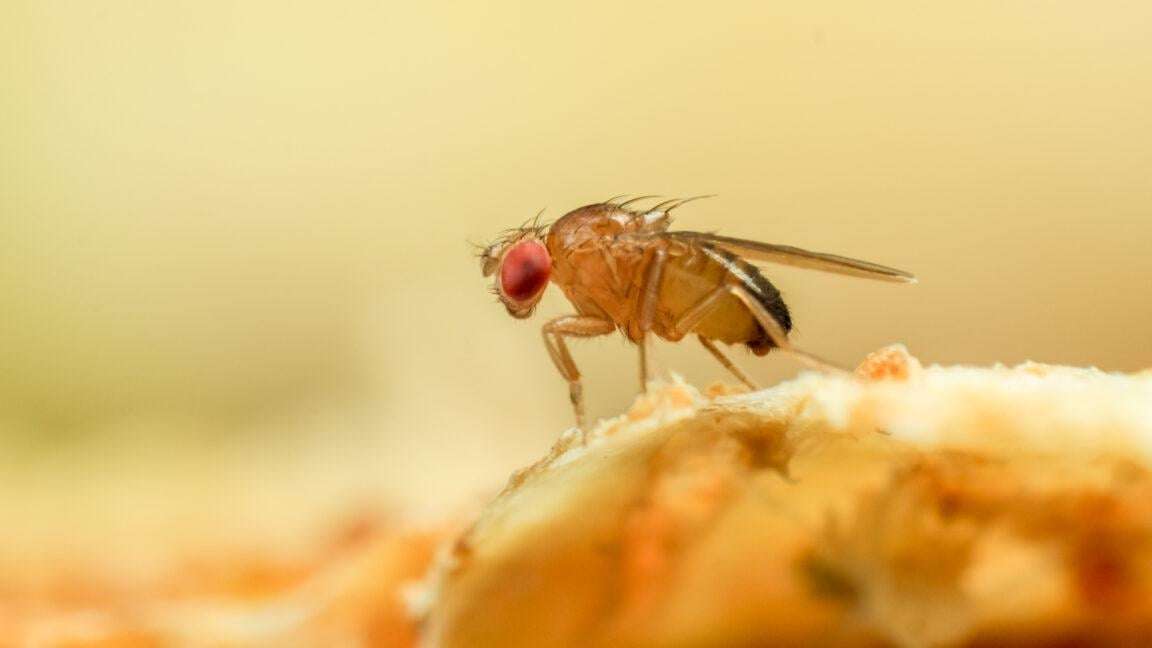
Fruit flies (Drosophila melanogaster) may be pests to humans, but they have their own pests to contend with. Ectoparasitic mites such as G. queenslandicus are some of the worst. Being bitten can put the flies' immune and repair responses into overdrive, at great energy cost. Parasitized flies are also less successful at mating.
Given all that, the flies are likely better off staying awake and in defense mode.
Benoit and his team compared the flies’ daytime and nighttime activities. They also bred generation after generation of mite-resistant flies to see how their resistance would evolve. When humans purposely select for or against certain features in other organisms like this, it's known as artificial selection. This was meant to give the researchers an idea of how mite-resistant flies evolve in response to mites in nature.
While many genes saw changes after the researchers selected for mite resistance, those associated with metabolic processes such as glycolysis, which involves enzymes breaking down glucose, were especially affected.
“We found that more than 30 metabolism genes were differently [activated] in these flies, suggesting they were burning their energy a little faster than you’d expect,” Benoit said in a press release.