This story is available exclusively to Business Insider subscribers. Become an Insider and start reading now.
President Donald Trump's highly anticipated new round of tariffs is here, and it could mean increased prices on a range of goods Americans rely on.
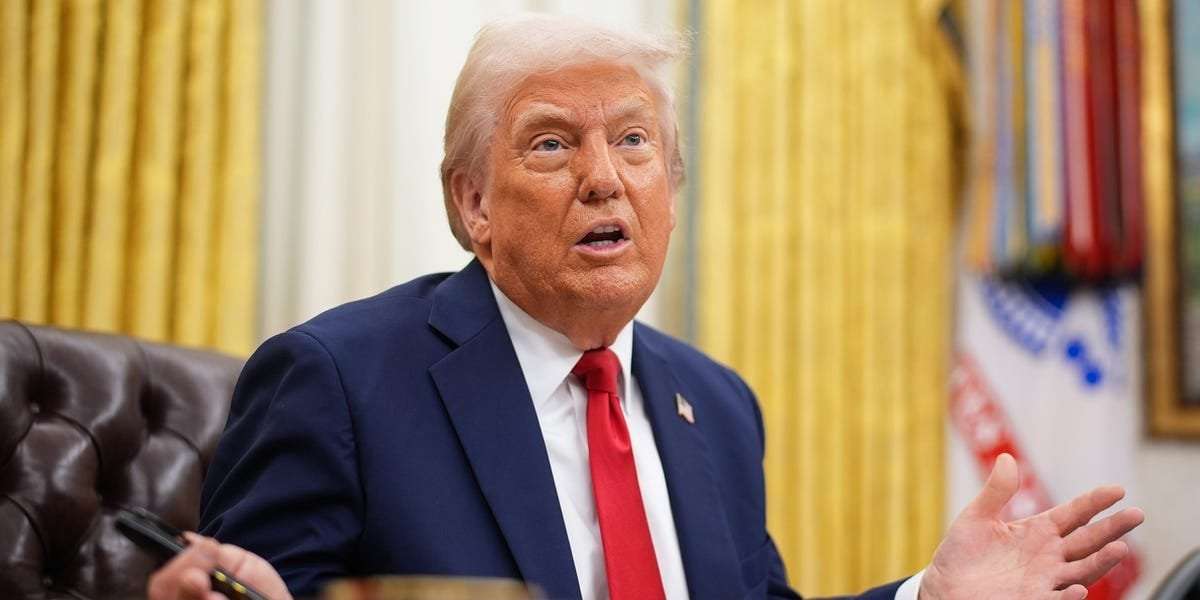
On Wednesday, Trump signed an executive order announcing reciprocal tariffs on all countries that have placed tariffs on US goods. These tariffs fall on Trump's so-called "Liberation Day," which the president has been touting for weeks. The announcement sent global markets plummeting.
"April 2, 2025, will forever be remembered as the day American industry was reborn, the day America's destiny was reclaimed, and the day that we began to make America wealthy again," Trump said during remarks on Wednesday.
The motivation for the reciprocal tariffs: "They do it to us, and we do it to them," Trump said. "Very simple. Can't get any simpler than that."
How countries and industries are affected by Trump's tariffs
Trump announced that he is imposing a 10% baseline tariff on all countries, set to go into effect on April 5.
He also announced a reciprocal tariff: Trump said during his remarks that he would charge countries "approximately half" of what those countries have been charging the US.
The reciprocal tariffs will apply to the countries with which the US has the highest trade deficit. They will go into effect on April 9, the White House said.
The reciprocal tariff amounts to a 34% tariff on goods from China, a 20% tariff for the European Union, a 32% tariff for Taiwan, and a 26% tariff for India.
In the case of China, the 34% reciprocal tariff is on top of the existing 20% tariff on Chinese goods — meaning the total effective tariff rate on Chinese goods stands at 54%.
FULL LIST: Liberation Day pic.twitter.com/ZBiRuJBCAr — Rapid Response 47 (@RapidResponse47) April 2, 2025
Trump also announced a 25% tariff on all car imports into the US.
He did not mention any new tariffs on Canada or Mexico during his remarks.
In the weeks leading up to April 2, Trump signaled a range of tariffs he was planning to implement. They included a 25% tariff on goods from Canada and Mexico, a 25% tariff on all car and car part imports into the US, tariffs on agricultural goods, and reciprocal tariffs on all countries that have placed tariffs on US goods. A 25% tariff on steel and aluminum imports is already in effect.
These tariffs are likely to increase prices on impacted goods, and while some companies might choose to absorb some of the costs, consumers are set to shoulder most of the burden.
Markets and consumers have already been feeling financial strains due to the ongoing uncertainty with Trump's trade plans.
"When the president doesn't have a clear strategy or direction, it is extremely difficult for businesses in particular and consumers as well, to plan for the future, and that's why you're seeing so much uncertainty in the consumer market right now and so much uncertainty in the business community," Alex Jacquez, an advisor on the National Economic Council under former President Joe Biden, told reporters on a Tuesday press call.
How countries and industries are reacting
The US is likely to see retaliatory tariffs from impacted countries following Trump's announcement.
Related stories Business Insider tells the innovative stories you want to know Business Insider tells the innovative stories you want to know
In a video address on Thursday, Ursula von der Leyen, the president of the European Commission, said "tariffs across the board make things work worse, not better," and said the EU is ready to take "firm countermeasures if necessary."
"Our immediate response to tariffs is unity and determination," she said.
Canada's Justin Trudeau previously said he would place tariffs on American goods until Trump's tariffs were withdrawn.
The United Auto Workers union previously lauded the president's plan to place a 25% tariff on all cars and car parts imported into the US, saying it would bring more jobs back into the US auto industry.
"These tariffs are a major step in the right direction for autoworkers and blue-collar communities across the country," UAW President Shawn Fain said in a statement.
Correction: April 3, 1:40 p.m. EST — An earlier version of this story misstated the reciprocal tariff rate on China. It is 34%, not 32%.
RetroTheGameBro on April 2nd, 2025 at 22:52 UTC »
Wow! I was struggling to pay for my day to day needs, barely scraping by.
But thanks to the president, I won't even be able to do that!
Fuck this country. Fuck this administration. Fuck everyone that voted for him.
Sprozz on April 2nd, 2025 at 21:29 UTC »
Liberating Americans from the cash in their accounts
urban_mystic_hippie on April 2nd, 2025 at 21:28 UTC »
Happy Recession Day Everyone!