In 1991, Ukraine’s population was 52 million. By 2015, it had shed 10 million. And now, the war is significantly worsening demographic prospects: As of 2024, the United Nations estimated Ukraine’s population was down to 37.9 million. In fact, some demographers hazard it could now be below 30 million — if only counting Ukraine-controlled areas.
In the war’s first year, however, polling by both Ukrainian and European sociologists rosily suggested most of those who fled would return, with some optimistically estimating 80 percent to 90 percent would do so. Libanova never really trusted those predictions — she initially suggested Ukraine could count itself fortunate if it saw a 50 percent return rate. “That would be fantastic,” she said.
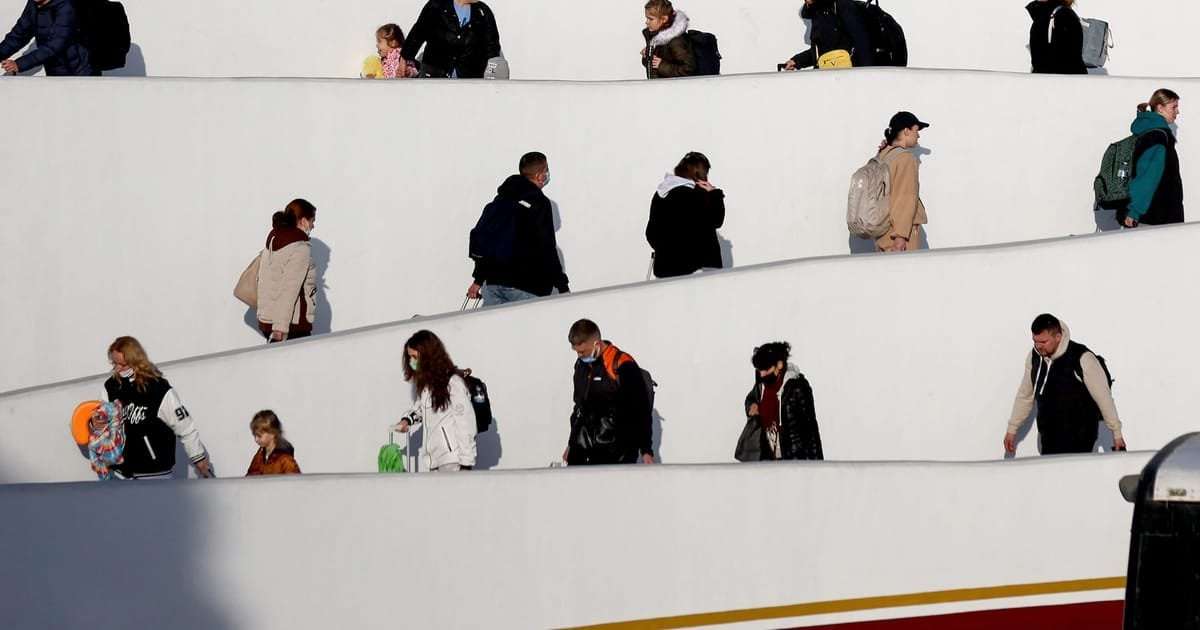
As of 2024, the United Nations estimated Ukraine’s population was down to 37.9 million. | Paula Bronstein/Getty Images
Three years later, she now predicts it will likely be closer to 30 percent — similar to the rate of return seen after the Balkan Wars of the 1990s. She suspects the hopeful forecasts were the result of the patriotic fervor harbored by those who had fled and the discomfort of admitting to anyone, including to themselves, that they might remain in their new homes unless they’re forced to leave by their host countries.
Former Minister of Foreign Affairs Dmytro Kuleba is even more pessimistic. Shortly after he resigned last year, he told President Volodymyr Zelenskyy Ukraine would have a huge demographic challenge. “I was always telling him — the president never agreed with me — that our only hope would be to import people from other countries,” Kuleba told POLITICO in a recent interview.
“I think most Ukrainians who’ve fled have gone for good, and we can’t really count on them to come back. Every family will sit down and draw up a list of arguments in favor of returning or not. But for the mothers, there will be that big question about uprooting their children again after they’ve made new friends, learned the language of their new homes and integrated,” he said. Moreover, as many of them now have jobs, they’ll have to reckon with opportunities being better where they are than in Ukraine, trying to recover from war.
Anecdotal evidence collected by this columnist suggests Kuleba may be right. For the past three years, I’ve asked more than a hundred Ukrainian refugees whether they plan to return, and their responses have shifted over time, from a first-year “yes,” to a second-year “maybe,” and a third-year “probably not” or flat “no.”
Doctorstrange223 on March 15th, 2025 at 10:09 UTC »
It is far worse. Before the war it was 37 million within the country but the Russian controlled areas pre war had 4 million of those people, but now I believe it is as low as 25 million. Maybe less. Russian security Council and former President Medvedev has said he thinks it is 25 million. Of course he is anti Ukraine but I have read similar opinions elsewhere then we have to factor in how many are under Russian controlled and not even allied to the Ukrainian government.
Dean_46 on March 15th, 2025 at 05:12 UTC »
The real population is probably lower. Ukraine's pre war population was around 40 million, from which about 8 million live in Russian controlled areas (and are mostly ethnically Russian, like in Crimea) who don't intend to be Ukrainian citizens. Another 8 million are refugees in Europe. Deduct war casualties from the 24 million who are left.
aWhiteWildLion on March 15th, 2025 at 03:14 UTC »
Ukraine has been experiencing a significant population decline over the past decades, a trend exacerbated by the ongoing conflict with Russia.
In 1991, Ukraine's population stood at 52 million. By 2015, it had decreased by 10 million, and as of 2024, the United Nations estimated the population to be 37.9 million. Some demographers suggest it could now be below 30 million when considering only areas controlled by Ukraine.
The war has also further impacted Ukraine's birth rate, which has been declining for decades due to high death rates, reduced births, and emigration.