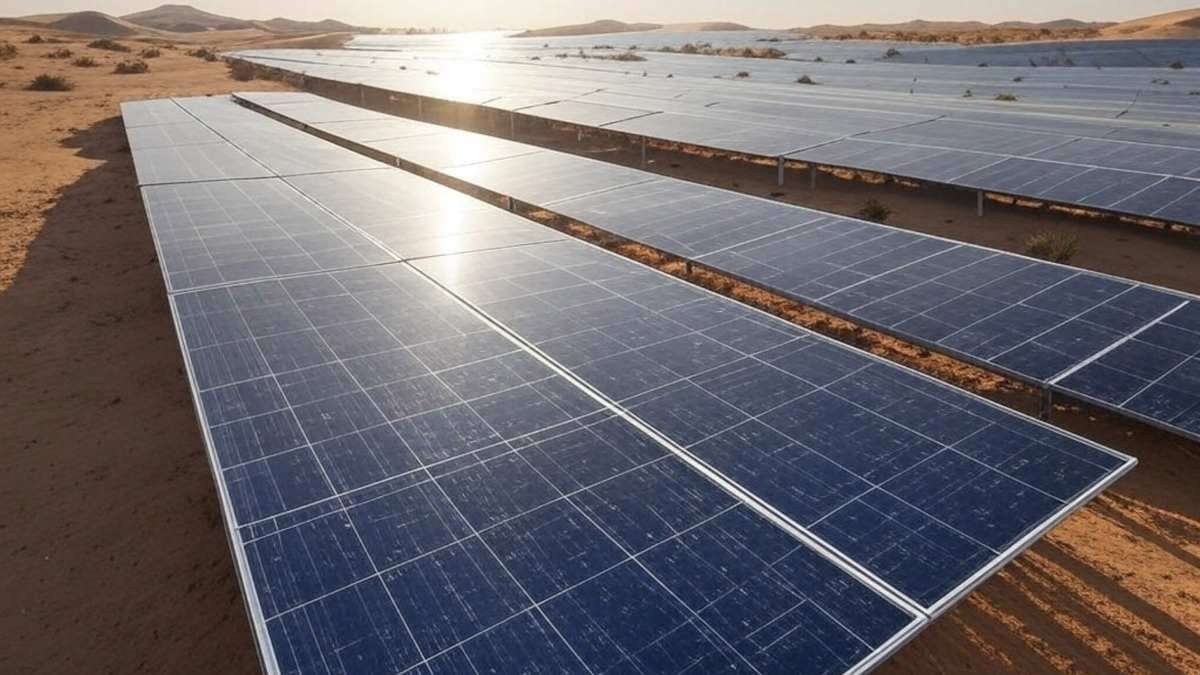
For years, solar energy has been celebrated as one of the most promising solutions to fight climate change. But while the focus has often been on its ability to generate clean electricity, new research from China suggests that large-scale solar farms may have an even greater impact—transforming entire ecosystems.
A groundbreaking study conducted at a massive solar installation in the Talatan Desert reveals that solar panels don’t just harness the sun’s power—they alter soil conditions, encourage vegetation growth, and reshape the local climate. These findings could change how we think about the relationship between renewable energy and the environment.
How Solar Panels Are Changing Deserts
A team of researchers from Xi’an University of Technology studied the Gonghe Photovoltaic Park in China’s Qinghai Province, a one-gigawatt solar farm covering vast stretches of desert. Their goal? To determine how the installation affected its surroundings.
Using the DPSIR model—a framework used by environmental scientists to analyze ecological changes—the team examined 57 environmental indicators, including soil composition, temperature, humidity, and biodiversity. What they found defies expectations: instead of harming the fragile desert ecosystem, the solar panels were actually revitalizing it.
From Barren Land to Thriving Microclimate
One of the most striking discoveries was the dramatic improvement in soil quality and ecological health beneath the solar panels.
The immediate area under the panels was rated as having “general” ecological health with a score of 0.4393 .
was rated as having with a score of . Transitional zones (areas between the panels and the open desert) scored lower at 0.2858 .
(areas between the panels and the open desert) scored lower at . The surrounding desert, untouched by solar infrastructure, had the poorest rating at 0.2802.
What’s causing this shift? The solar panels create consistent shade, which helps retain moisture, lower soil temperatures, and reduce evaporation. In arid environments where water is scarce, these subtle changes can make a huge difference—allowing vegetation to flourish and supporting the growth of microorganisms essential for soil health.
A Symbiotic Relationship Between Solar Energy and Nature
Traditionally, deserts have been seen as harsh, lifeless landscapes, but the research challenges this assumption. Under the right conditions, solar farms could act as catalysts for ecological revival.
In the case of the Gonghe Photovoltaic Park, the presence of solar panels altered energy distribution across the desert, creating a more hospitable environment for plant life. The result? A transformation of the desert ecosystem that could have long-term benefits for biodiversity.
This shift raises an important question: Could large-scale solar farms help restore degraded land while producing renewable energy? According to the researchers, the answer is promising. They concluded that photovoltaic installations have had a net positive impact on the desert environment—a finding that could influence future solar energy projects worldwide.
Long-Term Effects Still Need More Research
Despite these encouraging results, scientists caution that long-term monitoring is crucial. While the study provides compelling evidence that solar panels can enhance desert ecosystems, researchers emphasize the need for continued observation to fully understand the lasting effects on biodiversity, water cycles, and climate patterns.
Additionally, careful site selection will be key. Not all deserts are the same, and ensuring that solar farms are placed in the right locations will help maximize benefits while avoiding unintended consequences.
A New Future for Solar Energy and Desert Ecosystems
This research marks a significant turning point in how we think about renewable energy and environmental conservation. Deserts, once seen as unusable wastelands, could serve a dual purpose—acting as massive clean energy hubs while simultaneously fostering ecosystem recovery.
As the world pushes toward sustainable energy solutions, this study highlights an exciting possibility: solar power doesn’t just reduce carbon emissions—it may also help heal the planet. If harnessed correctly, the very technology we rely on to combat climate change could also play a role in restoring the Earth’s most fragile environments.
Le_Botmes on March 12nd, 2025 at 23:50 UTC »
Tldr: solar panels provide shade
Samwyzh on March 12nd, 2025 at 23:41 UTC »
The first practical use of the solar panel was showcased at the world fair as a low power irrigation system that could reverse,reduce desertification. Calling that invention a solar panel is a stretch, but it was theorized as a way to make agriculture easier.
braumbles on March 12nd, 2025 at 23:24 UTC »
The question is whether we'll do anything about it. Desertification has been increasing across the US and globe. Lakes like Powell, Meade, and the Great Salt Lake are all drying up at alarming rates. As land becomes uninhabitable people will start migrating. So whether it's cities like Jakarta sinking or sources of fresh water drying up, leading to unlivable land, there's going to be millions in search of a new home in the coming decades. There's going to be a great migration. I used to be more optimistic about slowing it down, but morons continue electing Republicans who are anti solution and pro problem. These morons may feel it won't be a US problem, but they're wrong, it'll be a global problem when tens or hundreds of millions are marching and looking for a new home.
https://www.youtube.com/watch?v=0Pl7_wnpB5Y&ab_channel=VICENews