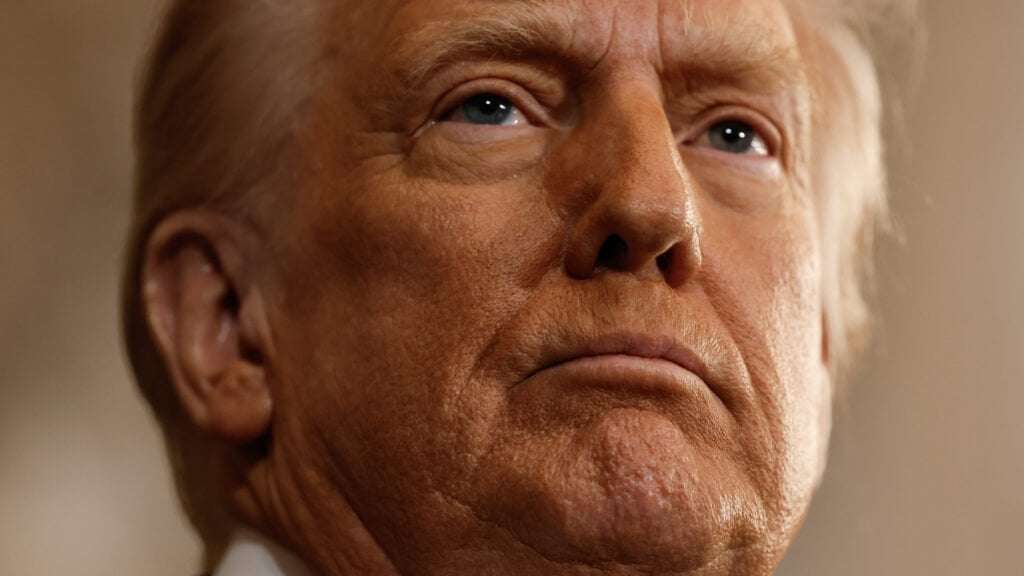
A flurry of scientific gatherings and panels across federal science agencies were canceled on Wednesday, at a time of heightened sensitivity about how the Trump administration will shift the agencies’ policies and day-to-day affairs.
Several meetings of National Institutes of Health study sections, which review applications for fellowships and grants, were canceled without being rescheduled, according to agency notices reviewed by STAT. A Feb. 20-21 meeting of the National Vaccine Advisory Committee, a panel that advises the leadership of the Department of Health and Human Services on vaccine policy, was also canceled. So was a meeting of the Presidential Advisory Council for Combating Antibiotic-Resistant Bacteria that was scheduled for Jan. 28 and 29.
The scope of the cancellations was unclear. It was also unclear whether they were related to the Trump administration’s freeze on external communications until Feb. 1.
Related Story RFK Jr. to face key Senate committee hearings next week
“Peer review via study sections is required by law in order for the NIH to disburse most of the $40 billion annual extramural budget,” said Norman E. Sharpless, a former director of the National Cancer Institute, part of the NIH. “If study sections and advisory council meetings are postponed for more than even a brief period, this will likely lead to interruptions in grant funding, which is bad for U.S. biomedical research.”
An NIH spokesperson did not answer questions about study section cancellations, but provided a general statement. “HHS has issued a pause on mass communications and public appearances that are not directly related to emergencies or critical to preserving health,” said the spokesperson. “This is a short pause to allow the new team to set up a process for review and prioritization. There are exceptions for announcements that HHS divisions believe are mission critical, but they will be made on a case-by-case basis.”
Any prolonged pause of the NIH’s study sections could result in funding delays for scientific labs awaiting approval of their work.
It’s expected that an incoming administration would pause activities by federal agencies to get their appointees in place. But the pause could lead to fallout down the line, said Carrie Wolinetz, chair of the health bioscience innovations practice at Lewis-Burke Associates and a former senior adviser at the NIH. ”Anything that disrupts study sections for a period of time, from government shutdowns to major weather events, can backlog and slow down the whole system, especially since study section members tend to be busy people who can be hard to schedule. Virtual study sections make it easier, but it can be disruptive,” she said.
“This is super stressful because of the uncertainty of not knowing how long these cancellations be in effect. If study sections don’t meet on time, then that could delay grants being distributed, which affects the ability of labs to pay their students and postdocs and staff. In some cases, if there was a gap in funding, it could result in someone either not being hired at all or having to be laid off,” said Rebecca Pompano, a chemist and biomedical engineer at the University of Virginia whose training session for a study section on Wednesday was canceled 20 minutes before it was scheduled to start.
“With [government] shutdowns, we all know eventually it will reopen, and so it’s always seen as temporary,” Pompano said. “But this one is more stressful because there’s been a lot of talk from [Robert F. Kennedy Jr.] about overhauling the NIH extensively.”
Annika Barber, a molecular biologist at Rutgers University who is a member of a study section slated for Feb. 20-21, was told the section was not canceled. “At least for now, it seems like this [scientific review officer] thinks that we will be meeting, and I was able to book my travel through the NIH World Travel website this afternoon and an Amtrak ticket was issued, so the NIH did pay for a train ticket, which also seems promising,” Barber said in an email to STAT.
Related Story Senate Democrats preview vaccine arguments ahead of RFK Jr. hearings
The communications pause also could delay time-sensitive information sharing.
Scientific updates in the Centers for Disease Control and Prevention’s Morbidity and Mortality Weekly Report, for example, are also subject to the pause. Three new reports on the H5N1 bird flu outbreaks in dairy cows and poultry were to be published this week; now it is unclear when they will be released, a CDC official who spoke on condition of anonymity told STAT. One of the reports was the result of a study looking for undetected infections in veterinarians who work with cows.
STAT reached out to the CDC to ask about the delay in the publication of the MMWR articles but did not receive a reply. STAT reached out to the Food and Drug Administration about the status of its advisory committees, which are key in the process of approving drugs and devices, but also did not receive a response.
Helen Branswell and Matthew Herper contributed reporting.
Cojalo_ on January 23rd, 2025 at 13:51 UTC »
He wants to drag the US back to the dark ages. Whoever voted this loon is insane
oldnjgal on January 23rd, 2025 at 13:21 UTC »
Science has too many big words for the big guy to handle.
Remarkable_Age_8229 on January 23rd, 2025 at 13:09 UTC »
What’s to be confused about? The man hated science in his first term and we’re confused why a more senile and insane version of the same person still doesn’t like science?