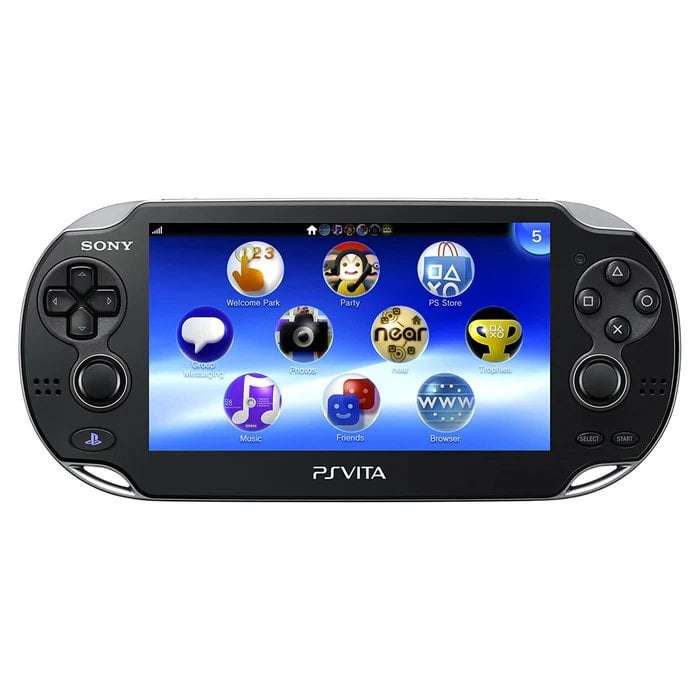
In 2011, Sony introduced the PlayStation Vita, a handheld gaming device that, in hindsight, had the potential to offer features similar to the Nintendo Switch. Shuhei Yoshida, a former PlayStation executive, recently shared insights into the Vita’s development and the decisions that may have hindered its success.
Yoshida highlighted several technical choices that impacted the Vita’s appeal. One notable decision was the use of proprietary memory cards, which forced us to spend extra money compared to standard alternatives.
Additionally, the inclusion of a back touchpad, inspired by impressive prototypes, added unnecessary cost without significantly enhancing gameplay. The OLED screen, while delivering vibrant visuals, further increased production expenses.
Interestingly, the Vita’s development kit featured video output capabilities, allowing it to connect to external screens—a function reminiscent of the Nintendo Switch’s versatility. However, this feature was removed from the consumer version to reduce costs.
Yoshida humorously reflected on this, suggesting that retaining such functionality could have positioned Vita as a more competitive and innovative product.
Beyond hardware decisions, resource allocation within Sony played a crucial role. Yoshida explained that the company’s efforts were divided between home consoles like the PlayStation 3 and PlayStation 4, and the handheld Vita.
This division stretched resources thin, leading to the home consoles receiving priority due to their greater popularity. In contrast, Nintendo’s unified focus on a single platform with dual capabilities, as seen with the Switch, allowed for a more concentrated and successful approach.
Reflecting on Sony’s strategy, Yoshida noted that the company’s legacy centers on delivering cutting-edge technology at affordable prices. This focus meant there was little consideration for combining efforts into a single hybrid device, unlike Nintendo’s approach with the Switch.
In summary, while the PlayStation Vita was a beloved piece of hardware with innovative features, a series of technical and strategic decisions—ranging from proprietary accessories and omitted functionalities to divided resources—contributed to its underwhelming market performance.
These insights from Yoshida offer a perspective on how different choices might have altered the handheld gaming landscape, potentially positioning the Vita as a precursor to the Nintendo Switch’s success.
Have something to add? Let us know in the comments below!
PerfectCheesecake25 on January 16th, 2025 at 18:04 UTC »
Did it have Mario kart? Without Nintendos hit ip the switch wouldn’t have hit that big either
TheWhiteHunter on January 16th, 2025 at 16:44 UTC »
tl;dr - the Vita should have kept video output, scrapped the back touch, used an LCD screen and not used proprietary accessories (like the memory cards) to reduce costs and make it more accessible.
Yes, Sony has a great history of high quality first party games, but have also struggled with the staying power of them. That isn't necessarily a bad thing as it allows developers to move on to try new things, but the three longest running first party Playstation franchises I can think of are God of War, Ratchet and Clank, and Gran Turismo.
imo, Nintendo isn't successful because of their hardware but rather despite it. Sony could have literally made a "Playstation Switch" before Nintendo and it wouldn't have been successful without Nintendo's IPs. Sony doesn't exactly have console-selling local-multiplayer options like Mario Kart, Mario Party, and Smash Bros.
I'd love to see Sony give the portable market another whirl but given that even Nintendo has hybridized their home console, and the super casual market has moved onto mobile phone game - I don't see that ever happening. The Playstation Portal gaining the ability to stream games directly from Sony rather than exclusively from your home console is probably the best we'll get.
Negative-Squirrel81 on January 16th, 2025 at 14:35 UTC »
PSP had an external output which I loved using, as the system's bread and butter titles were basically full console length games. Great for JRPGs, but also action games, especially SHMUPs, really benefited from being played on a much larger screen.