University of Queensland (UQ) researchers have discovered a molecule that can protect brain cells from damage caused by oxidative stress and autophagy, processes linked to many brain diseases.
Dr Alessandra Donato and Professor Massimo Hilliard from The Clem Jones Centre for Ageing Dementia Research (CJCADR) at UQ’s Queensland Brain Institute said the findings could open new possibilities for treating conditions like stroke.
“Oxidative stress, caused by free radicals, can damage neurons by activating a process called autophagy,” Dr Donato said.
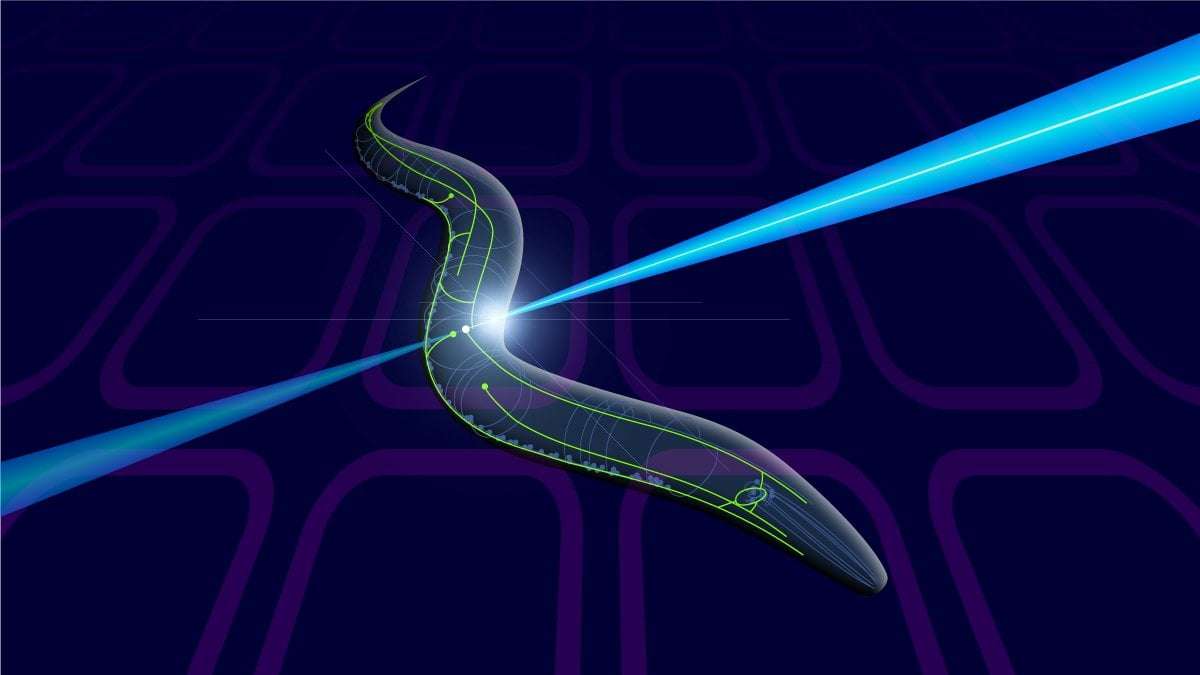
Using the nematode C. elegans to discover a neuronal protective molecule against oxidative damage. Credit: Nick Valmas and Dee McGrath.
“Autophagy is like the cleaner of the cells – it breaks down and recycles old, damaged, or abnormal cell parts in many species, including humans.
“It’s a normal and generally positive cellular process, but when it gets out of control, it can contribute to cell death, much like inflammation.”
“Inflammation is generally good but if the inflammation becomes chronic, it can do serious damage. The same is true for autophagy.”
Professor Hilliard said his team had identified a molecule – OSP-1 – that could help regulate the autophagy process in neurons, making it a potential target for new treatments to protect brain cells from damage caused by oxidative stress.
“The idea is that potentially, by using this OSP-1 molecule, we can block autophagy the moment there is a stroke or the moment there is an acute insult to the cell that activates autophagy,” Professor Hilliard said.
“Possibly, we can put the brakes on it genetically or by acting on that pathway using a drug treatment.”
Discovery of a molecule that protects neurons from oxidative damage. Credit: Alessandra Donato and Nick Valmas.
The team completed these studies in the roundworm C. elegans and in mammalian cells in the dish and can now explore whether this can be applied in vivo in rodents to influence stroke outcomes.
This research has been conducted in collaboration with Professor Elizabeth Coulson’s team and with Professor Hang Lu at the Institute of Technology in Atlanta. Professor Coulson is also a member of CJCADR, QBI and Head of UQ School of Biomedical Sciences.
The research paper has been published in Nature Communications.
Media: QBI Communications, [email protected], Elaine Pye +61 415 222 606, Merrett Pye +61 422 096 049
LPSD_FTW on January 8th, 2025 at 03:03 UTC »
I'm waiting for the molecule that will make head trauma brain damage go away, so I don't get anxious over all the heading in football and hits to the head during martial arts practices. It sucks when your two favourite physical activities come with a detriment to your brain's health :(
xiledone on January 8th, 2025 at 01:52 UTC »
Our cells have pathways that allow them to self destruct when they become cancerous, non functional, or infected. This molecule stops that process. It's an important checks and balance mechanism.
Too much of this molecule increases cancer, too little and you have neurodegeneration.
I'm glad we found this, it has therapeutic properties that we can use vs demyelinating diseases like multiple sclerosis, guillain-barre, and marie charcot syndome. I say this so that anyone reading this doesn't think injecting themselves with it will help them become smarter (yes there are so many ppl on reddit who think this way)
ahothabeth on January 8th, 2025 at 01:43 UTC »
The research paper itself is here.