India has made a striking achievement in reducing malaria cases and deaths, contributing significantly to the overall decline in the World Health Organisation (WHO) South-East Asia Region.
The WHO World Malaria Report 2024 revealed that in 2023, the South-East Asia Region reported eight malaria-endemic countries accounting for four million cases, making up 1.5% of the global malaria burden. India alone contributed to half of the region's cases, followed by Indonesia with nearly one-third.
The region saw notable improvements, particularly in India, where the estimated cases dropped by 17.7 million from 200 to 2023, and malaria incidence fell by 93%, from 20 cases to 1.5 cases per 1,000 people at risk. Sri Lanka was certified malaria-free in 2016.
Globally, in 2023, 29 out of 83 malaria-endemic countries were responsible for nearly 95% of global malaria cases and 96% of malaria deaths. Nigeria (25.9%), the Democratic Republic of the Congo (12.6%), Uganda (4.8%), Ethiopia (3.6%), and Mozambique (3.5%) made up more than half of all malaria cases worldwide.
Similarly, four countries accounted for more than half of all malaria deaths globally: Nigeria (30.9%), the Democratic Republic of the Congo (11.3%), Niger (5.9%), and Tanzania (4.3%).
TRENDS IN MALARIA CASES AND DEATHS IN INDIA
Between 2022 and 2023, India reported a 9.6% drop in malaria cases, while Bangladesh, Indonesia, and Nepal also recorded declines. However, some countries like Myanmar, Thailand, and the Democratic People's Republic of Korea experienced sharp increases in cases, highlighting uneven progress across the region.
Despite India's success, it accounted for approximately 88% of all malaria deaths in the region, alongside Indonesia. Nevertheless, India, Bangladesh, and Thailand achieved reductions in mortality rates by over 63%.
India’s progress owes much to community health workers, particularly women, who have been instrumental in reaching remote populations. Their culturally sensitive approach ensures female patients overcome social barriers to access healthcare.
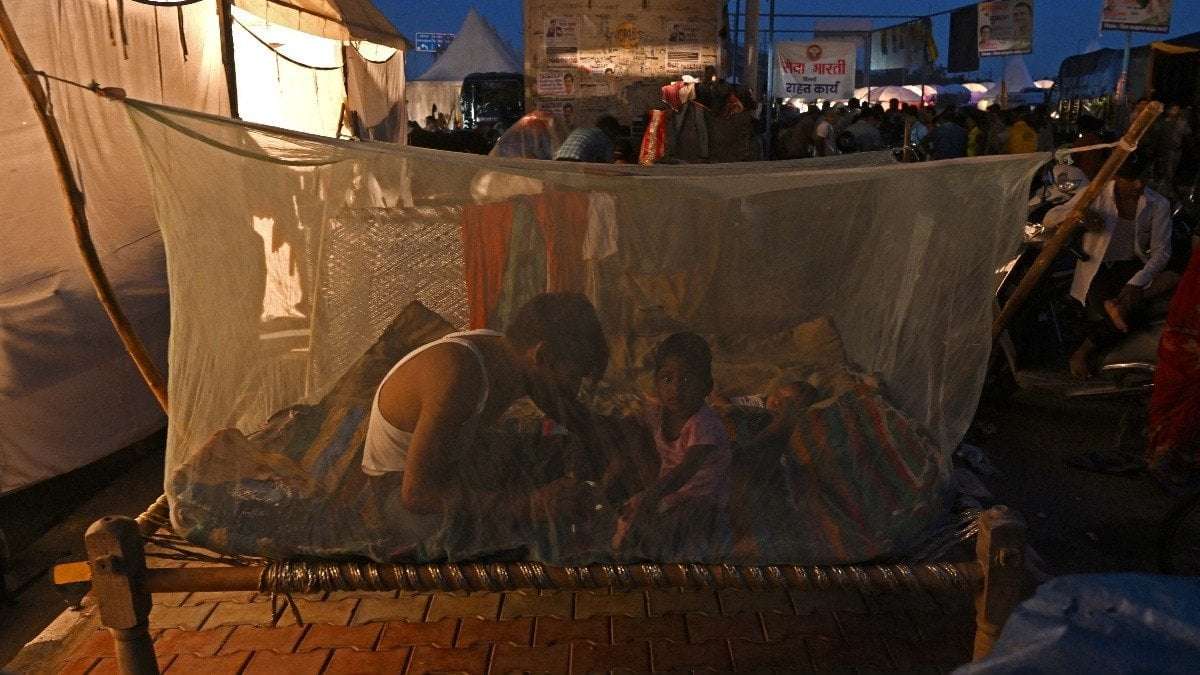
Insecticide-treated mosquito nets (ITNs) and indoor residual spraying (IRS) have been key tools in malaria prevention. In 2023, India distributed over 1.1 million ITNs to reduce malaria cases. Some countries like Myanmar, Thailand, and the Democratic People's Republic of Korea experienced sharp increases in cases. (Photo: Getty Images)
The WHO’s High Burden to High Impact (HBHI) initiative, launched in 2018, supported malaria control in India until 2024. By then, India had exited the HBHI group due to significant progress. Malaria cases fell by 69% from 6.4 million in 2017 to two million in 2023, and deaths dropped by 68% during the same period.
The invasive Anopheles stephensi mosquito, known for spreading malaria in urban areas, remains a challenge, with cases reported in eight African countries. WHO’s July 2024 report highlighted lessons from India, Iran, and Sri Lanka in controlling this species.
WHO has also expanded its focus on IRS, publishing an updated manual in February 2024 to tackle other vector-borne diseases like dengue and Zika.
A major breakthrough in 2023 was WHO’s recommendation of a second malaria vaccine, R21/Matrix-M, to complement the RTS,S vaccine. Together, these vaccines are expected to provide sufficient protection for children in high-risk areas, further advancing malaria prevention efforts.
India’s achievements showcase the importance of sustained efforts and innovation in the fight against malaria, serving as a model for other high-burden nations.
Kheprisun on December 14th, 2024 at 00:06 UTC »
This is great news 😊
Riff316 on December 13rd, 2024 at 23:13 UTC »
Meanwhile in America, the headline is something like: “RFK asks India ‘if you aren’t using your malaria anymore, can the US have it?’”
masteremrald on December 13rd, 2024 at 23:08 UTC »
Wow that is a pretty significant decrease! Great to see their efforts being so effective.