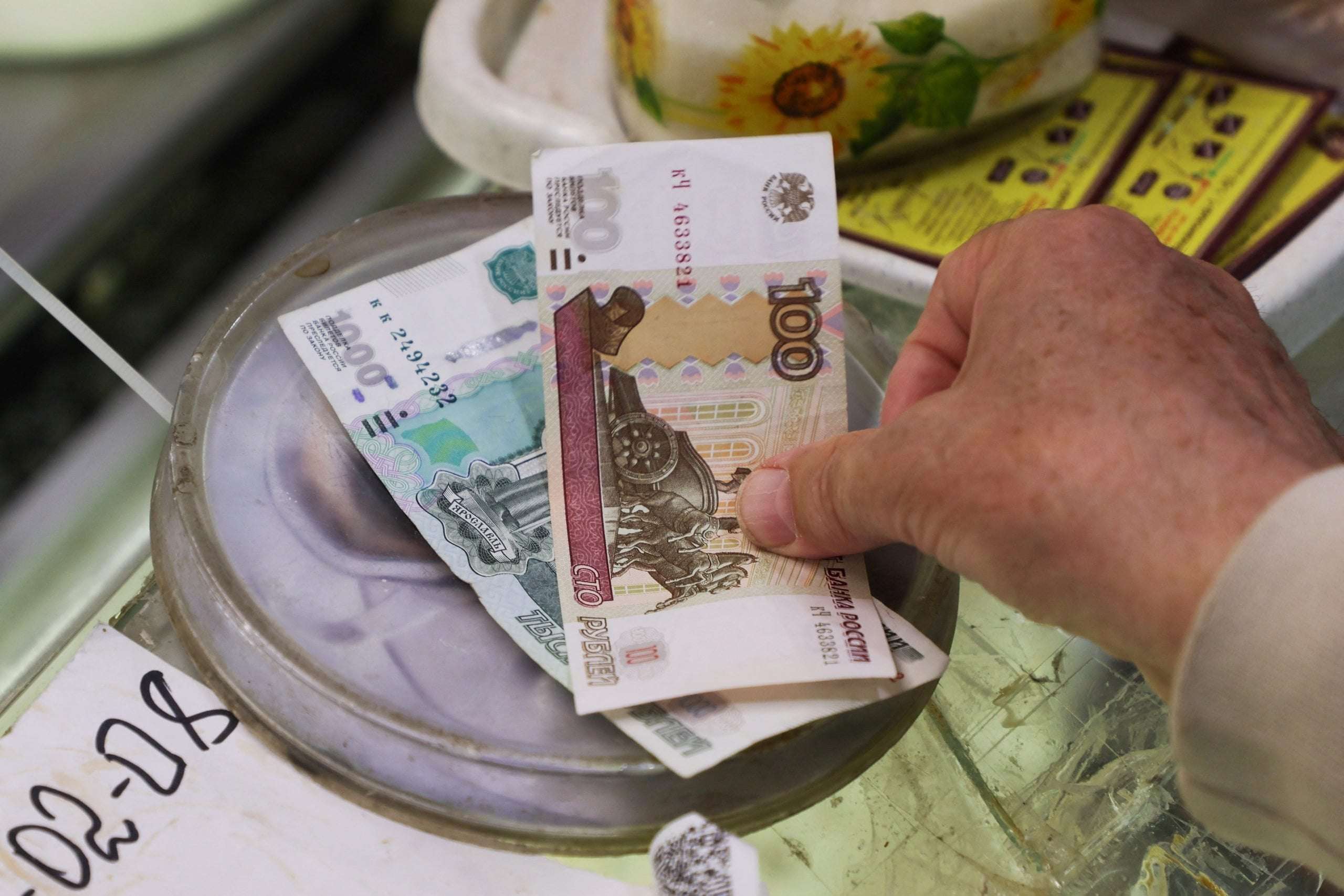
Ordinary citizens are feeling a tightening noose from measures agreed by the West, creating panic among some Russian businesses.
One of Moscow’s online telecom forums hosted a discussion on August 29 about the tech specifics of a Chinese-made WiFi-router — one of the cheapest and most popular items of basic telecommunications hardware. Built for home use and small cafes, it has a price tag of about $30.
The author praised the router, but indicated that it is impossible to buy directly on Ali Express — Russia’s most popular online retail platform, also Chinese-owned.
But he had a solution. “The router is perfectly visible on Ali if you select Kazakhstan as the country, and while ordering, you just ‘jump’ from Kazakhstan to the Russian delivery address,” he explained. “Same story with radio components, and the same with motherboards for Xeon processors.”
The author was immediately drowned out by reprimands from other users worried that the loophole would be closed.
And that’s precisely what happened, just two days later.
It has become a popular element of the Western sanctions debate to argue the measures have no effect. It’s true that while Russia has become the world’s most-sanctioned state, the system is widely evaded with the help of countries like China.
It’s also true that sanctions are dynamic; they change and are improved over time. One such major change was a threat from the US late last year to impose secondary sanctions on Chinese banks, so denying them access to US dollars. Meanwhile dozens of Chinese components suppliers have been directly targeted. This is now having a serious effect on trade, much of it war-related.
Russian mainstream media now report that Chinese banks have begun refusing payments from Russia, while also rejecting payments if Russian names appear in the paperwork.
As a result, Chinese banks and businesses are being strong-armed into applying US sanctions, at least for now.
In March, several Chinese banks stopped accepting payments from Russia in yuan. During the summer, more and more Chinese banks followed suit.
Get the Latest Sign up to receive regular emails and stay informed about CEPA's work. Email Δ
Just a month ago, Chinese suppliers asked no questions when goods paid for from Kyrgyzstan were going to Russia. Now they require export declarations.
Cross-border payments have significantly decreased, not only with China but also with Central Asian countries and Turkey. These are the major sanctions-evasion nations and the change has sent many Russian companies, especially small- and medium-sized businesses, into a state of silent panic.
“Money has stopped flowing. There are very few cross-border payments left. Just Kyrgyzstan, Uzbekistan (at a stretch) and that’s it. China used to smooth things out a lot,” a Moscow-based banker admitted.
Where big corporations could expect to use a form of barter as a substitute for cross-border transactions, or to lobby for exceptions, small- and medium-sized businesses largely worked alone. And as with the $30 WiFi router, they have been caught up by the new measures even though the goods are not linked to the war effort.
The ramifications are echoing through the Russian financial system, forcing the Russian Central Bank to change its attitude to cryptocurrency.
On September 1, Russia launched “an experiment” by encouraging the use of cryptocurrency for cross-border payments in the hope this will circumvent the restrictions. The new system will operate under the supervision of the Central Bank. In August, Putin had a law allowing cross-border payments for imported goods and exchange trading within the framework of “the experimental legal regime,” but leaving in place the ban on accepting crypto as payment for goods and services.
To many, this experiment sounds like a pretty desperate move. The Russian national financial infrastructure is not ready to use such means as a full-sized substitution for traditional cross-border payments — the Central Bank had been opposed cryptocurrency for years.
In many countries it’s impossible to open cryptocurrency accounts for Russians, and the Russian crypto exchange Garantex has been sanctioned by the US since April 2022.
Not many countries are ready to accept Russian crypto transfers, although many Russian bankers expect the UAE to become a leader in such operations.
As for China, its bankers have already indicated that while operations in cryptocurrency with Russia are quick, they are also costly, raising the price for imports to Russia even more than before. The shift to payments in extremely volatile cryptocurrency could cost the Russians dearly.
Andrei Soldatov and Irina Borogan are Non-resident Senior Fellows with the Center for European Policy Analysis (CEPA.) They are Russian investigative journalists, and co-founders of Agentura.ru, a watchdog of Russian secret service activities.
Europe’s Edge is CEPA’s online journal covering critical topics on the foreign policy docket across Europe and North America. All opinions are those of the author and do not necessarily represent the position or views of the institutions they represent or the Center for European Policy Analysis.
qcatq on September 6th, 2024 at 23:51 UTC »
China literally has a special bank to trade with Iran and now Russia, Bank of Kunlun. All transactions are rerouted to just go through this bank instead.
Trust-Issues-5116 on September 6th, 2024 at 21:58 UTC »
The usual daily Sanctions Work dance to avoid facing the reality of a need to deliver more weapons.
CEPAORG on September 6th, 2024 at 21:02 UTC »
Submission Statement: "Ordinary citizens are feeling a tightening noose from measures agreed by the West, creating panic among some Russian businesses." Andrei Soldatov and Irina Borogan discuss the growing impact of Western sanctions on Russia, highlighting how ordinary citizens and businesses are increasingly feeling the strain. As sanctions evolve, even traditional routes for evading these measures—like using Chinese suppliers—are tightening, with reports of Chinese banks refusing payments from Russia. The Russian government is experimenting with cryptocurrency to facilitate cross-border transactions, but this shift appears desperate and poorly supported by the existing financial infrastructure.