Welcome to Pollapalooza, our occasional polling column.
Project 2025 could be an albatross for Trump
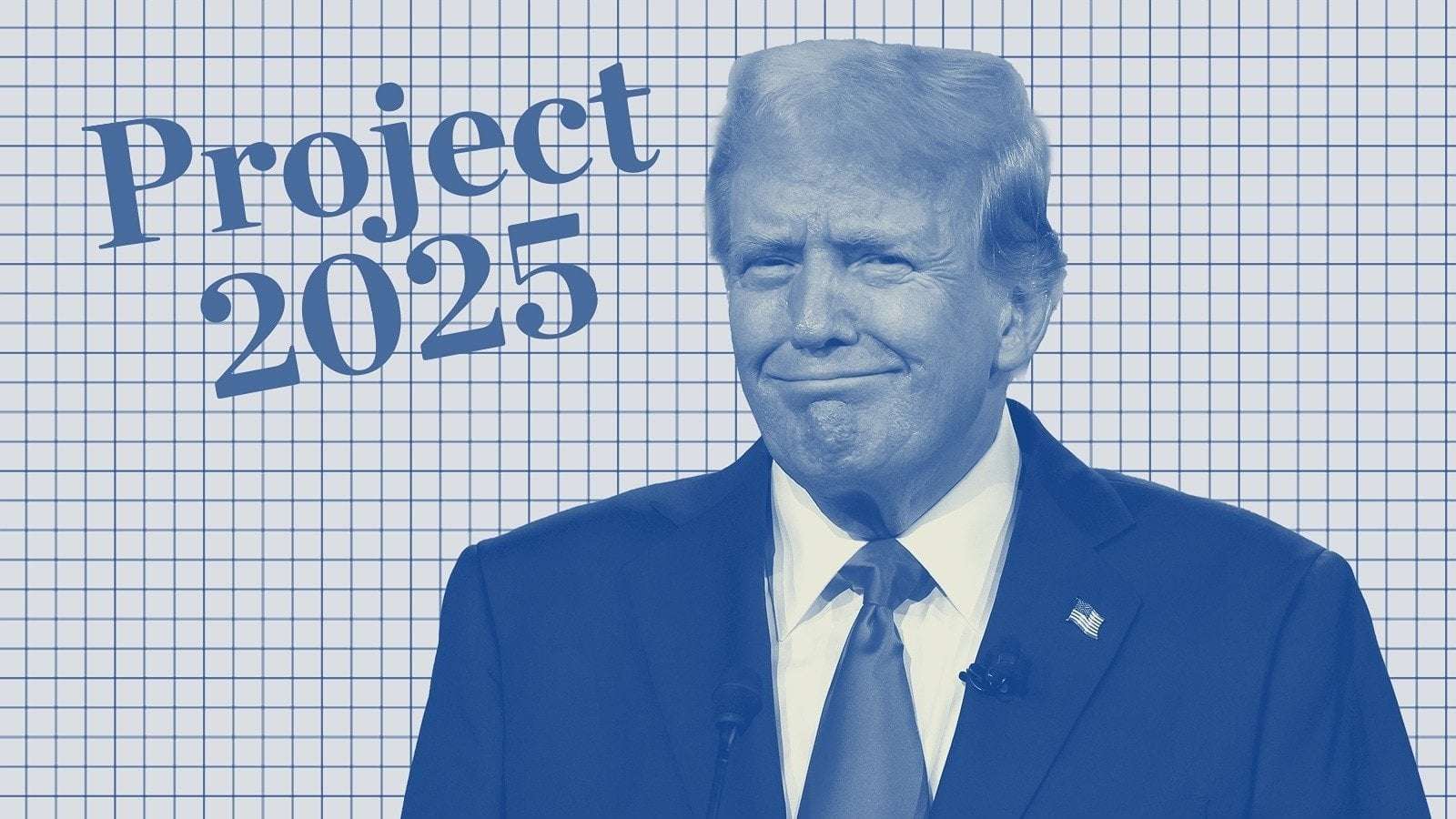
There's been some infighting among conservatives lately over a package of sweeping conservative policy proposals known as "Project 2025." Conservative groups developed the plan as a sort of wish list for if former President Donald Trump gets reelected, and it contains policies widely considered to align with his vision for governance. But the former president's campaign has disavowed the project and recently went so far as to say its "demise would be greatly welcomed," while Trump urged his supporters to boo it at a campaign rally.
That's likely because a growing majority of Americans are hearing about the controversial proposal, and a significant share also disapprove of it and closely associate it with Trump, despite his concerted attempts to distance himself from it.
Two different YouGov polls conducted for the University of Massachusetts Department of Political Science and The Economist in the last two weeks each found that between 70 and 80 percent of Americans had heard about Project 2025. YouGov/The Economist found that 47 percent thought Trump at least somewhat supports the plan, similar to the 45 percent who said it "accurately describes what Trump stands for" in a mid-July survey by Navigator Research, a progressive-aligned polling outfit. Recent Navigator surveys also compared attitudes toward the project in late June versus mid-July, and they found that the project had become both more familiar and less popular among Americans across the political spectrum.
Unfavorable views of the project rose the most among Democrats, for whom the plan's net favorability dropped by a whopping 36 percentage points, but it also became less popular among the smaller share of Republicans who had heard of the project: Net favorability for Project 2025 dropped 9 points among those who identified as MAGA supporters and 17 points among other Republicans.
When it comes to what specific policies within Project 2025 Americans dislike, the University of Massachusetts poll found that a majority of respondents disagreed with policies like "firing thousands of federal employees and replacing them with appointees loyal to the president" (-56 percent net support) or "reducing federal civil rights protections for lesbian, gay, and transgender people" (-29 percent net support). A YouGov poll in early July found similarly low support for policies like withdrawing federal approval for the abortion pill mifepristone (-26 percent net support) — though other proposals were somewhat more popular, like deploying the military to help with arrests along the U.S.- Mexico border (+11 percent net support) or outlawing pornography (an even split).
Democrats are hoping to take full advantage of the plan's unpopularity. Vice President Kamala Harris's campaign is taking steps to brand Trump's policies as part of Project 2025 — sometimes inaccurately. This strategy could dovetail with the campaign's efforts to refocus the presidential race around issues that may favor Harris, like abortion rights and fears about Trump's autocratic tendencies. So, heading into the upcoming Democratic National Convention, Democrats may keep talking as much about Republican policy proposals as their own.
Americans are less sure childhood vaccines are important
During the coronavirus pandemic, a partisan gap opened up over the coronavirus vaccine, with many Republicans chafing at vaccine mandates and even claiming without evidence that the vaccine was unsafe. As a result, a sizable minority of Americans refused to get vaccinated: According to a fall 2023 survey from KFF, 22 percent of American adults said they were unvaccinated against COVID-19. That included 34 percent of Republicans but only 9 percent of Democrats.
Now, though, there is evidence that this skepticism is rubbing off on other vaccines too — including those that have been required and known to be safe for years. According to a new poll from Gallup, the share of Americans who believe it is "extremely important" for parents to get their children vaccinated has fallen from 58 percent in 2019 to 40 percent in 2024. And this decline is driven almost entirely by Republicans, who have fallen from 52 percent to 26 percent on this question. (Democrats went from 67 percent to 63 percent.)
It's possible that many respondents had COVID-19 vaccines specifically on the mind when answering this question. But Americans also now say the government should require parents to vaccinate their children specifically "against contagious diseases such as measles" by just a 51-percent-to-45-percent margin. By contrast, in 1991, Americans were almost unanimous that these vaccines should be required for children, 81 percent to 14 percent.
Americans really like the child tax credit
In a recently resurfaced 2021 interview, Ohio Sen. JD Vance, the Republican nominee for vice president, suggested that Americans without children should be taxed at a higher rate than those with children. And while Vance has drawn criticism for other comments disparaging "childless" Americans, his stance is actually widely popular.
Democrats have argued that one way to achieve such an outcome is to restore the expanded child tax credit that was part of their 2021 economic stimulus and COVID-19 response package. A bill to do just that failed to advance in the Senate last week, which is probably a disappointment to the American people: A more generous child tax credit has broad bipartisan support. In a YouGov/The Economist survey released this week, 72 percent of Americans said they would support "expanding eligibility for the child tax credit among lower-income families," with 42 percent expressing strong support. Majorities of Democrats, Republicans and independents support the proposal.
Even a more generous proposal to expand the credit to all families with children (regardless of income) — closer to Vance's suggestion that all childless families should pay more in taxes — receives majority support among the public. In a May survey from Data for Progress, likely voters were asked if they supported expanding "the Child Tax Credit so that all families can receive up to $2,000 for each child they have, annually." Sixty-seven percent of voters said they supported such a policy, compared with just 24 percent who opposed it.
Asked directly whether "people with dependent children should pay lower taxes" in the YouGov/The Economist poll, Americans were more split. Forty-two percent said yes, 33 percent said no and 25 percent said they weren't sure. Ironically, members of Vance's own party were much less likely to agree with his sentiment than those across the aisle: 44 percent of Democrats were in favor, compared to 30 percent not in favor (a margin of 14 percentage points), while Republicans were split 41 percent to 40 percent, a margin of just 1 point in favor of the proposal.
Do people really think Republicans are 'weird'?
Two days after President Joe Biden dropped out of the presidential race, a throwaway line by Minnesota Gov. Tim Walz on cable TV took the media by storm. "These guys are just weird," he said, referring to Trump and Vance. That word — weird — was instantly picked up by Harris's campaign and lauded by Democrats as an approachable and effective way to characterize their GOP opponents' views as out of the norm. Its massive popularity may even be one of the reasons Harris chose Walz as her running mate.
But the phrase doesn't appear to be just an obsession among the media and D.C. punditry. Polling in recent days has suggested that the general public is catching on as well, and it looks like the message may be a winning one for Democrats.
In an early August poll from Data for Progress that asked whether the word "weird" more accurately described Democrats or Republicans, 47 percent said it was more fitting for Republicans, while 37 percent said the same for Democrats. Data for Progress also asked respondents about various headline-making statements from Trump and Vance, like Vance's recently unearthed comments about childless women and Trump's quip about immigrants "taking Black jobs." When asked whether they thought these statements (which were not attributed to any source) were "weird" or "normal," even Republicans thought that most were weird, often by large margins.
Data for Progress is a liberal-leaning pollster, which might have influenced the question wording and results, but we've seen several nonpartisan outfits ask about the topic, too. A recent poll from YouGov and the University of Massachusetts Department of Political Science asked respondents what one word they would use to describe Vance. While many respondents said things like "strong," "patriot" and "smart," one of the most popular responses was "weird," coming second only to "unknown."
A YouGov survey on Aug. 1 shows a slightly more complicated picture, though. While a plurality of 47 percent of respondents agreed that conservatives are "weird," almost the exact same share (46 percent) said that they also thought liberals were "weird." So while Walz's comments were certainly successful in characterizing at least the GOP's vice presidential nominee, public opinion about which party is "weirder" could also be reflecting more general disdain for politicians and political parties as a whole.
Poopywoopypants on August 11st, 2024 at 00:56 UTC »
My mom, a lifelong conservative, called me today frantic and worried about Project 2025. She had been watching CBS Morning and they broke down Project 2025 and it terrified her. Said she's voting for Harris.
It's really unpopular. They want to pretend it doesn't exist and then push this on the American people against their will.
twenafeesh on August 11st, 2024 at 00:47 UTC »
Even while Trump tries to distance himself from Project 2025, the fact that Vance is on the ticket is designed as a wink and a nod to the Christian nationalists and other rightists who want to do things like:
Surveillance of pregnant women, rebrand HHS as the "Department of Life", a national abortion ban, refuse to certify election results, install Project 2025 architects in high levels of government,Project 2025 (or Agenda 47, if we go with its rebrand) is the greatest expansion of government control over private life in US history.
Anyone who says Trump and Vance's agenda isn't weird and creepy hasn't read about it enough.
JD Vance wrote a glowing endorsement of Project 2025. Know that when JD Vance says unhinged things about childless women, he means every single word. Demonizing people for not having children is a plank of the right's extreme forced-birth agenda. It's a feature, not a bug.
Magnon on August 11st, 2024 at 00:43 UTC »
The trump admin disbanded the pandemic team in what, 2018?, 2 years before we get a worldwide pandemic. One of the big aspects of project 2025 is firing a huge swath of the government and replacing it with republican yes men who will be loyal to 'king' trump.
We collectively saw the damage disbanding a relatively small but important cog in the machine caused. Everyone has family or friends that were lost to covid because of unpreparedness and republican meddling with what should've been the response. They aren't trying to replace a cog in the machine this time, they're trying to replace the machine. Letting them be in a position to do that would be absolute insanity.