Although most methane is removed by processes in the atmosphere, soils are full of bacteria that absorb the gas and break it down for use as energy. Soil had been thought of as the only terrestrial sink for methane, but the researchers now show that trees may be as important, perhaps more so.
Lead researcher on the study, Professor Vincent Gauci of the University of Birmingham, said: “The main ways in which we consider the contribution of trees to the environment is through absorbing carbon dioxide through photosynthesis, and storing it as carbon. These results, however, show a remarkable new way in which trees provide a vital climate service.
“The Global Methane Pledge, launched in 2021 at the COP26 climate change summit aims to cut methane emissions by 30 per cent by the end of the decade. Our results suggest that planting more trees, and reducing deforestation surely must be important parts of any approach towards this goal.”
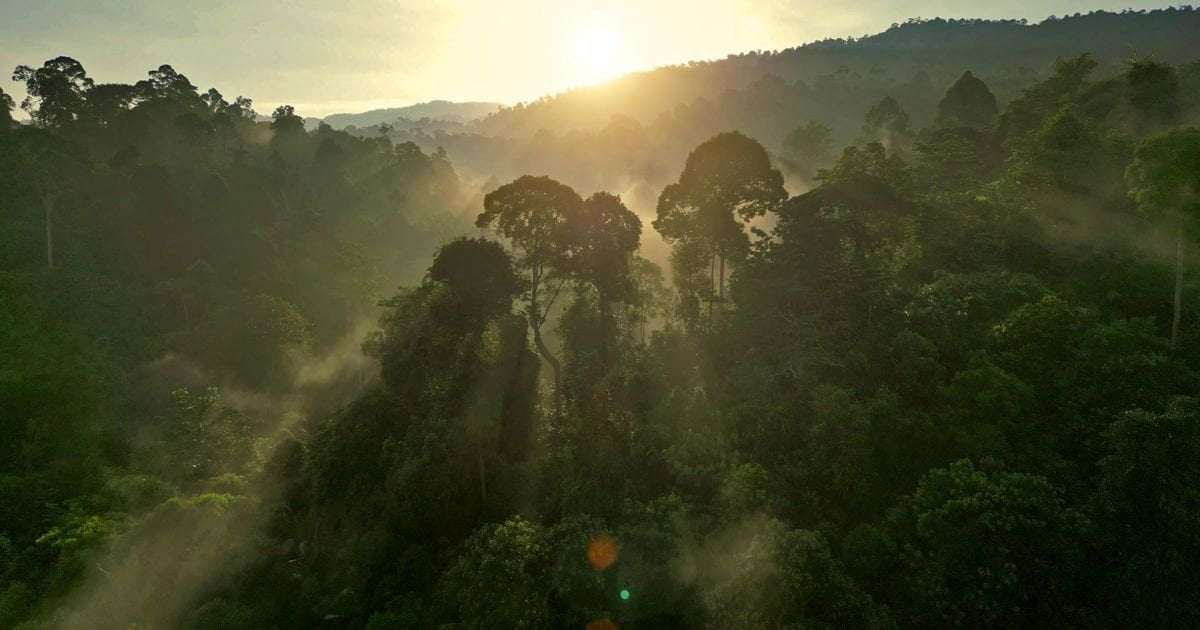
In the study, the researchers investigated upland tropical, temperate and boreal forest trees. Specifically, they took measurements spanning tropical forests in the Amazon and Panama; temperate broadleaf trees in Wytham Woods, in Oxfordshire, UK; and boreal coniferous forest in Sweden. The methane absorption was strongest in the tropical forests, probably because microbes thrive in the warm wet conditions found there. On average the newly discovered methane absorption adds around 10% to the climate benefit that temperate and tropical trees provide.
By studying methane exchange between the atmosphere and the tree bark at multiple heights, they were able to show that while at soil level the trees were likely to emit a small amount of methane, from a couple of metres up the direction of exchange switches and methane from the atmosphere is consumed.
In addition, the team used laser scanning methods to quantify the overall global forest tree bark surface area, with preliminary calculations indicating that the total global contribution of trees is between 24.6-49.9 Tg (millions of tonnes) of methane. This fills a big gap in understanding the global sources and sinks of methane.
The tree shape analysis also shows that if all the bark of all the trees of the world were laid at flat, the area would be equal to the Earth’s land surface. “Tree woody surfaces add a third dimension to the way life on Earth interacts with the atmosphere, and this third dimension is teeming with life, and with surprises”, said co-author Yadvinder Malhi of the University of Oxford.
Professor Gauci and colleagues at Birmingham are now planning a new research programme to find out if deforestation has led to increased atmospheric methane concentrations. They also aim to understand more about the microbes themselves, the mechanisms used to take up the methane and will investigate if this atmospheric methane removal by trees can be enhanced.
entropy13 on July 27th, 2024 at 23:49 UTC »
So does UV light from the sun (by turning it into CO2), but this is still good news!
chromatictonality on July 27th, 2024 at 20:21 UTC »
Serious question for any plant physiologists out there: is it possible to genetically engineer massive trees that thrive in saltwater and can help combat climate change and protect coastal regions simultaneously? Or is that just a pipe dream?
Bandeezio on July 27th, 2024 at 19:06 UTC »
WELL.... methane half-life is only 7 years, so it does just decay pretty fast anyway, unlike CO2 with methane you just need to lower the output and it goes down pretty fast. The CO2 is scarier one because it can stay around more or less until sequestered, see Venus for example.