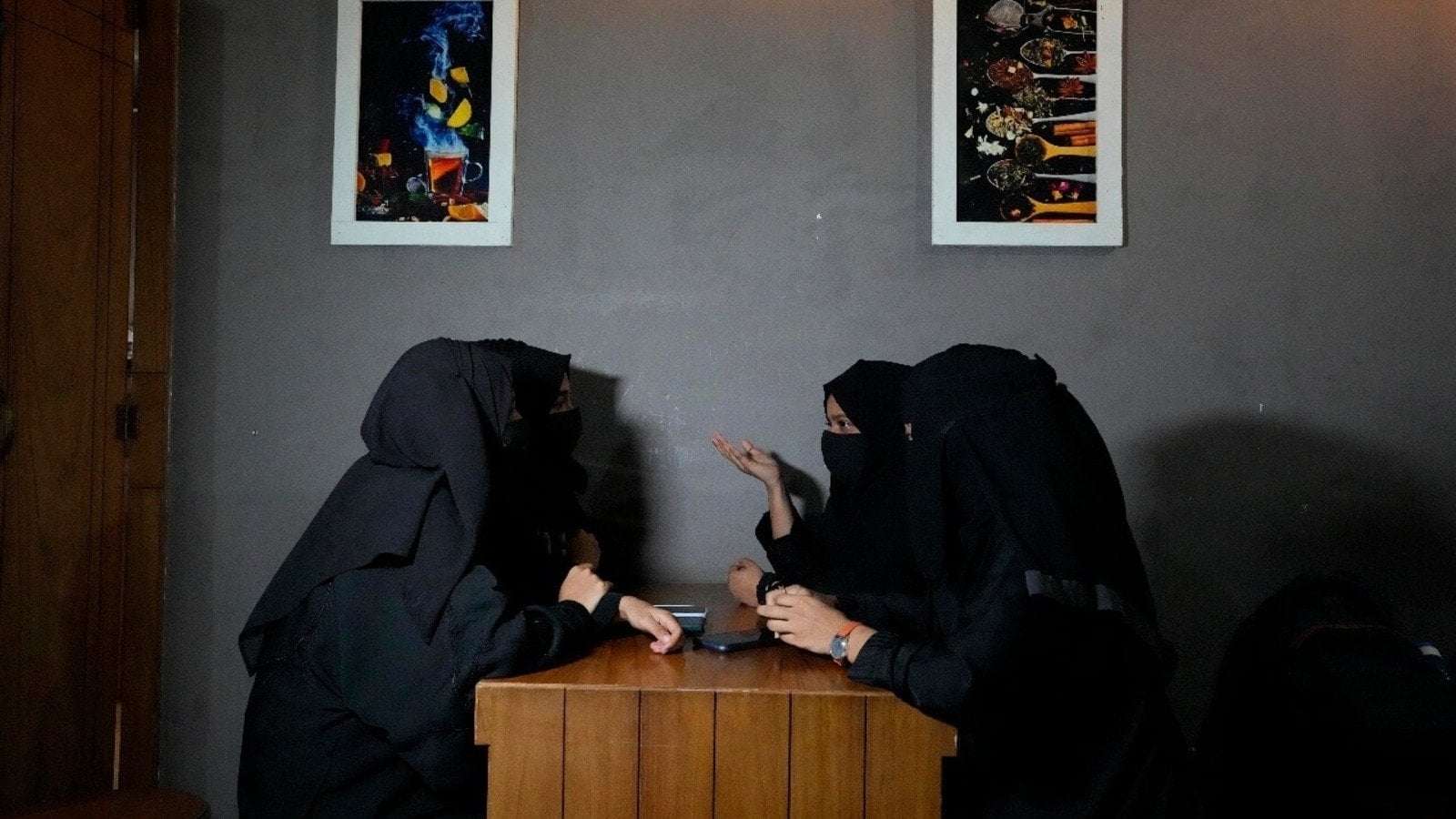
Tajikistan, a central Asian nation neighbouring Afghanistan, is set to impose a hijab ban on its citizens after the Tajikistan parliament's upper house, Majlisi Milli, passed a law on June 19 prohibiting "alien garments" and children's festivities during two major Islamic holidays—Eid al-Fitr and Eid al-Adha. The women's garments have been arriving in Tajikistan from the Middle East in recent years and are seen by officials as linked to Islamic extremists. (AP/File)
On June 19, the 18th session of the Majlisi Milli, led by its chairman Rustam Emomali, was held.
The bill was passed on May 8 by the lower chamber, the Majlisi Namoyandagon, and it primarily focuses on banning the hijab and other traditional Islamic clothing.
Sulaiman Davlatzoda, the head of the Religion Committee, had then said as per Radio Liberty’s Tajik Service, Radio Ozodi, that children's holidays were banned to ensure “proper education and ensuring their safety during Ramadan and Eid al-Adha”.
According to the Majlisi Milli press centre, during the session, they supported changes to Tajikistan's laws concerning holidays, cultural practices, the role of teachers in children's upbringing, and parental duties.
Regarding the women's garments, they have been arriving in Tajikistan from the Middle East in recent years and are seen by officials as linked to Islamic extremists. The bill has caused debate among Tajikistan's mostly Muslim population in the tightly governed ex-Soviet republic.
Lawmakers also agreed on new changes to the rules for breaking the law, which include large fines for those who break them. The rules did not previously list wearing a hijab or other religious clothing as something citizens can't do.
Radio Ozodi reported on May 23, that the Tajikistan authorities decided that the fines for people who break these rules would be different for different entities.
Individuals could get fines as high as 7,920 somonis, while companies could get fined up to 39,500 somonis. Government officials and religious leaders might have to pay even more if they're found guilty, with fines reaching 54,000 somonis for officials and 57,600 somonis for religious leaders.
Read more : Kolkata teacher resigns over alleged hijab ban, university issues clarification
Has Tajikistan already banned hijab unofficially?
Tajikistan has officially banned the Islamic Hijab after years of it being unofficially restricted. The Tajik government started cracking down on the hijab in 2007 when the Ministry of Education prohibited both Islamic attire and Western-style miniskirts for students.
This ban was later expanded to include all public institutions, with some organisations requiring their employees and visitors to remove their headscarves. Local authorities formed special teams to enforce this informal ban, and police even conducted raids in markets to apprehend people breaking the rule. However, officials have denied multiple reports from women who claimed they were stopped on the street and fined for wearing the hijab, Asia Plus reported.
In recent years, the Tajik government has promoted traditional Tajik clothing through a campaign. In 2017, millions of people received text messages urging women to wear Tajik national clothes. The messages emphasised the importance of respecting and making it a tradition to wear these outfits. This effort peaked in 2018 with the release of a 376-page manual titled "The Guidebook Of Recommended Outfits In Tajikistan," which detailed appropriate attire for various occasions.
Read more : India’s engagement with Taliban should redefine Tajikistan relationship
Additionally, Tajikistan has informally discouraged men from wearing bushy beards. Reports indicate that thousands of men have been forcibly stopped by police over the past decade and had their beards shaved off against their will.
In March this year, Tajikistan President Emomali Rahmon said, “Xenophobia in clothing, i.e. wearing foreign clothes with fake names and hijab, is another pressing issue for our society.”
Coralhellas on June 21st, 2024 at 12:29 UTC »
Having a beard is also strongly discouraged by the government of Tajikstan, in order to battle radicalism they say.
funny_lyfe on June 21st, 2024 at 09:18 UTC »
My Indian friend is married to a Tajik woman. I went to their wedding, they are not religious people at all. They don't care about Islam and openly drink as well. Among the best people I have come across, warm and friendly. The only thing is they can only speak Russian, Tajik and Farsi so it's hard to have much of a conversation with them.
Edit: It's been pointed to me that Tajik and Farsi are the same language or are similar languages.
No_Discussion6913 on June 21st, 2024 at 08:22 UTC »
Tajikistan also demands DNA tests to prevent cousin marriages, and closely monitors mosques in case of extremists. Good news!