Scientists have developed a glowing dye that sticks to cancer cells and gives surgeons a “second pair of eyes” to remove them in real time and permanently eradicate the disease. Experts say the breakthrough could reduce the risk of cancer coming back and prevent debilitating side-effects.
The fluorescent dye spotlights tiny cancerous tissue that cannot be seen by the naked eye, enabling surgeons to remove every last cancer cell while preserving healthy tissue. That could mean fewer life-changing side effects after surgery.
The technique was developed by scientists and surgeons at the University of Oxford in collaboration with the California biotech company ImaginAb Inc and was funded by Cancer Research UK.
“We are giving the surgeon a second pair of eyes to see where the cancer cells are and if they have spread,” said Freddie Hamdy, professor of surgery at the University of Oxford. “With this technique, we can strip all the cancer away, including the cells that have spread from the tumour, which could give it the chance to come back later.”
In the first trial of its kind, 23 men with prostate cancer were injected with the marker dye before undergoing surgery to remove their prostates. The fluorescent dye highlighted the cancer cells and where they had spread into other tissues, such as the pelvis and lymph nodes.
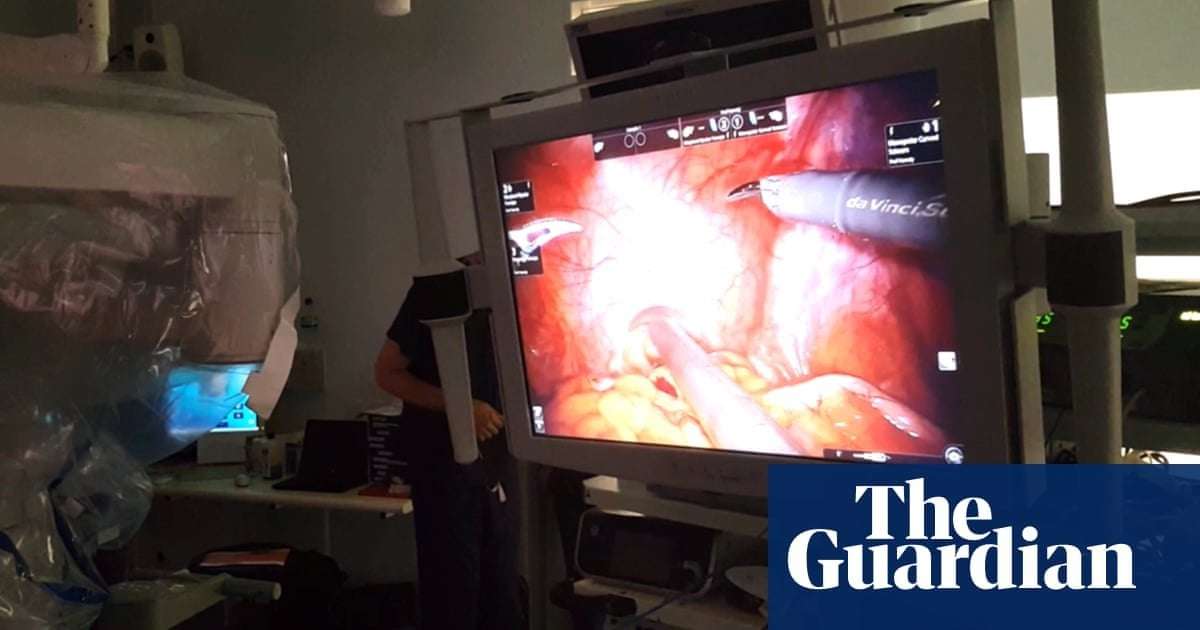
A special imaging system was used to shine a light on the prostate and nearby regions, making the prostate cancer cells glow. The ability to see such detail allowed the surgeons to remove cancer cells while preserving healthy tissue.
Details of the breakthrough were published on Monday 10 June in the European Journal of Nuclear Medicine and Molecular Imaging.
View image in fullscreen David Butler from Southmoor in Oxfordshire, who took part in the ProMOTE study. Photograph: David Butler
“It’s the first time we’ve managed to see such fine details of prostate cancer in real time during surgery,” said Hamdy, the lead author of the ProMOTE study. “It also allows us to preserve as much of the healthy structures around the prostate as we can, to reduce unnecessary life-changing side-effects like incontinence and erectile dysfunction.
“Prostate surgery is life-changing. We want patients to leave the operating theatre knowing that we have done everything possible to eradicate their cancer and give them the best quality of life afterwards. I believe this technique makes that possibility a reality.”
The procedure works by combining the dye with a targeting molecule known as IR800-IAB2M. The dye and marker molecule attach themselves to a protein called prostate-specific membrane antigen (PSMA), found on the surface of prostate cancer cells.
David Butler, 77, a retired sales development manager from Southmoor, Oxfordshire, is cancer-free after becoming one of the 23 men to participate in the trial. Before the surgery, scans had indicated that his prostate cancer had begun to spread.
skip past newsletter promotion Sign up to First Edition Free daily newsletter Our morning email breaks down the key stories of the day, telling you what’s happening and why it matters Enter your email address Sign up Privacy Notice: Newsletters may contain info about charities, online ads, and content funded by outside parties. For more information see our Newsletters may contain info about charities, online ads, and content funded by outside parties. For more information see our Privacy Policy . We use Google reCaptcha to protect our website and the Google Privacy Policy and Terms of Service apply. after newsletter promotion
Now fully recovered and healthy, Butler said he was a “lucky man” and was determined to “enjoy every moment” of life. He added: “I retired early to make the most of life’s pleasures: gardening, playing bowls and walking. Taking part in the ProMOTE study has allowed me to have many more of those pleasures for years to come.”
Though the technique has been trialled in patients with prostate cancer, it could be adapted to other forms of the disease. Experts hope the dye can be used for other types of cancer by switching the protein with which it attaches itself to cancer cells.
Dr Iain Foulkes, executive director of research and innovation at Cancer Research UK, said: “Surgery can effectively cure cancers when they are removed at an early stage. But, in those early stages, it’s near impossible to tell by eye which cancers have spread locally and which have not.”
Further trials were now required in larger groups of patients, but the combined marker dye and imaging system could “fundamentally transform” how we treat cancer in future, Foulkes said.
“It is exciting that we could soon have access to surgical tools which could reliably eradicate prostate and other cancers and give people longer, healthier lives free from the disease.”
Whateveryouwantitobe on June 10th, 2024 at 18:41 UTC »
It's pretty amazing how even within the last couple of decades, it seems like we've come a long way on cancer. It's a very complicated disease with countless variants, so curing it is incredibly difficult. I still have hope that I see a complete cure in my lifetime that doesn't involve surgery or chemo/radiation.
On a side note, I'm coming up on my 15 year anniversary of having a Whipple procedure for pancreatic cancer. I'd be lying if I said that life has been roses since then, in fact, it's been pretty damn hard. But had it not been found when I was 20, I'd likely either be dead by now or counting down the days. Thank you to all who research and work to end this horrible disease. You are the real angels out there.
Nitramite on June 10th, 2024 at 17:27 UTC »
This is the reason I stay in this sub honestly.. Every great study or treatment we discover is amazing news. We seem to be so close. If there's one thing I want in my life it's to know we cured Cancers, all of them.
RareCodeMonkey on June 10th, 2024 at 16:58 UTC »
Young people would be terrorized by how much of a death sentence cancer used to be. Nowadays, I know quite a few people that had cancer and got cured. There is still a long way to go to cure it for good. But each step is good news.