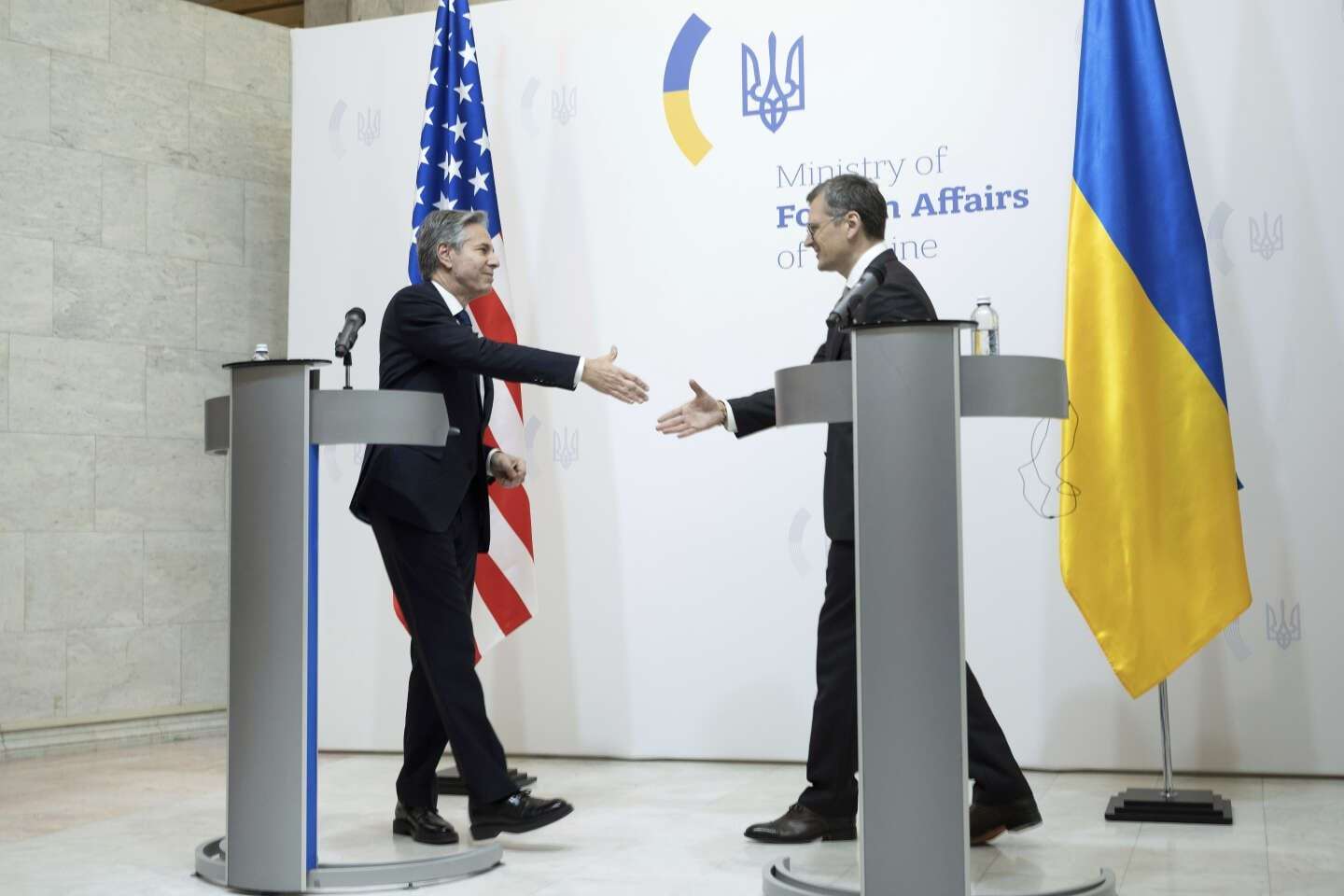
Since February 24, 2022, a phrase has found its way into Western leaders' rhetoric: The war Russia is waging on Ukraine is "existential." The threat represented by a Russia that is altering borders and rewriting history is "existential." Yet how do you measure the existential nature of a conflict? Is this war a little existential? A lot? And for whom, apart from Ukraine? For Russia's immediate neighbors? For the rest of Europe? For the United States?
These are not just philosophical questions. They have practical and strategic implications, the full weight of which Ukraine is currently feeling. When a threat is truly existential, you do everything you can to ward it off.
Faced with the most difficult military situation since the first weeks of the massive Russian invasion, which began over two years ago, the Ukrainians and their closest allies are aware of just how little help they currently have, and are coming to doubt the "existential" nature of the Russian war for others.
Read more Subscribers only Ukrainian soldiers in the Donbas are fed up waiting for Western munitions
"It's hard," Ukrainian Foreign Minister Dmytro Kuleba replied gloomily about the situation on the battlefield to European experts and officials gathered at the Lennart Meri conference in Tallinn, Estonia, on May 18. "Send us everything we need, because we have proved over these two years that when our soldiers have everything they need, we succeed," he continued, adding: "Send us Patriot [missiles], send us artillery ammunition, send us armored vehicles, allow us to hit any necessary military target inside Russia, help us protect our skies, and you will see the difference."
This is one of the major criticisms leveled at the US at the moment: Why hold back the Ukrainians and prevent them from attacking enemy military targets on Russian territory with the long-range weapons supplied to Kyiv, when the Russian army has no qualms about targeting civilians and destroying infrastructure that is vital to the Ukrainian population? The more the Russian army becomes offensive and murderous, the less justifiable this unequal battle becomes. American reluctance, after seven months of prevarication in Congress over the vote on the $60 billion (around €55 billion) in aid promised to Ukraine, has increasingly discredited Joe Biden's team among certain countries in northern and eastern Europe, even though they have traditionally been the most Atlanticist.
Read more Subscribers only War in Ukraine: US aid will not be enough to level the playing field in 2024
On Tuesday, May 28, the White House settled the debate within the Biden administration, in which Secretary of State Tony Blinken would have liked to give the Ukrainians a free hand: No, the presidential spokesman reiterated, there was no authorization to target Russian territory. Today, many Western experts are ready to admit it: For Washington, the war in Ukraine is not existential. "We told Israel that we'd defend it, we never said that to Ukraine," acknowledged a former American ambassador.
You have 50.04% of this article left to read. The rest is for subscribers only.
Brendissimo on May 29th, 2024 at 18:39 UTC »
I think this columnist fundamentally misunderstands and misframes the nature of this war. Who has been saying this war is existential for the United States? Has anyone credible ever said this? Because it is a laughable assertion. The United States hasn't faced an existential threat (besides the specter of nuclear war) since the US Civil War. It hasn't faced an active existential threat from a foreign power since the War of 1812.
It is also false to suggest that this war is primarily framed as an existential struggle for NATO. Poland, the Baltics, and Romania being concerned about Russian aggression if Russia wins in Ukraine is not the same thing as Russia's invasion of Ukraine itself being "existential" for those countries. What they are concerned about is a hypothetical future risk to themselves. Which, especially in the case of the Baltics, was seen as a potentially existential risk prior to 2022. For good reason, given their lack of strategic depth.
Don't get me wrong. I absolutely agree with the greater message here - the West can and should do a lot more to aid Ukraine in defending themselves against the murderous ongoing war of conquest and ethnic cleansing that Putin is waging. For Ukraine, it absolutely is existential. And things like usage restrictions on Western weapons and limits on which categories to send are increasingly absurd when Russia is doing everything in its power to complete their conquest, and breaking almost every rule of warfare that civilized nations have.
But this author's framing is so completely wrongheaded that it undercuts their entire point.
Haunting-Detail2025 on May 29th, 2024 at 18:36 UTC »
Aside from Ukraine it’s not really existential for any nation in their view. If it were, we’d be seeing ground and air forces from nations like Sweden and Germany and the UK and France directly confronting Russian armed forces. They’re not. I’m not sure why the US gets held to this bar of being told it’s an unreliable ally (despite it providing the most military and intelligence support of any country and being the first to warn about what was going to happen and having encouraged European nations to cut off ties to Russia to avoid risky situations like this) when pretty much nobody else is doing more than it in raw numbers and they never get held to the same accusations.
Really, is Spain a more reliable ally for the rest of Europe? They’ve hardly done anything for Ukraine compared to most of Europe, yet I don’t hear anybody bemoaning them and calling them a fake or unreliable ally. It just feels like the US constantly gets held to an unmeetable standard where it’s either accused of doing too much and being too pushy about Russia and China, or it’s being told it doesn’t do enough and nobody can rely on it.
diffidentblockhead on May 29th, 2024 at 16:49 UTC »
Reliability of what? The firmest US commitment is to collective defense treaty allies. That’s why the possibility of NATO for Ukraine was a big deal in the first place.
Allowing less restrained use of US-sourced weapons deserves serious consideration, not pretense that it’s a no-brainer.