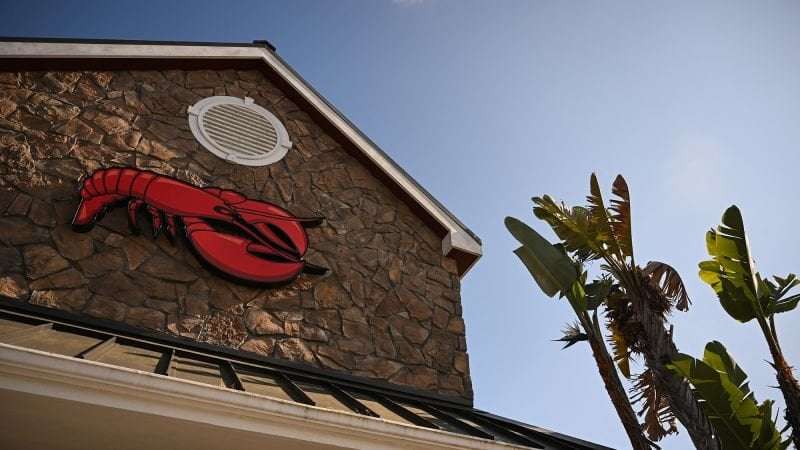
Red Lobster, which brought affordable shrimp and lobster to middle-class America and grew to become the largest seafood restaurant chain in the world, has filed for bankruptcy.
The company said it had more than $1 billion in debt and less than $30 million in cash on hand. It plans to sell its business to its lenders, and in turn, it will receive financing to stay afloat. It expects to continue to close restaurants in the meantime.
Red Lobster, known for its cheddar bay biscuits, crab legs and shrimp dishes, spread around the country during the 1980s and 1990s. In 2016, Beyoncé mentioned Red Lobster in her song “Formation,” describing bringing a romantic partner to Red Lobster, causing sales to surge.
With 578 restaurants across 44 states and Canada, Red Lobster serves 64 million customers a year, and it brings in $2 billion in annual sales, the company said in its bankruptcy filing. One in five lobster tails purchased in North America is bought by Red Lobster.
But recent mismanagement, competition, inflation and other factors brought down Red Lobster, analysts and former Red Lobster employees say.
Years of underinvestment in Red Lobster’s marketing, food quality, service and restaurant upgrades hurt the chain’s ability to compete with growing fast-casual and quick-service chains.
Red Lobster started in 1968 by Bill Darden, an architect of the casual dining revolution in America, and General Mills soon bought the restaurant. Red Lobster later became part of Darden Restaurants, the owner of Olive Garden and other chains.
In 2014, Darden sold off Red Lobster to Golden Gate Capital, a private equity firm, for $2.1 billion. Since 2020, seafood distributor Thai Union Group, based in Thailand, has been the largest Red Lobster shareholder. Thai Union owns 49% of the company.
But Red Lobster has struggled under Thai Union.
The number of customers coming to Red Lobster tumbled 30% since 2019 and has only slightly improved since the pandemic. Earlier this year, Thai Union said it would divest from Red Lobster and take a $530 million loss on its investment.
Former Red Lobster employees say Thai Union’s cost-cutting efforts and strategy mistakes hurt the chain.
“Thai Union forced huge cost reductions, including many that were penny wise and pound foolish because they hurt sales,” a former Red Lobster executive who spoke under the condition of anonymity because of a non-disclosure agreement with the company told CNN earlier this month. Thai Union did not respond to requests for comment on that article.
Red Lobster executives began to run for the doors under Thai Union’s management, resulting in a huge amount of C-suite churn. Red Lobster has had five CEOs since 2021. In 2021 and 2022, Red Lobster brought on a new CEO, chief marketing officer, chief financial officer and chief information officer. All were gone within two years.
Last summer, under Thai Union, Red Lobster turned $20 endless shrimp into a permanent item on the menu for the first time, instead of its traditional limited-time offer deal. The change cost the company $11 million and cut into Thai Union profit. In its bankruptcy filing, Red Lobster said it is investigating the circumstances of that promotion, which the company’s management opposed.
“We need to be much more careful,” Thai Union CFO Ludovic Garnier said on an earnings call in November 2023.
But the company in its bankruptcy filing blamed Thai Union for the losses. Noting that under the guise of a “quality review,” Red Lobster eliminated two of its breaded shrimp suppliers, leaving Thai Union with an exclusive deal. That led to higher costs for the restaurant chain, and did not comply with the company’s typical decision-making process for picking suppliers based on projected demand.
The explosive growth and popularity of fast-casual chains like Chipotle and quick-service chains like Chick-fil-A over the past two decades also squeezed Red Lobster.
Casual dining has slipped from 36% of total restaurant industry sales in 2013 to 31% in 2023, according to Technomic, a restaurant research firm.
In its bankruptcy filing, Red Lobster conceded it had “a bloated and underperforming restaurant footprint” and cited a difficult economic environment and increased competition for its recent financial failures.
Red Lobster has been telegraphing its bankruptcy for months.
In January, the company hired Jonathan Tibus, a restructuring veteran, to assess its business. It named Tibus as CEO in March. Last week, the company began shutting down 93 restaurants in preparation for its bankruptcy.
As it ran out of cash, the company stopped paying its vendors last year.
The company plans to stay afloat with a $100 million financing agreement, it said in its bankruptcy petition.
This story has been updated with additional developments and context.
catdogpigduck on May 20th, 2024 at 16:37 UTC »
private equity companies ruin another brand to line their pockets
Cranyx on May 20th, 2024 at 15:11 UTC »
A lot of media liked to play up the "it's because of endless shrimp" angle because it's both simplistic and sort of funny in the way that gets shared online, but that's a very incomplete picture. Yes they lost money on it, but that was a drop in the bucket compared to the mountain of debt they were put under by the private equity group that bought them up.
This is a story of investors squeezing every drop out of a company and then abandoning the scraps, not "shrimp too cheap"
teddytwelvetoes on May 20th, 2024 at 15:03 UTC »
don’t believe the nonsense about the unlimited shrimp or whatever they’re blaming this on - private equity bought em up, sold all the land that they were on, and then jacked up rent for the restaurants lmao