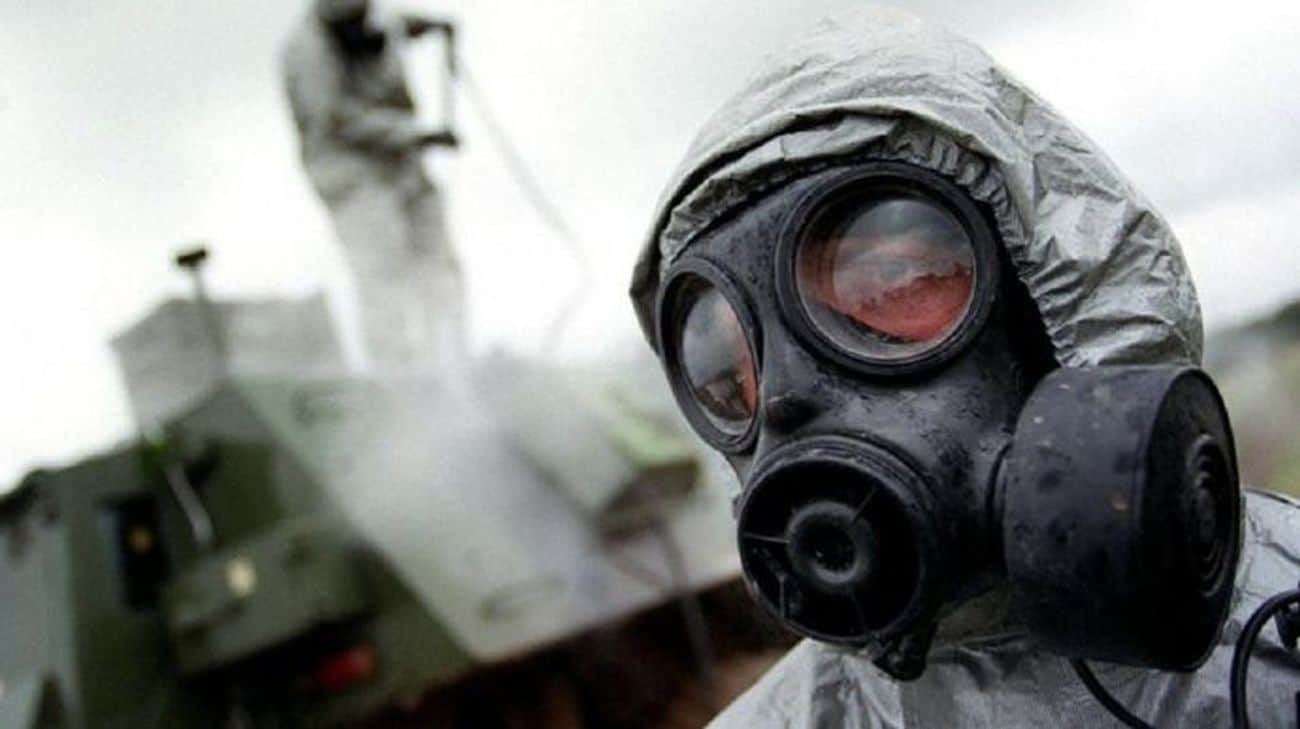
The US State Department, in justifying the new sanctions against Russia, has indicated that Russian troops used the banned chemical substance chloropicrin against the Armed Forces of Ukraine.
Source: European Pravda; statement by the State Department
Details: The US State Department states that Russia used chloropicrin against Ukrainian troops and also used riot control agents, violating the Convention on the Prohibition of Chemical Weapons.
"The use of such chemicals is not an isolated incident, and is probably driven by Russian forces’ desire to dislodge Ukrainian forces from fortified positions and achieve tactical gains on the battlefield," the State Department notes.
Speaking about Russia's disregard for its obligations to ban the use of chemical weapons, the United States drew parallels with the poisoning of opposition politician Alexei Navalny and Sergei and Yulia Skripal with the Novichok nerve agents.
In this regard, the US State Department imposed sanctions on the radiation, chemical and biological protection troops of the Russian Defence Ministry, the Russian Research Institute for Applied Acoustics and the 48th Central Research Institute of the Russian Defenсe Ministry, which are engaged in the development of chemical weapons.
Four companies involved in Russia's chemical weapons programme were also sanctioned.
Background: Earlier, the US Treasury Department announced the introduction of sanctions against almost 200 individuals and legal entities, contributing to Russia's military-industrial complex and helping it evade the restrictions already imposed.
Support UP or become our patron!
StillWritingeh on May 1st, 2024 at 21:17 UTC »
Watch Russia be upset when Ukraine hits them back
SMIDSY on May 1st, 2024 at 21:04 UTC »
Chloropicrin gas. Here's a little rundown for those that haven't gone down the chemical weapons rabbit hole.
Chloropicrin is, in a nutshell, tear gas with no chill. It produces the standard eye and nose irritation and cough but with the added bonus of SEVERE nausea.
It came into use during the First World War, not because it killed (it rarely does in wartime conditions), but because the particles were small enough to get through gas masks of the time, forcing those hit to remove their masks or literally drown in their own sick. Chloropicrin attacks would almost always be combined with a more lethal agent like mustard or especially phosgene which, while plenty lethal, was slow acting and relatively easily defeated by gas masks.
Agabouga on May 1st, 2024 at 20:58 UTC »
Why do we call these acts war crimes if there is no authority to punish/dissuade a country from committing them?