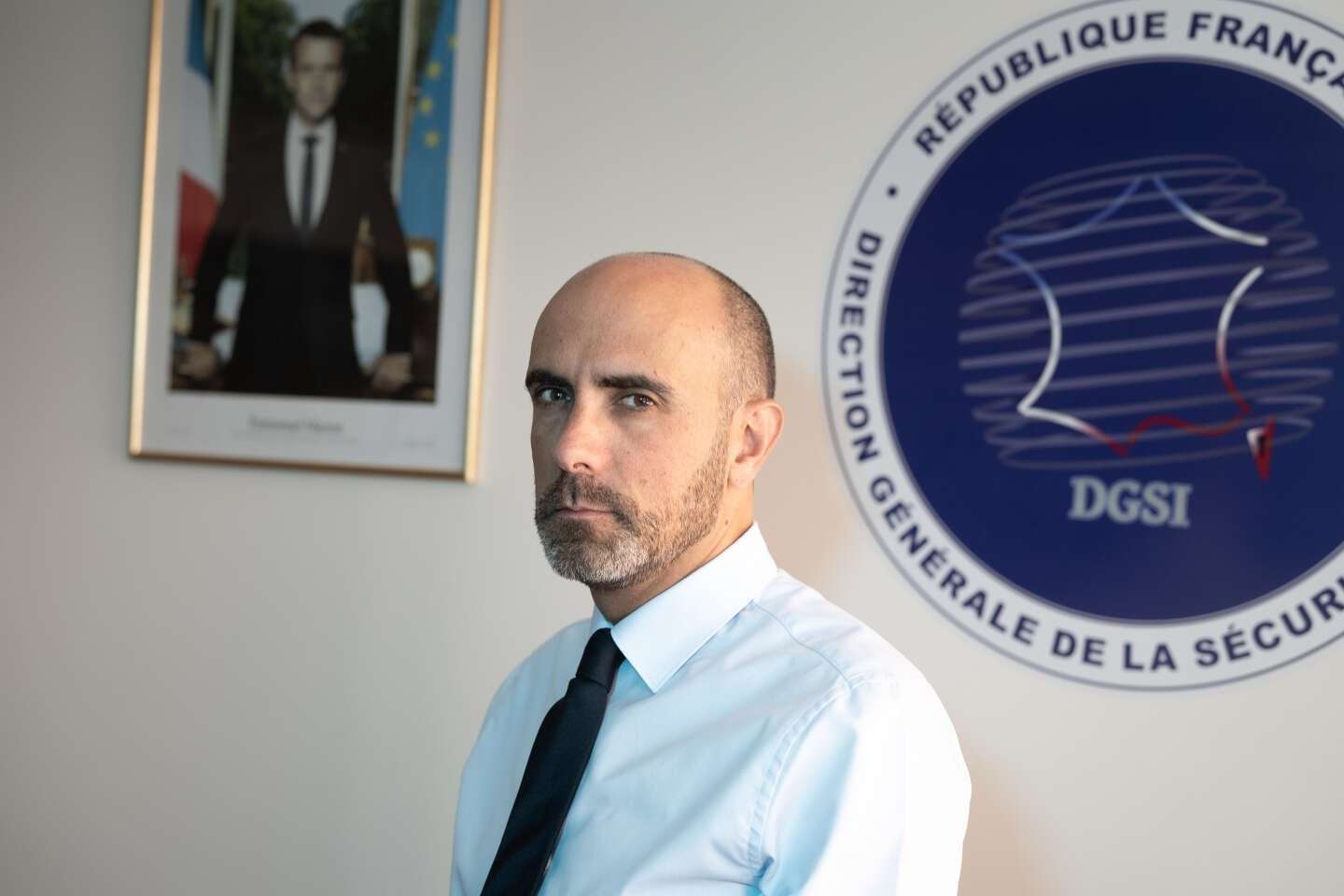
Nicolas Lerner, director general for internal security (DGSI). Here, at the DGSI offices in Levallois-Perret (northeastern Paris suburbs), on June 27, 2023. SAMUEL GRATACAP FOR LE MONDE
Nicolas Lerner has been the head of the General Directorate of Internal Security (DGSI), France's domestic intelligence agency, since 2018. In an interview with Le Monde, he explains the challenges involved in monitoring terrorists with mental disorders, such as the perpetrator of the knife attack that killed one person in Paris on Saturday, December 2. After a two-year lull, Lerner has observed an increase in the threat posed by very young individuals, fueled by the renewed activity of terrorist groups in Syria and Afghanistan.
As with the perpetrator of the Arras terrorist attack that killed a schoolteacher in northern France, the knife-wielding attacker in Paris was being monitored by the DGSI. Is this a failure of your department?
Not a day goes by without the DGSI's 5,000 or so agents being mobilized: 73 attacks have been prevented since 2013, 43 since 2017. Three attacks have even been prevented by the DGSI since March 2023.
Since the murder of Samuel Paty [a history teacher killed in October 2020], in accordance with the Interior Minister's [Gérald Darmanin] instructions to take a firm stance, 545 foreigners registered in the Alert Processing Register for the Prevention of Radicalization of a Terrorist Nature have also been deported. Given this daily commitment, we are bitterly frustrated and immensely saddened by each new incident.
Do these two attacks signal the return of the terrorist threat to France after a relatively calm period?
The Arras attack came after a year and a half without a terrorist attack. The last one to be judicially treated as such was the assassination of [Corsican independentist] Yvan Colonna in prison, in March 2022. Yet if we only consider terrorist attacks that took place outside prison, we have to go back to the murder of Stéphanie Monfermé, in Rambouillet [eastern Paris region], in April 2021, two and a half years ago.
In fact, for over a year now, we've detected a renewed upward trend for this threat, driven by three factors. Firstly, a revitalization of the endogenous movement, particularly driven by very young individuals. Secondly, the persistent entrenchment of jihadist ideology in experienced profiles with an undiminished desire to strike us. And thirdly, the return of threats linked to external theaters.
Should France learn to live with this threat and accept that zero risk does not exist?
No country in the world, not even among the most authoritarian, can claim to be immune to the risk of terrorism. It's very important to realize that this Islamist ideology will undoubtedly exist for a very long time to come. The French people need to know that this threat will persist, and that this unrelenting struggle will necessarily be a long-term one.
You have 80% of this article left to read. The rest is for subscribers only.
Afghan_ on December 7th, 2023 at 13:56 UTC »
the tumorous spread of wahabbism and salafism since the 20th century has had no positives
Beaudism on December 7th, 2023 at 10:24 UTC »
Propaganda has never been so rampant and swaying. AI and the internet are some of the greatest tools ever made to fool the masses. Question and scrutinize everything. Trust nothing and no one without rigorous examination. Don’t be persuaded to action without litigious rigours first. Don’t let them fool and control you.
bvishuessr on December 7th, 2023 at 10:14 UTC »